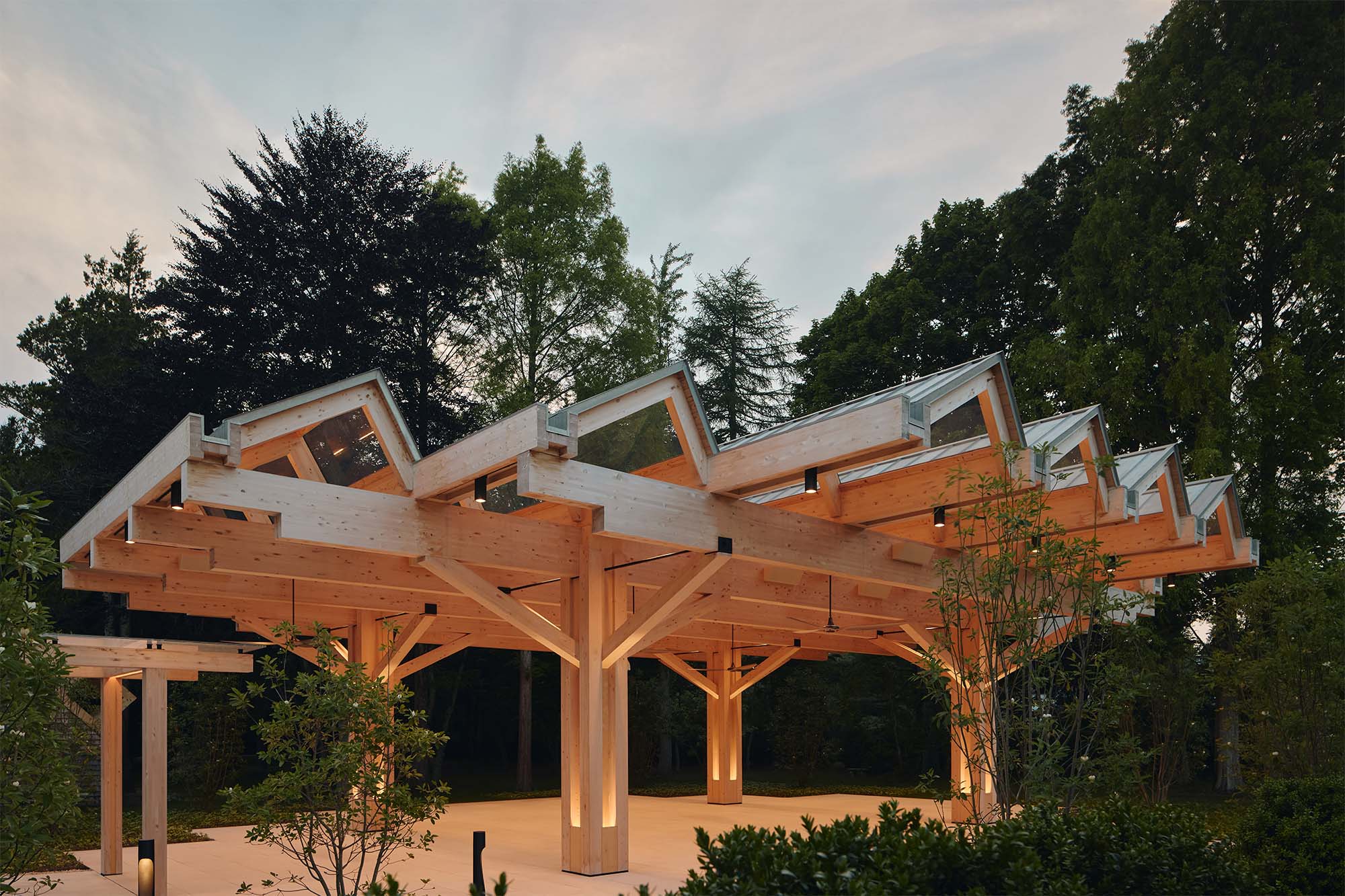
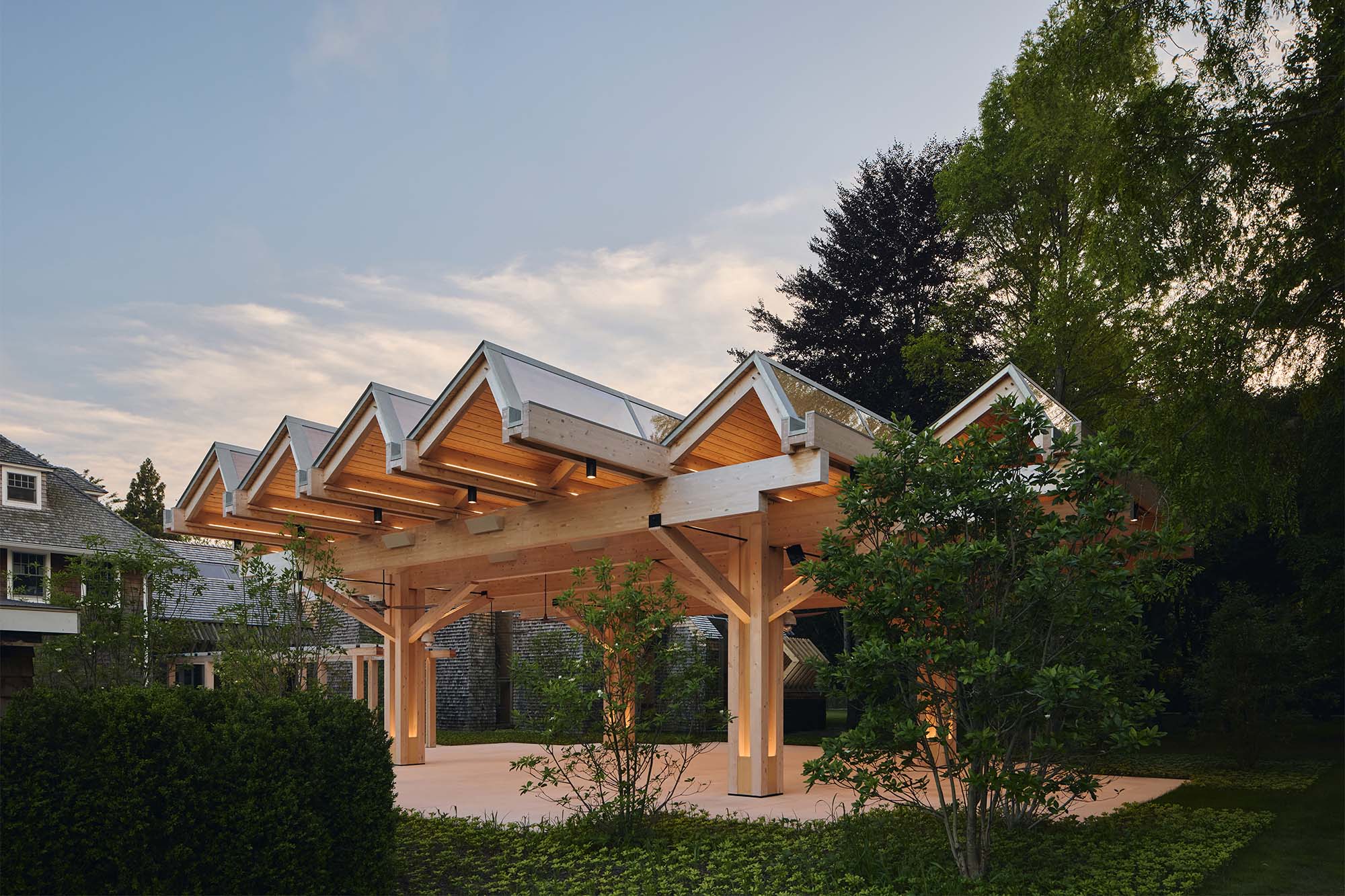
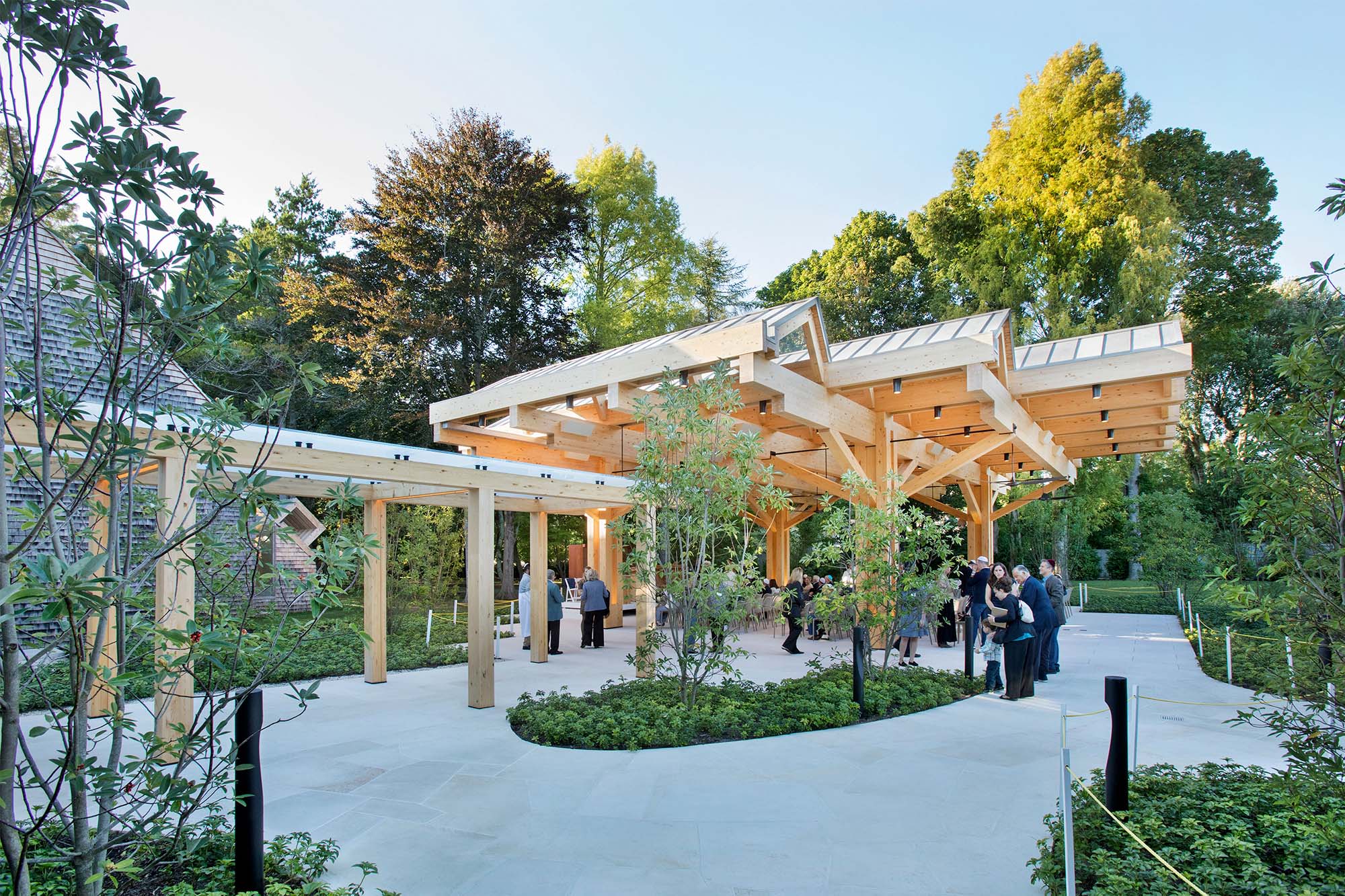
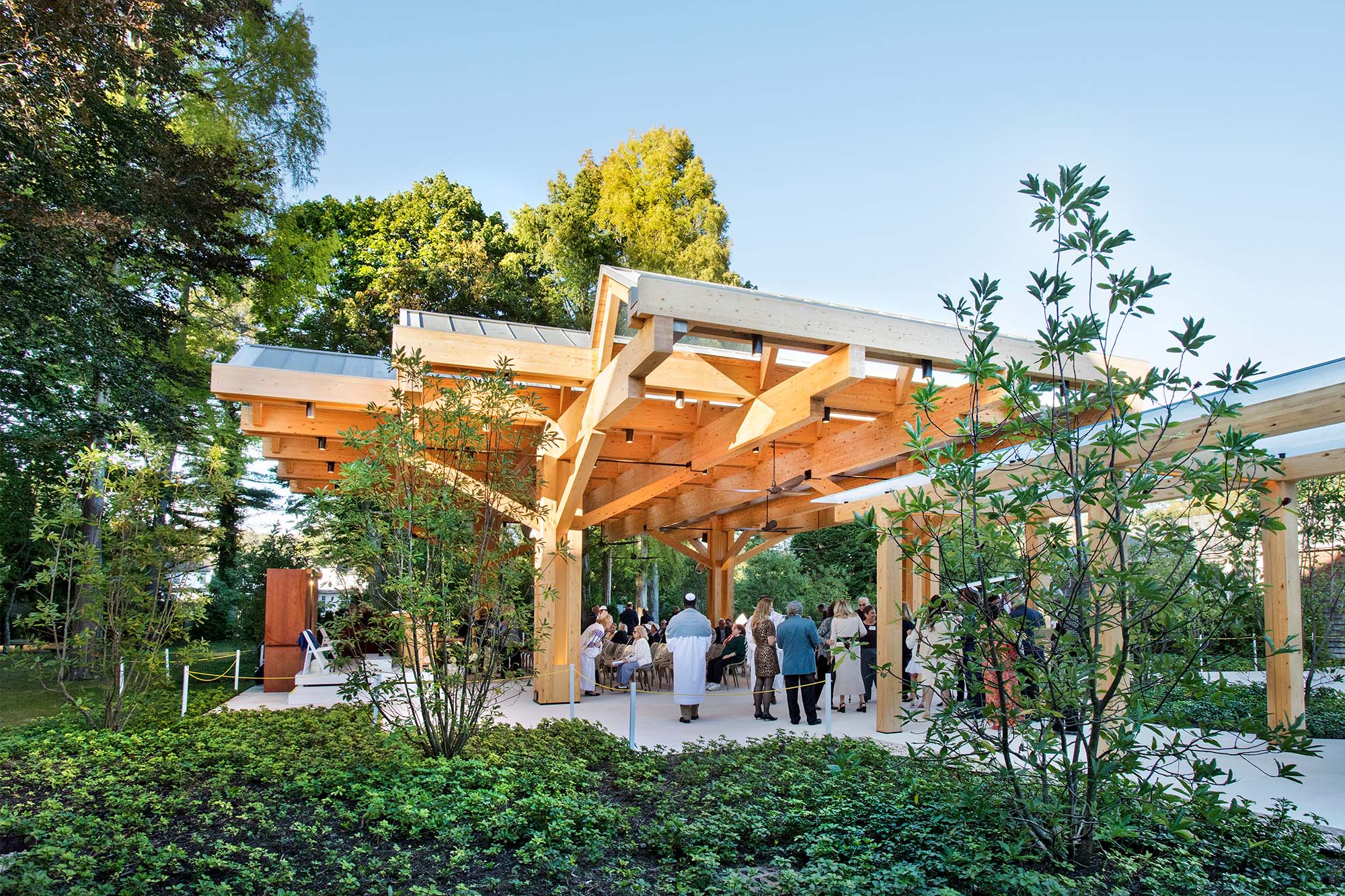
Complementing the beautiful Sanctuary designed by Norman Jaffe in 1985, this timber Pavilion completes the Jewish Center of the Hamptons campus. Like the Sanctuary, the Pavilion comprises a series of slanting roofs and north-facing skylights, allowing for natural light to come into the space below without adding heat or glare concerns. Surrounded by a spectacular grove, the Pavilion is a dramatic venue for outdoor religious observance, performance, contemplation, and celebration.

Complementing the beautiful Sanctuary designed by Norman Jaffe in 1985, this timber Pavilion completes the Jewish Center of the Hamptons campus. Like the Sanctuary, the Pavilion comprises a series of slanting roofs and north-facing skylights, allowing for natural light to come into the space below without adding heat or glare concerns. Surrounded by a spectacular grove, the Pavilion is a dramatic venue for outdoor religious observance, performance, contemplation, and celebration.

The synagogue is named Gates of the Grove because part of Norman Jaffe’s vision was to create, behind the synagogue, a grove of beautiful trees. This outdoor pavilion, nestled in this grove of trees, serves as a natural extension, echoing the beauty of the sanctuary.

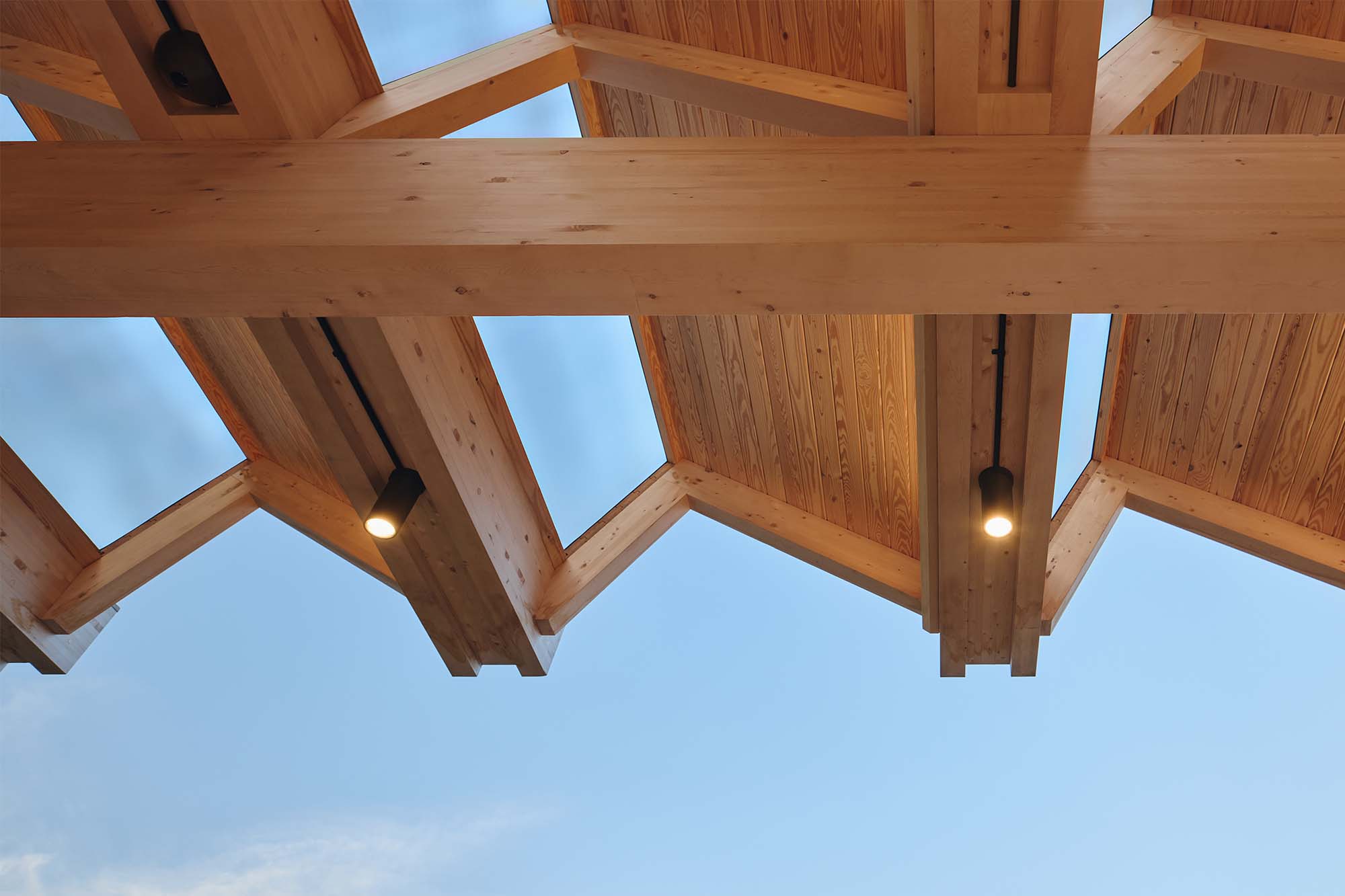
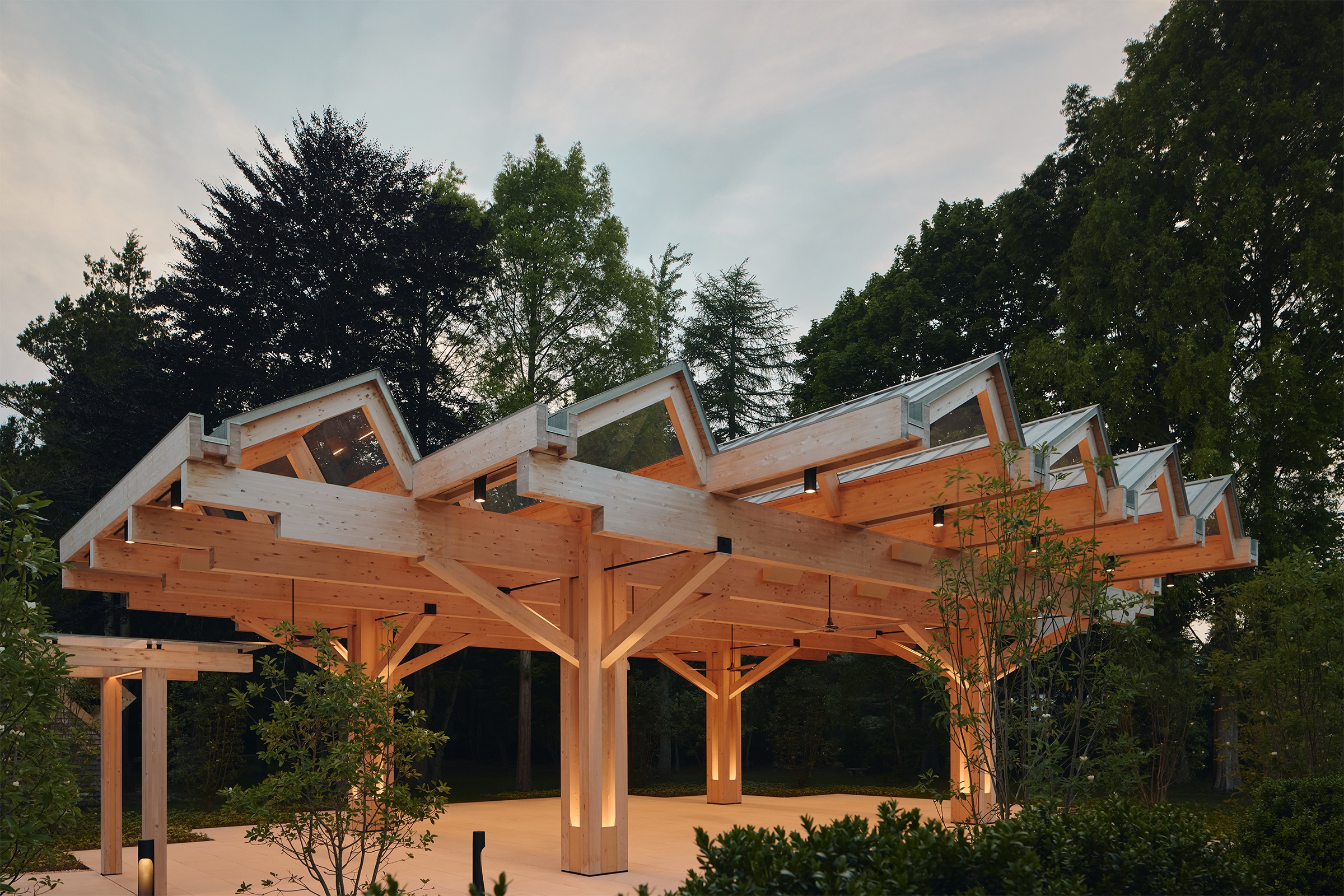
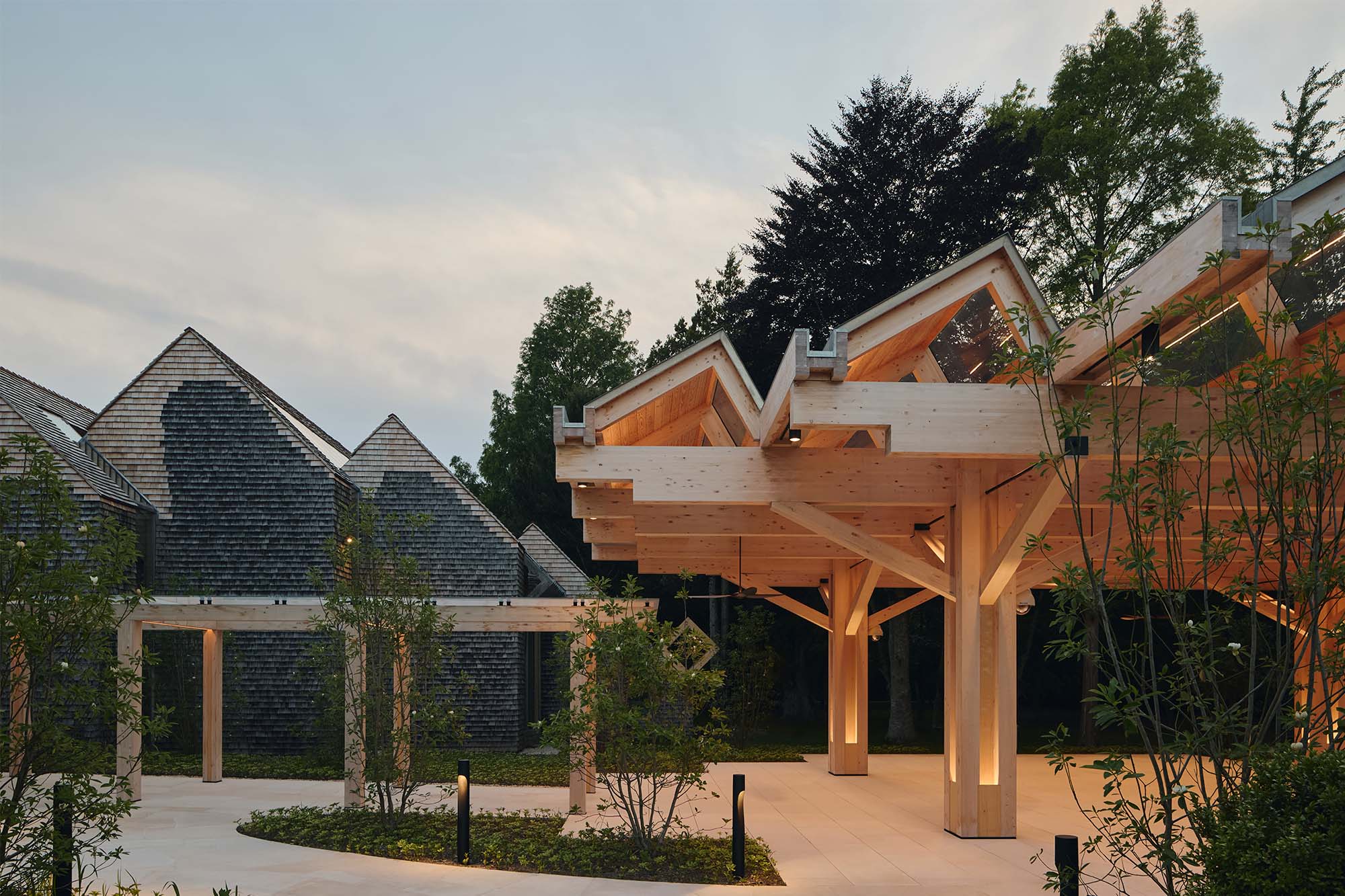
Laminated Alaskan Yellow Cedar members serve as columns, girders, and beams supporting the angled roof monitors. The four columns recall trees–each column a cluster of four laminated members enclosing a space for conduits and roof drainage—with laminated timber ‘branches’ supporting the girders above. The wood was harvested in Alaska, laminated and fabricated in Pennsylvania Dutch Country, and delivered to the site on one truck—erection and assembly took six days. A timber-framed walkway covered in glass creates a minimal, protected transition between the Pavilion and the Sanctuary.
The synagogue is named Gates of the Grove because part of Norman Jaffe’s vision was to create, behind the synagogue, a grove of beautiful trees. This outdoor pavilion, nestled in this grove of trees, serves as a natural extension, echoing the beauty of the sanctuary.

Laminated Alaskan Yellow Cedar members serve as columns, girders, and beams supporting the angled roof monitors. The four columns recall trees–each column a cluster of four laminated members enclosing a space for conduits and roof drainage—with laminated timber ‘branches’ supporting the girders above. The wood was harvested in Alaska, laminated and fabricated in Pennsylvania Dutch Country, and delivered to the site on one truck—erection and assembly took six days. A timber-framed walkway covered in glass creates a minimal, protected transition between the Pavilion and the Sanctuary.
This all-timber pavilion structure with its zinc roofing is designed to have a minimal carbon impact while accentuating a connection to the grove and surrounding nature. Off-site fabrication allowed for minimum construction impact at the site, which was a critical component for the operations of the existing synagogue. The pavilion is designed to float—four footings support the entire roof and carefully designed north-facing skylights provide natural light throughout the day. At night, the pavilion is intentionally lit with dark-sky compliant LED downlights; lighting is placed in the column grooves and under the roof monitors to dematerialize the structure and make it seem that the roof floats above the ground.

This all-timber pavilion structure with its zinc roofing is designed to have a minimal carbon impact while accentuating a connection to the grove and surrounding nature. Off-site fabrication allowed for minimum construction impact at the site, which was a critical component for the operations of the existing synagogue. The pavilion is designed to float—four footings support the entire roof and carefully designed north-facing skylights provide natural light throughout the day. At night, the pavilion is intentionally lit with dark-sky compliant LED downlights; lighting is placed in the column grooves and under the roof monitors to dematerialize the structure and make it seem that the roof floats above the ground.

The Pavilion is a unique architectural intervention of a culturally important religious space, providing much needed additional flexible space for the congregation, all while being both sustainable and beautiful.

The Pavilion is a unique architectural intervention of a culturally important religious space, providing much needed additional flexible space for the congregation, all while being both sustainable and beautiful.

Location
East Hampton, NY
Area
3,500 sf
Clients
Jewish Center of the Hamptons
View Project Facts
Location
East Hampton, NY
Area
3,500 sf
Clients
Jewish Center of the Hamptons
Your browser is out-of-date!

Update your browser to view this website correctly. Update my browser now

×