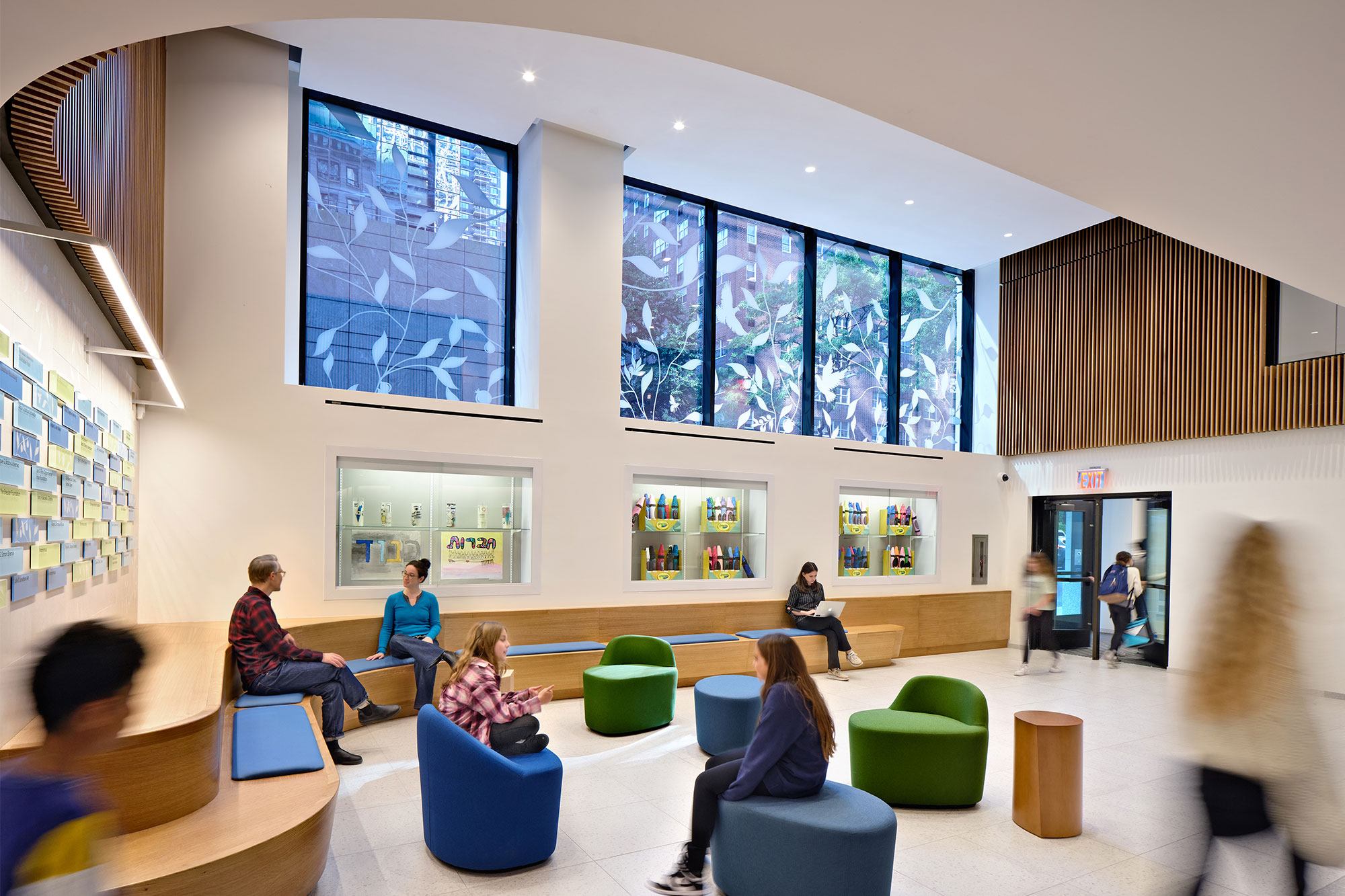
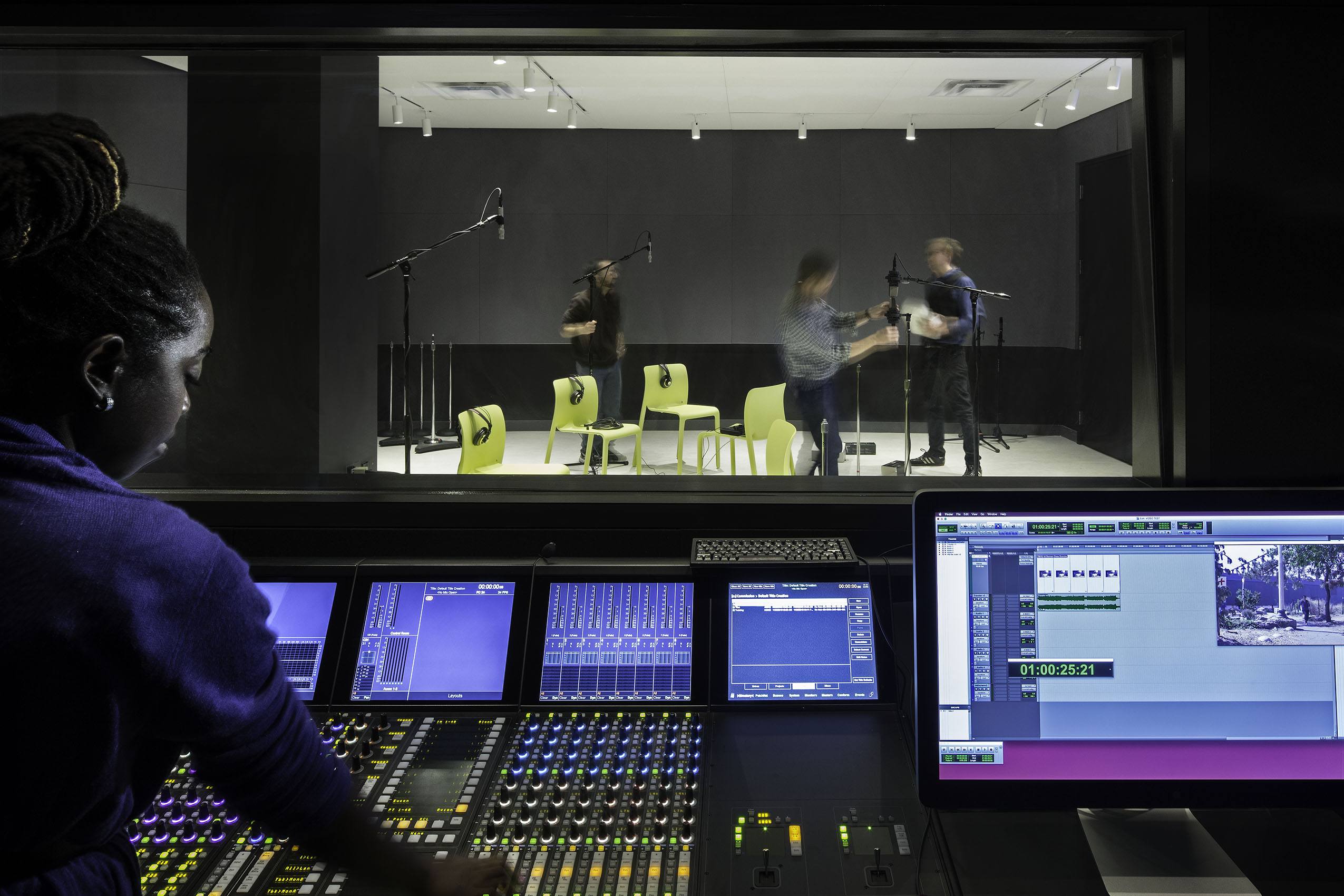
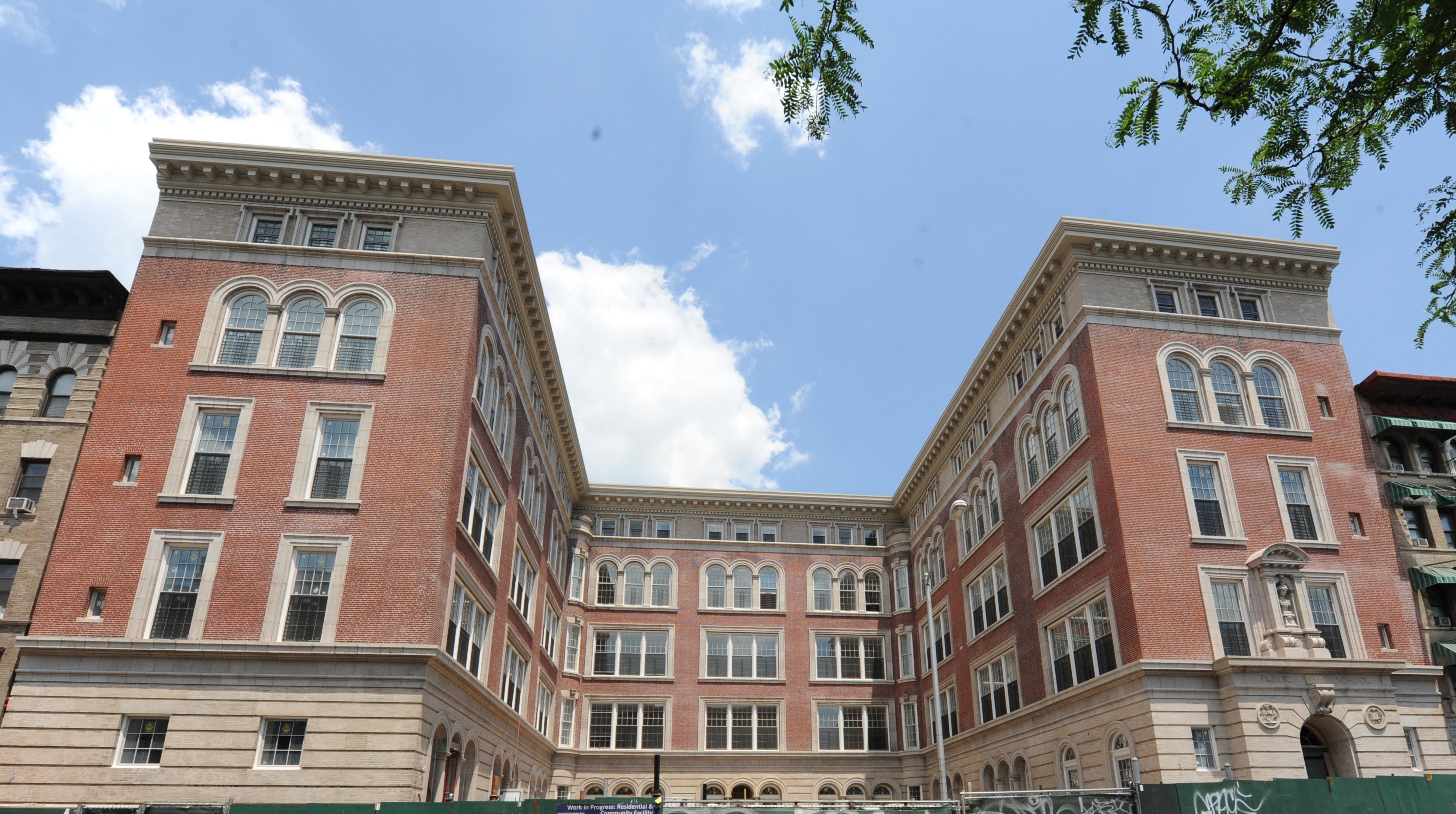
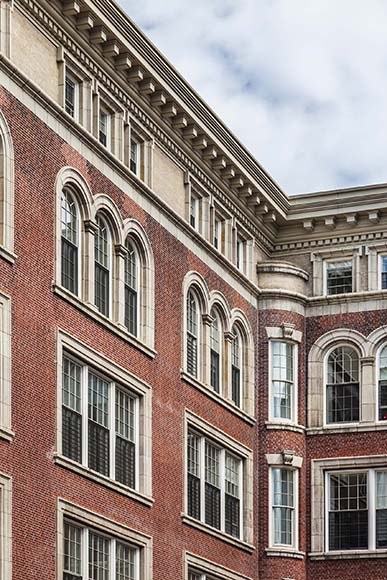
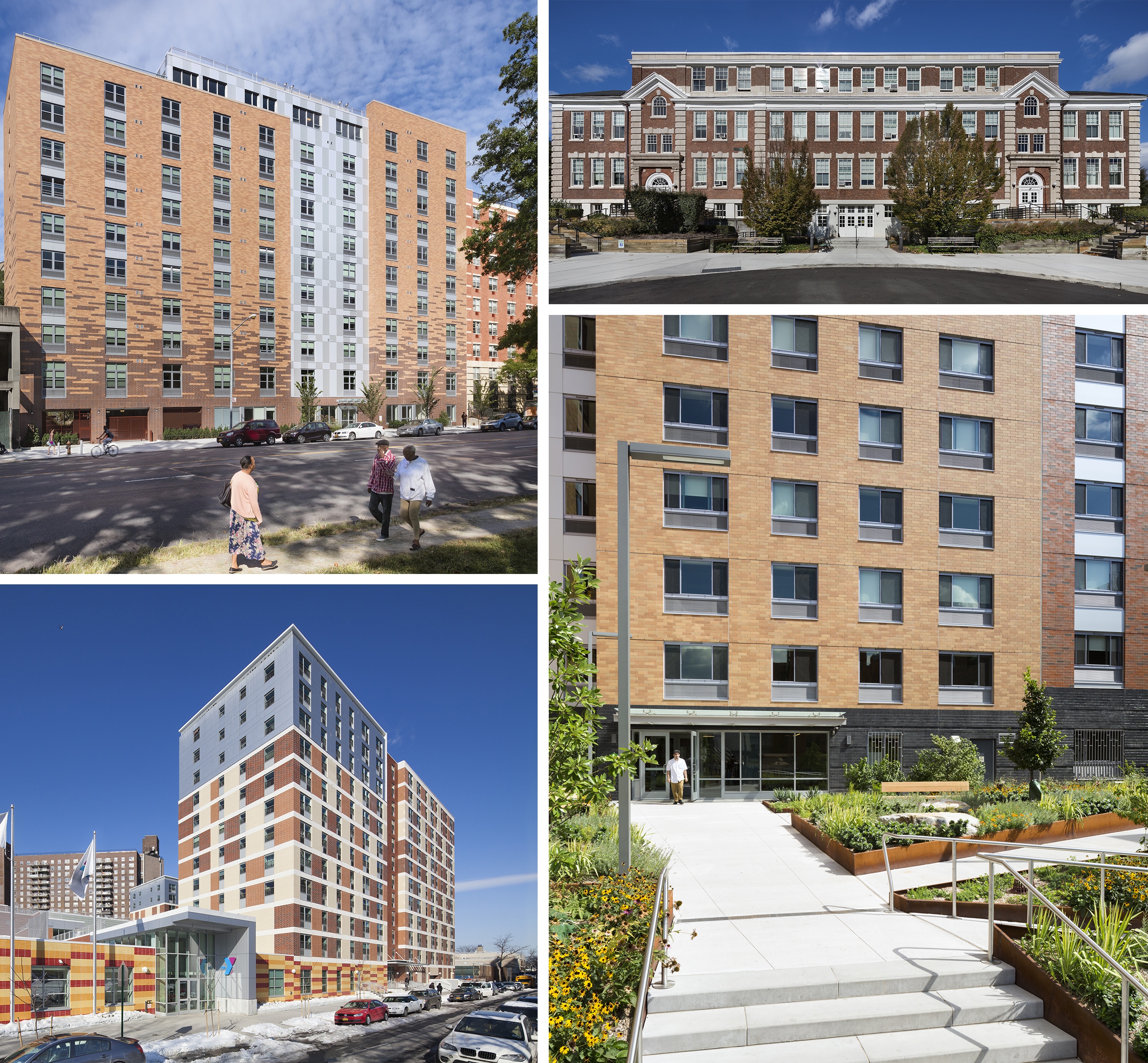
This office-to-school conversation, designed to accommodate The Shefa School’s unique pedagogic model of dual-language, personalizes instruction for K-8 students, and provides an adaptable home where students can grow and thrive. The transformation of an abandoned 1920s office building on Manhattan’s Upper West Side created a vertical campus for elementary and middle school age students with learning disabilities.
The historic building’s 100-year-old framework presented both challenges and opportunities, guiding the design to vertically stack the school’s diverse program across 12 floors. To make the new program work, substantial renovations were needed. A third of each floor was rebuilt to accommodate a new core and elevators, and the two top floors were removed and reconstructed for a new gym and play roof. The terracotta façade and copper cornice were preserved and rebuilt.
By weaving together historic elements with innovative design, Shefa’s new home is more than a school; it is a community anchor that embodies the mission of empowering students to reach their fullest potential. The project demonstrates how architecture can elevate education and inspire a shared sense of purpose.
Congratulations to all the winners!
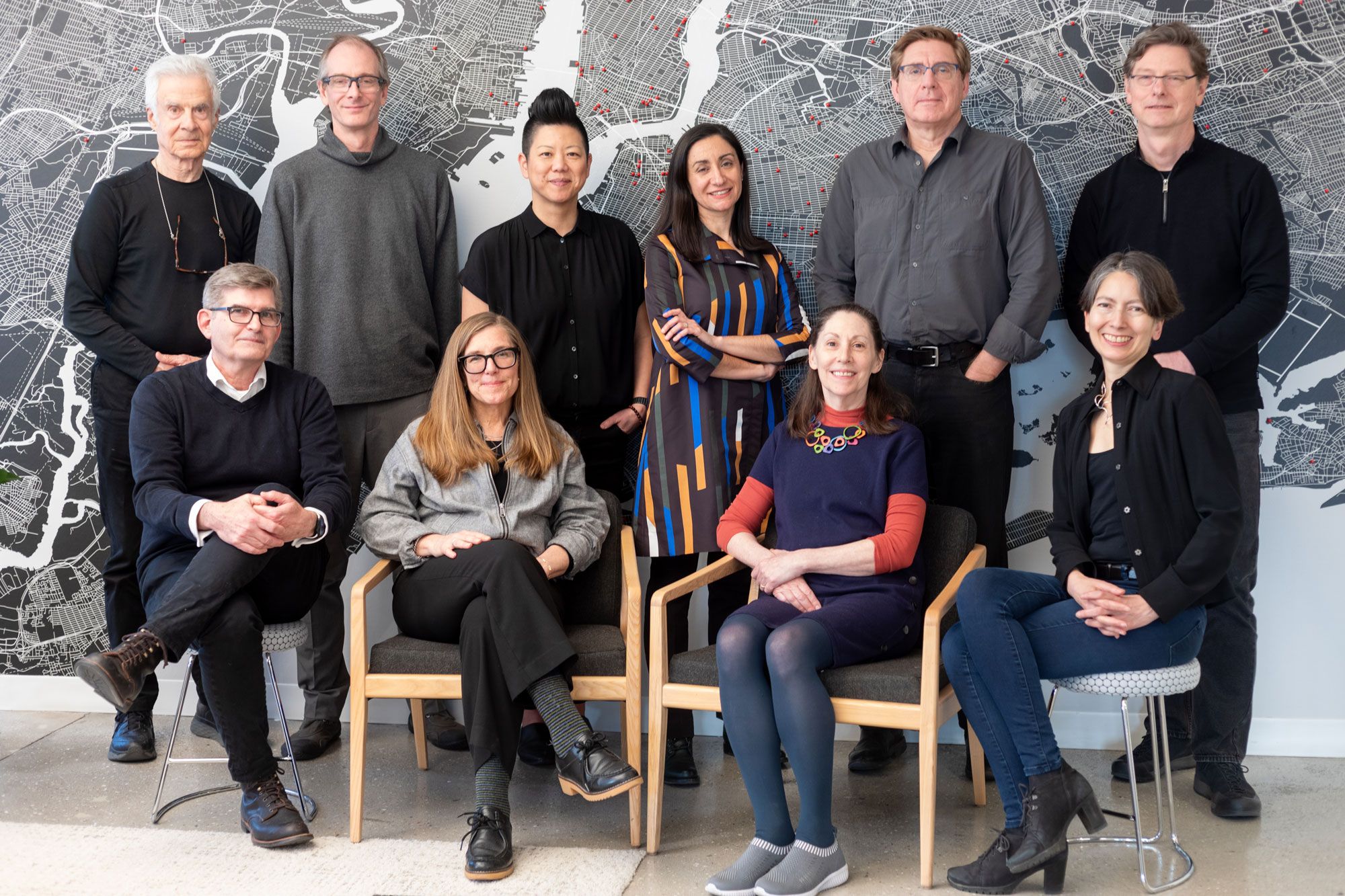
Dattner Architects is a women-owned design firm. This is a milestone for our practice, which was founded 60 years ago. Our long-standing commitment to equity and inclusion has organically fostered women to thrive and achieve at the highest level of leadership. Today the firm is led by 10 partners, half of whom are women; and the women are the majority owners. We are a firm that continues to evolve and advance.
Our core mission is unwavering, and it unites our work and our practice. We proudly take on the planning and design of the region’s most essential projects, creating architecture that enriches the urban experience, transforms environments, and strengthens communities.
Today Dattner Architects is over 100 people, 59% of whom are women, 41% BIPOC, and 17% LGBTQ+ all working together from one office in New York City. A steadfast dedication to our mission, a strong and varied portfolio of that spans sectors, and a thoughtful leadership transition plan allows our 60-year-old practice to continue to remain vital and vibrant—reflecting the diversity and relevancy of our practice.
"Driven to work at the urban scale, I initially sought out Dattner Architects because the firm had designed many of the civic spaces that were formative in my life," notes Gia Maneiro, Principal and Corporate President. "This passion fueled my career here—from junior designer to Principal—supported by the confidence, camaraderie and mentorship that defines the culture of the office. Raising my daughter solidified my commitment to leadership in the future of sustainable public architecture, and I could not be more proud to share in a majority women owned partnership that embodies these values."
Dattner Architects is certified as a WBE with New York City, New York State, the Port Authority of New York and New Jersey, the New York City School Construction Authority, and the City of Philadelphia.
We are honored to announce that The Architect’s Newspaper has selected Dattner Architects for the 2024 Best of Practice Award (XL Firm – Northeast). AN's Best of Practice program seeks to define an expansive meaning of excellence that not only considers the firm’s individual projects, values and culture but also inclusivity, social impact, sustainability, regional relevance, and technological innovation. This recognition highlights our commitment to addressing the complex challenges faced by the architecture industry today and acknowledges the collective efforts of our team.
As a mission-driven, women-owned design firm, we design impactful architecture that responds to the issues of our time. We have proudly taken on the planning and design of the region’s most essential projects, creating architecture that enriches the urban experience, transforms environments, and strengthens communities. Our approach involves integrating sustainable practices and prioritizing projects that serve the broader community, reflecting our dedication to inclusivity and social responsibility.
Dattner Architects has long fostered equity and inclusion, and we have championed employee professional growth and recognition. Our commitment to diversity includes a team of over 100 people, 59% women, 41% BIPOC, and 17% LGBTQ+.
Our innovative buildings have enriched NYC's urban fabric, positively impacting countless New Yorkers. We are humbled to see the warmth, appreciation, and life brought to our projects by those who inhabit, recreate, learn, and work in these buildings.
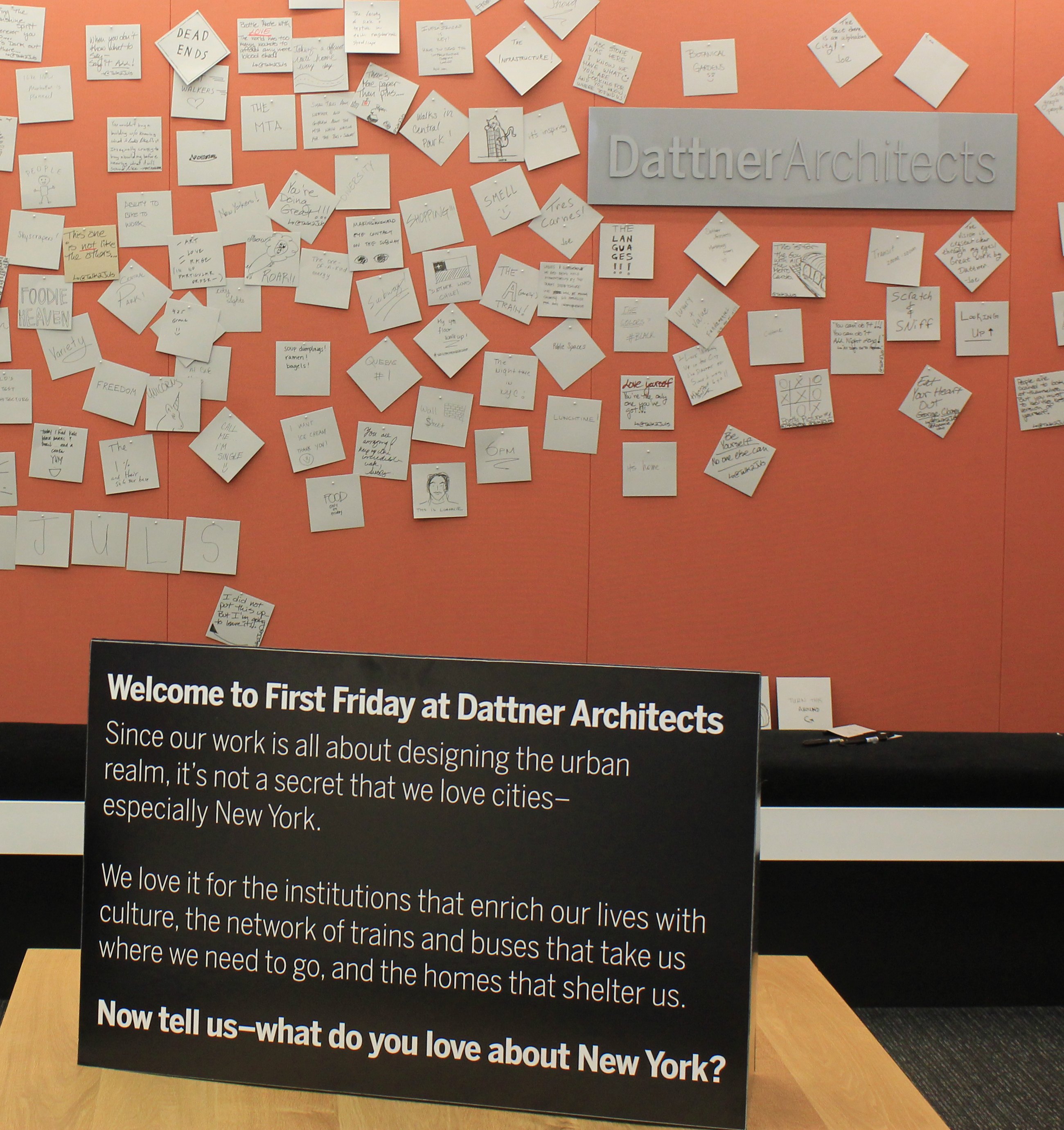
[caption id="attachment_21452" align="alignleft" width="2000"] Architectural League First Friday at Dattner Architects 2024[/caption]
View the full list of winners:
https://www.archpaper.com/2024/06/announcing-the-winners-of-ans-2024-best-of-practice-awards/
Last night, we hosted the 2nd Dattner Architects Gallery opening of 2017. The artistic works of three Dattner employees are now currently featured on the walls of our office. As you walk down the hallway, you will find acrylic and oil paintings (Project Manager, Rocio Acosta), stone sculptures (Associate Principal, Gia Mainiero AIA, LEED AP BD+C), and pottery (Human Resources Manager, Mary Beth Lardaro). During the opening, our artists spoke about their creative pursuits outside of the office, including the motivation behind their chosen craft, and the methods used to create their art. It was great to witness such artistry, and hear how these personal endeavors influence their work here at Dattner. Creativity breeds creativity. We are thankful to Rocio, Gia, and Mary Beth for inspiring us to continue to create! In doing so, we remain steadfast in our mission to improve and sustain communities through our design.
Last night, we hosted the 2nd Dattner Architects Gallery opening of 2017. The artistic works of three Dattner employees are now currently featured on the walls of our office. As you walk down the hallway, you will find acrylic and oil paintings (Project Manager, Rocio Acosta), stone sculptures (Associate Principal, Gia Mainiero AIA, LEED AP BD+C), and pottery (Human Resources Manager, Mary Beth Lardaro). During the opening, our artists spoke about their creative pursuits outside of the office, including the motivation behind their chosen craft, and the methods used to create their art. It was great to witness such artistry, and hear how these personal endeavors influence their work here at Dattner. Creativity breeds creativity. We are thankful to Rocio, Gia, and Mary Beth for inspiring us to continue to create! In doing so, we remain steadfast in our mission to improve and sustain communities through our design.
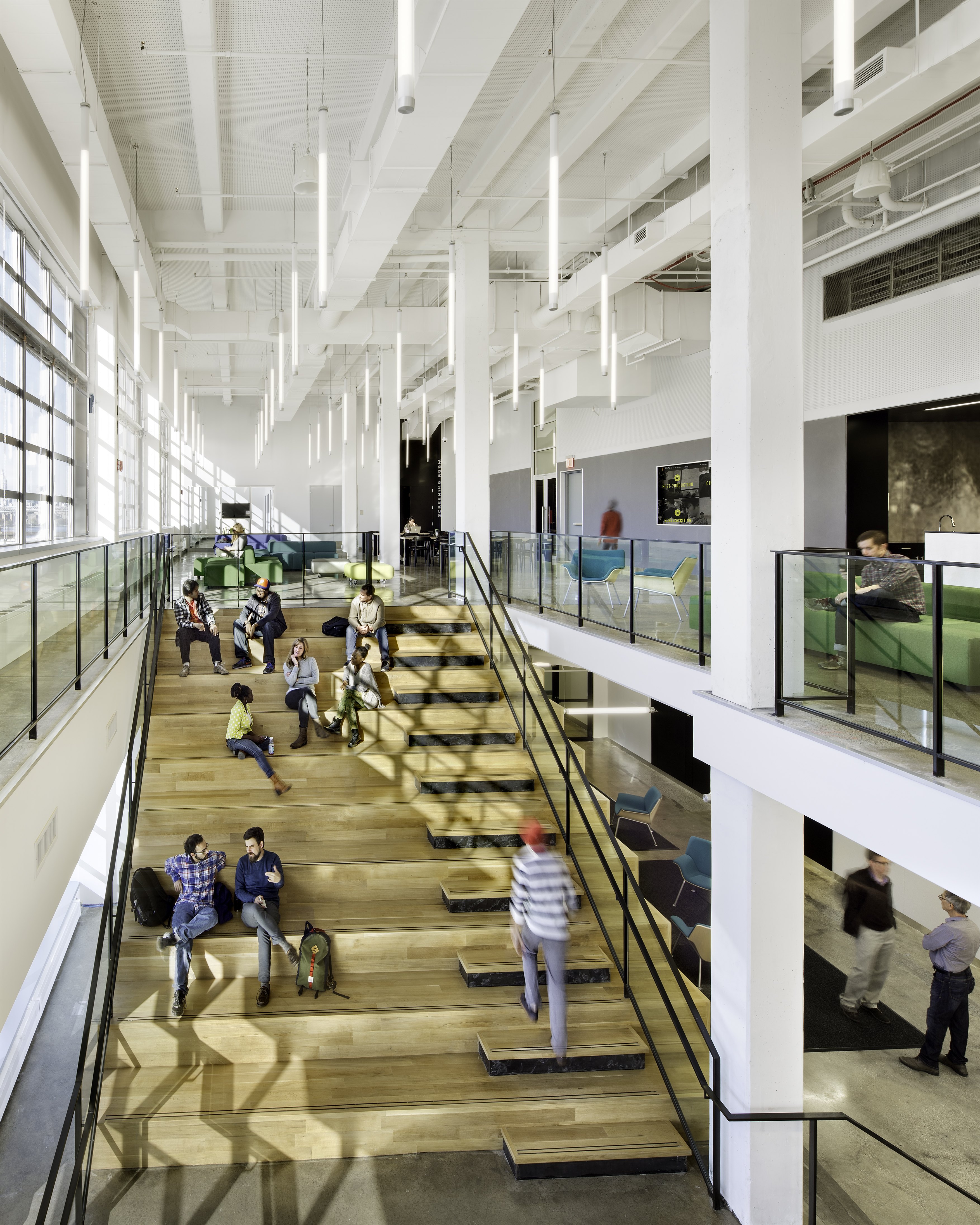
Recently, the New York Times wrote a piece featuring Dattner Architects’ designed CUNY Brooklyn College's Feirstein Graduate School of Cinema. The article discusses the current climate in Hollywood, including the lack of diversity, the challenges behind rebooting the system, and the pivotal role Feirstein and its students are playing in this reboot. Feirstein is under the radar in comparison to other film schools around the country, and part of the school’s mission is to admit “women and minorities whose stories aren't usually told."
In the hallways of Feirstein, change is happening.
* Click images to enlarge.
Recently, the New York Times wrote a piece featuring Dattner Architects’ designed CUNY Brooklyn College's Feirstein Graduate School of Cinema. The article discusses the current climate in Hollywood, including the lack of diversity, the challenges behind rebooting the system, and the pivotal role Feirstein and its students are playing in this reboot. Feirstein is under the radar in comparison to other film schools around the country, and part of the school’s mission is to admit “women and minorities whose stories aren't usually told."
In the hallways of Feirstein, change is happening.
* Click images to enlarge.
On March 16th, Dattner Principals Paul Bauer and John Woelfling will participate in the Sustainability Summit, and the Affordable Housing Summit during the New York Building Expo. Paul will host a talk on sustainability in architecture, while John will take part in a discussion about Passive House building and design. The two-day event, hosted at the Javits Center, will focus on the latest trends and projects as they relate to: Real Estate, Health & Safety, Government Policy, Architecture, Sustainability, Digital Construction, and Infrastructure.
Paul’s Presentation:
Summit: Sustainability
Title: Sustainability in Architecture
Time: March 16, 2017. 11:30am – 11:50pm
Panelists:
– Paul Bauer – Dattner Architects
John’s Panel:
Summit: Residential Construction
Title: Affordable Housing – Meeting Demand
Time: March 16, 2017. 11:25am – 11:50am
Panelists:
– John Woelfling – Dattner Architects
– Mark Ginsberg – Curtis + Ginsberg Architects
– James Lee, Vice President of Construction Management, Grosvenor Construction
– Christopher Long, Founding Partner, Leong Leong
– Peter Bafitis, Principal, RKTB Architects
Registration
On March 16th, Dattner Principals Paul Bauer and John Woelfling will participate in the Sustainability Summit, and the Affordable Housing Summit during the New York Building Expo. Paul will host a talk on sustainability in architecture, while John will take part in a discussion about Passive House building and design. The two-day event, hosted at the Javits Center, will focus on the latest trends and projects as they relate to: Real Estate, Health & Safety, Government Policy, Architecture, Sustainability, Digital Construction, and Infrastructure.
Paul’s Presentation:
Summit: Sustainability
Title: Sustainability in Architecture
Time: March 16, 2017. 11:30am – 11:50pm
Panelists:
– Paul Bauer – Dattner Architects
John’s Panel:
Summit: Residential Construction
Title: Affordable Housing – Meeting Demand
Time: March 16, 2017. 11:25am – 11:50am
Panelists:
– John Woelfling – Dattner Architects
– Mark Ginsberg – Curtis + Ginsberg Architects
– James Lee, Vice President of Construction Management, Grosvenor Construction
– Christopher Long, Founding Partner, Leong Leong
– Peter Bafitis, Principal, RKTB Architects
Registration
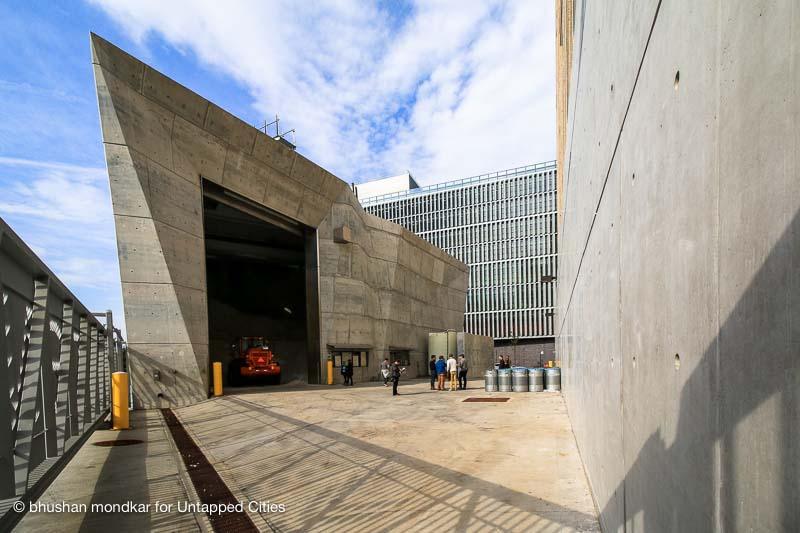
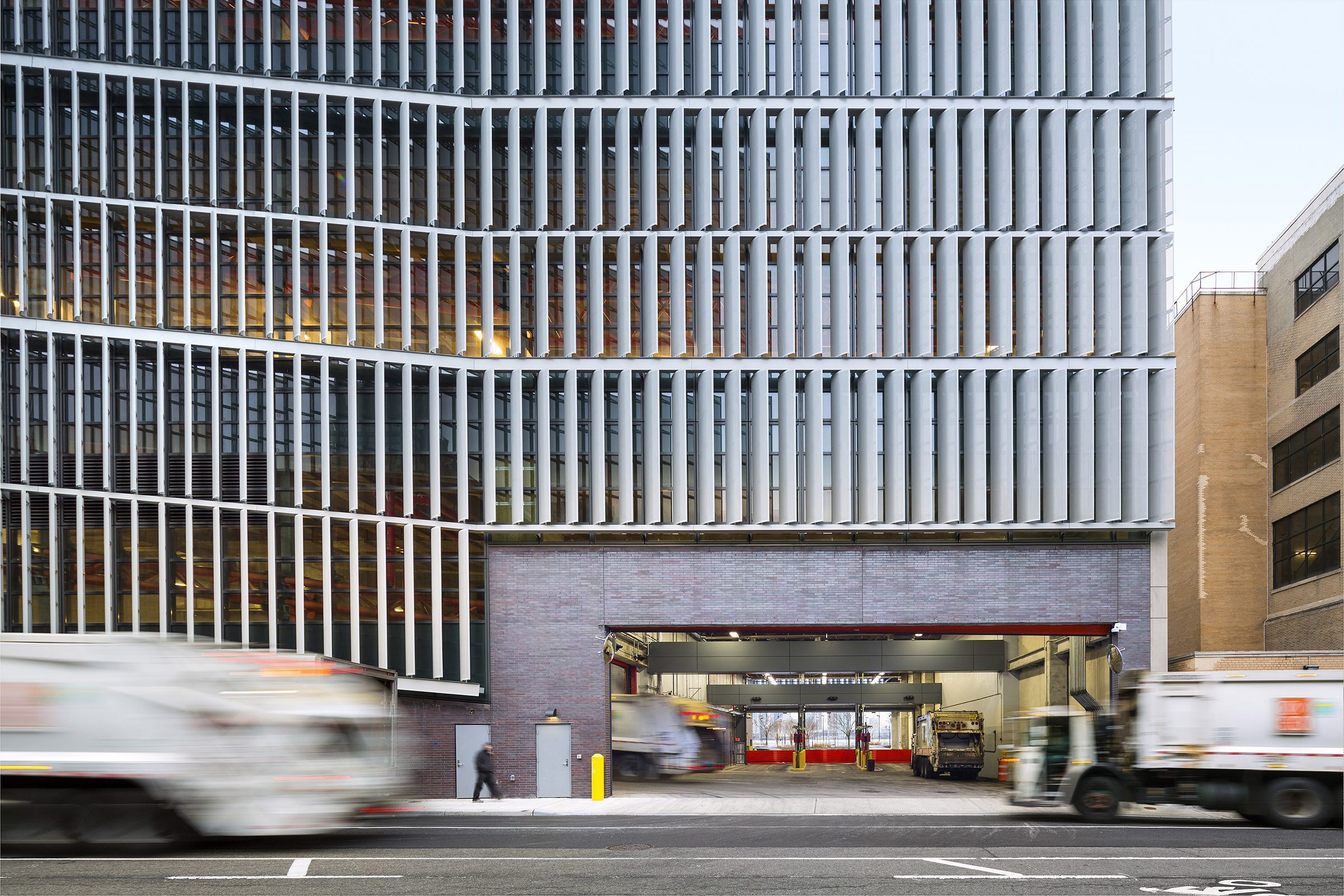
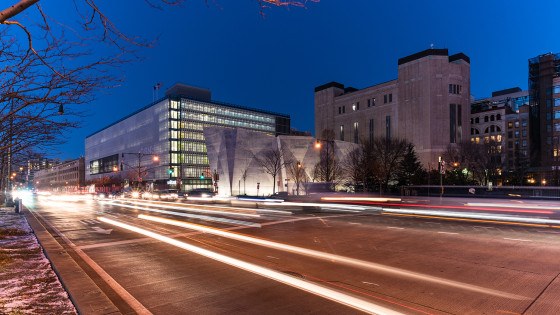
Dattner Architects' widely-acclaimed infrastructure projects are in the news again! The folks behind Untapped Cities’ recently visited the Manhattan Districts 1/2/5 Garage and Spring Street Salt Shed. With the goal of uncovering some of New York City’s most unique places and stories, Untapped Cities gives readers a glimpse into the sanitation center that provides “innovative, sound functionality behind an architecturally modern façade.”
Dattner Architects' widely-acclaimed infrastructure projects are in the news again! The folks behind Untapped Cities’ recently visited the Manhattan Districts 1/2/5 Garage and Spring Street Salt Shed. With the goal of uncovering some of New York City’s most unique places and stories, Untapped Cities gives readers a glimpse into the sanitation center that provides “innovative, sound functionality behind an architecturally modern façade.”
On March 3rd, guests were welcomed to Dattner Architects’ office to see some of our high-profile and award-winning work. An invitation and custom map guided visitors to food, drinks and project exhibits. We were thrilled to see the office quickly fill up with people who all share a similar passion for architecture and urban environments.
Over 100 guests wrote what they loved about New York City and posted it on our “Declaration Wall.” A wide range of statements were declared from favorite neighborhoods, to best NYC foods, and to type of buildings. The “Archive,” showcasing Richard Dattner’s historical projects, was a huge highlight of the night. A big thank you to the Architectural League for allowing us to take part in the First Friday Series!
*Click to enlarge images
On March 3rd, guests were welcomed to Dattner Architects’ office to see some of our high-profile and award-winning work. An invitation and custom map guided visitors to food, drinks and project exhibits. We were thrilled to see the office quickly fill up with people who all share a similar passion for architecture and urban environments.
Over 100 guests wrote what they loved about New York City and posted it on our “Declaration Wall.” A wide range of statements were declared from favorite neighborhoods, to best NYC foods, and to type of buildings. The “Archive,” showcasing Richard Dattner’s historical projects, was a huge highlight of the night. A big thank you to the Architectural League for allowing us to take part in the First Friday Series!
*Click to enlarge images
On the evening of Friday, March 3rd, as part of the Architectural League’s highly-acclaimed First Friday Series, we will open our office up to clients and industry friends to enjoy drinks, conversation, and a behind the scenes look at our ongoing and award-winning work. The League’s First Fridays is a monthly series which provides opportunities for League members to visit the offices of leading design practices to see work on the boards and learn more about the offices’ organization and design processes. As part of the experience, we plan to exhibit several innovative, high profile projects, an “Archive” of 50+ years of our work, and a special interactive experience to reconnect each guest to the city we all love.
*Please note that advanced is required through the Architectural League.
On the evening of Friday, March 3rd, as part of the Architectural League’s highly-acclaimed First Friday Series, we will open our office up to clients and industry friends to enjoy drinks, conversation, and a behind the scenes look at our ongoing and award-winning work. The League’s First Fridays is a monthly series which provides opportunities for League members to visit the offices of leading design practices to see work on the boards and learn more about the offices’ organization and design processes. As part of the experience, we plan to exhibit several innovative, high profile projects, an “Archive” of 50+ years of our work, and a special interactive experience to reconnect each guest to the city we all love.
*Please note that advanced is required through the Architectural League.
On March 9th, the Center for Architecture is hosting the day-long 2017 Universal Design Conference, a multi-disciplined gathering of educators, product and service innovators, built environment experts, decision makers, and procurement officials interested in sharing knowledge and exploring innovative applications of universal design.
Focusing on sustainability, resilient communities, and accessibility, participants will explore leading universal design trends such as community resiliency, aging in place, and livable communities through 20-minute UDx Talks. Participants will hear from leading industry experts, and learn about examples of excellence from companies and communities showcasing the principles of universal design.
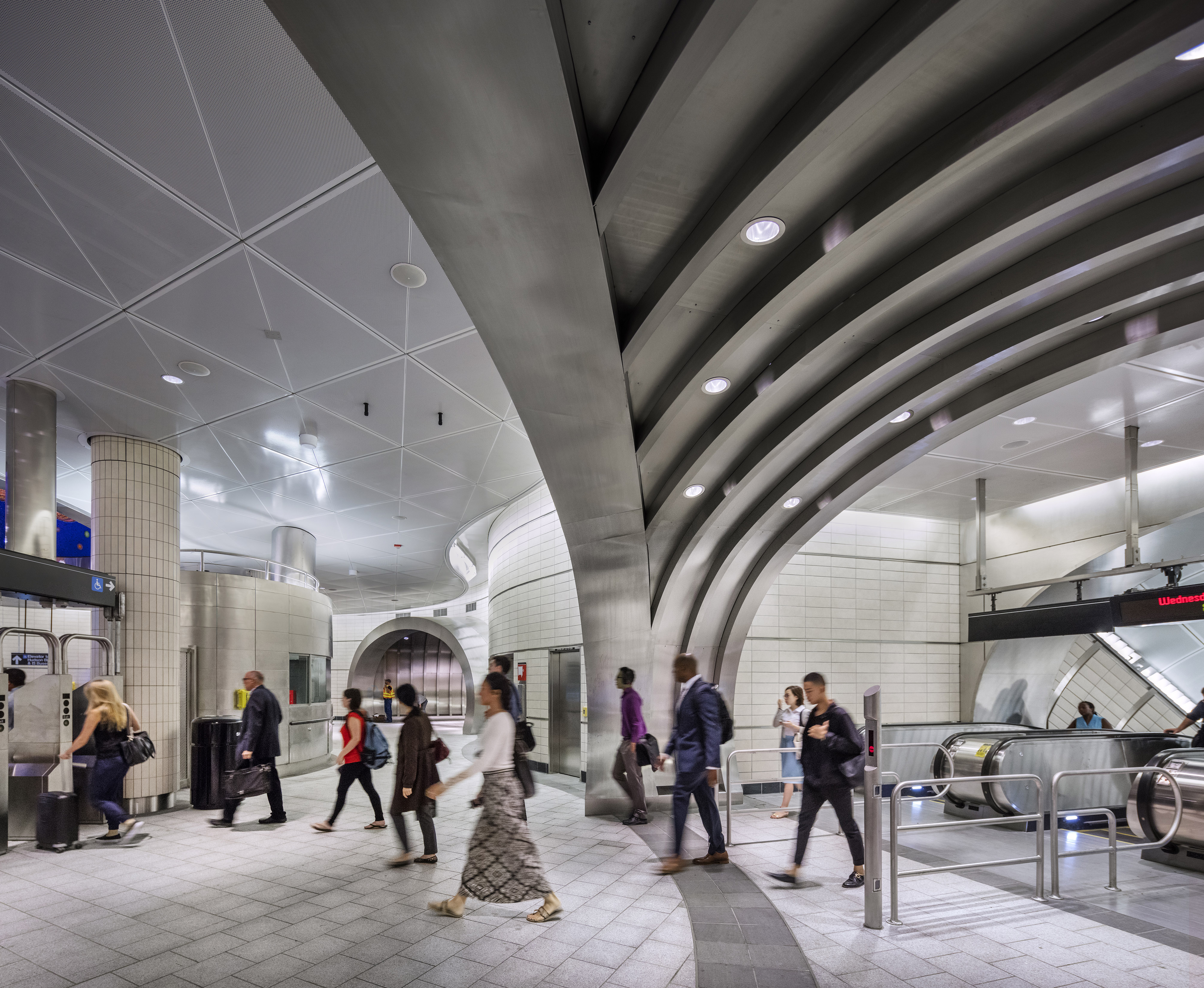
Among those experts, Dattner Architects' Principal, Beth Greenberg FAIA, will present how four Universal Design Principles • Equitable Use, Flexibility of Use, Simple, Intuitive Use, and Perceptible Information • are incorporated into the New 34 Street - Hudson Yards Station project - the first new subway station in the NYC Transit system in over 25 years.
Check Out the Full Schedule
To Register, please visit the Conference Website
On March 9th, the Center for Architecture is hosting the day-long 2017 Universal Design Conference, a multi-disciplined gathering of educators, product and service innovators, built environment experts, decision makers, and procurement officials interested in sharing knowledge and exploring innovative applications of universal design.
Focusing on sustainability, resilient communities, and accessibility, participants will explore leading universal design trends such as community resiliency, aging in place, and livable communities through 20-minute UDx Talks. Participants will hear from leading industry experts, and learn about examples of excellence from companies and communities showcasing the principles of universal design.
Among those experts, Dattner Architects' Principal, Beth Greenberg FAIA, will present how four Universal Design Principles • Equitable Use, Flexibility of Use, Simple, Intuitive Use, and Perceptible Information • are incorporated into the New 34 Street - Hudson Yards Station project - the first new subway station in the NYC Transit system in over 25 years.
Check Out the Full Schedule
To Register, please visit the Conference Website
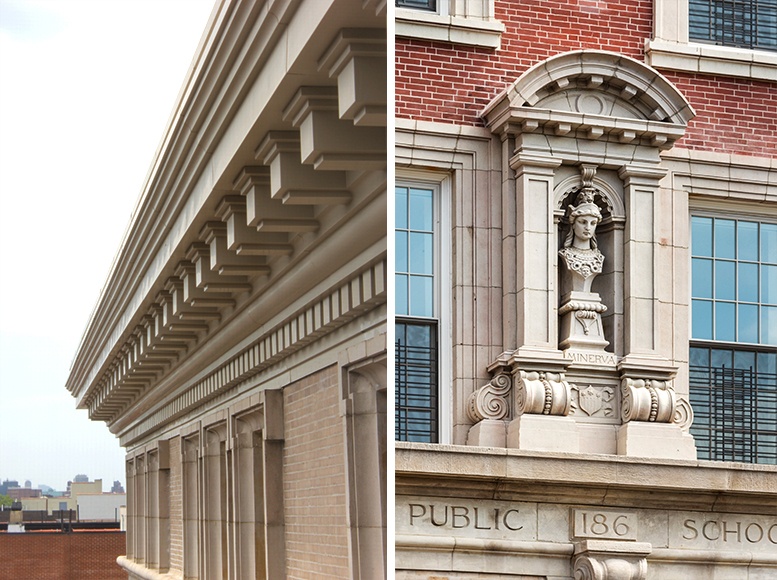
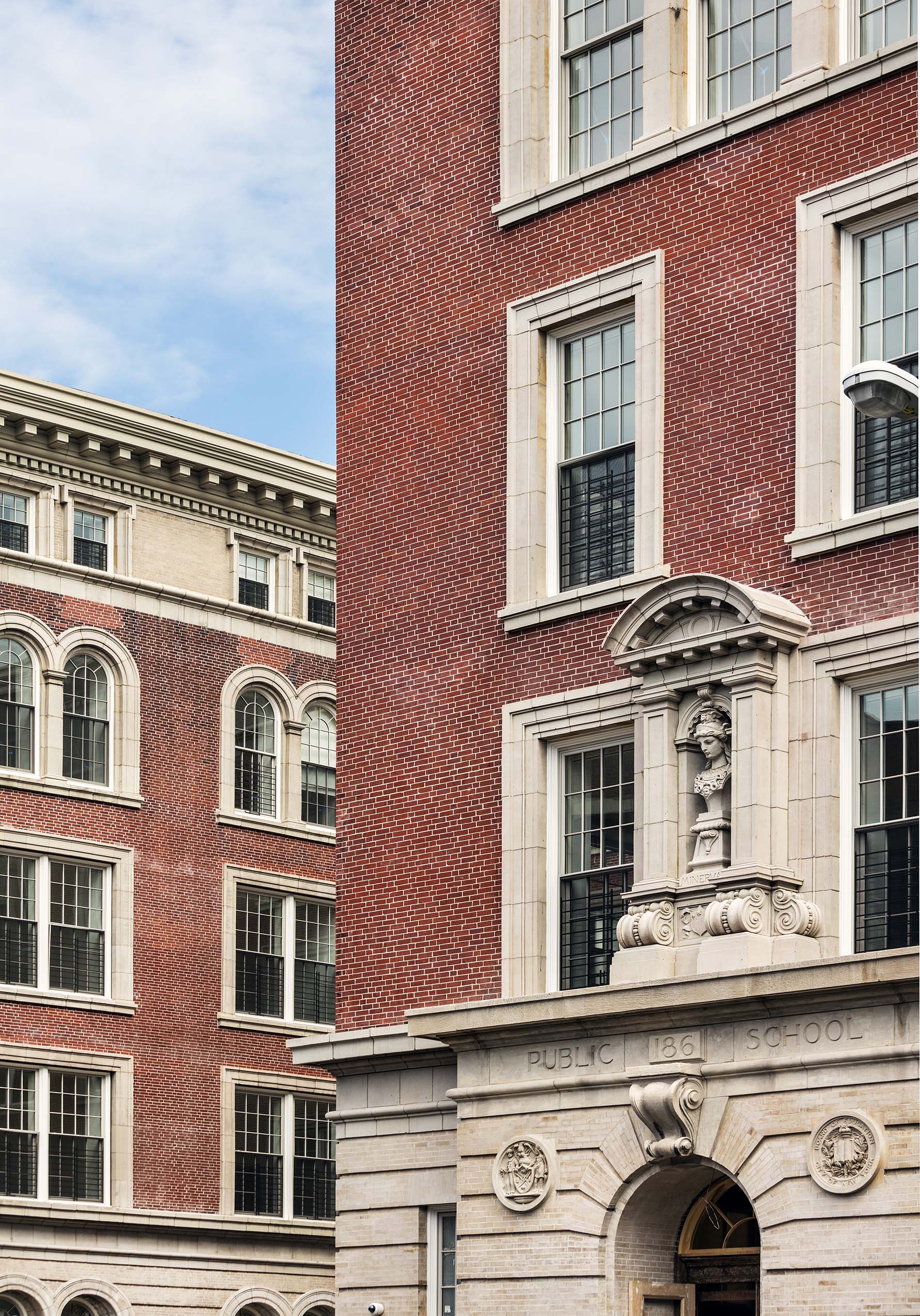
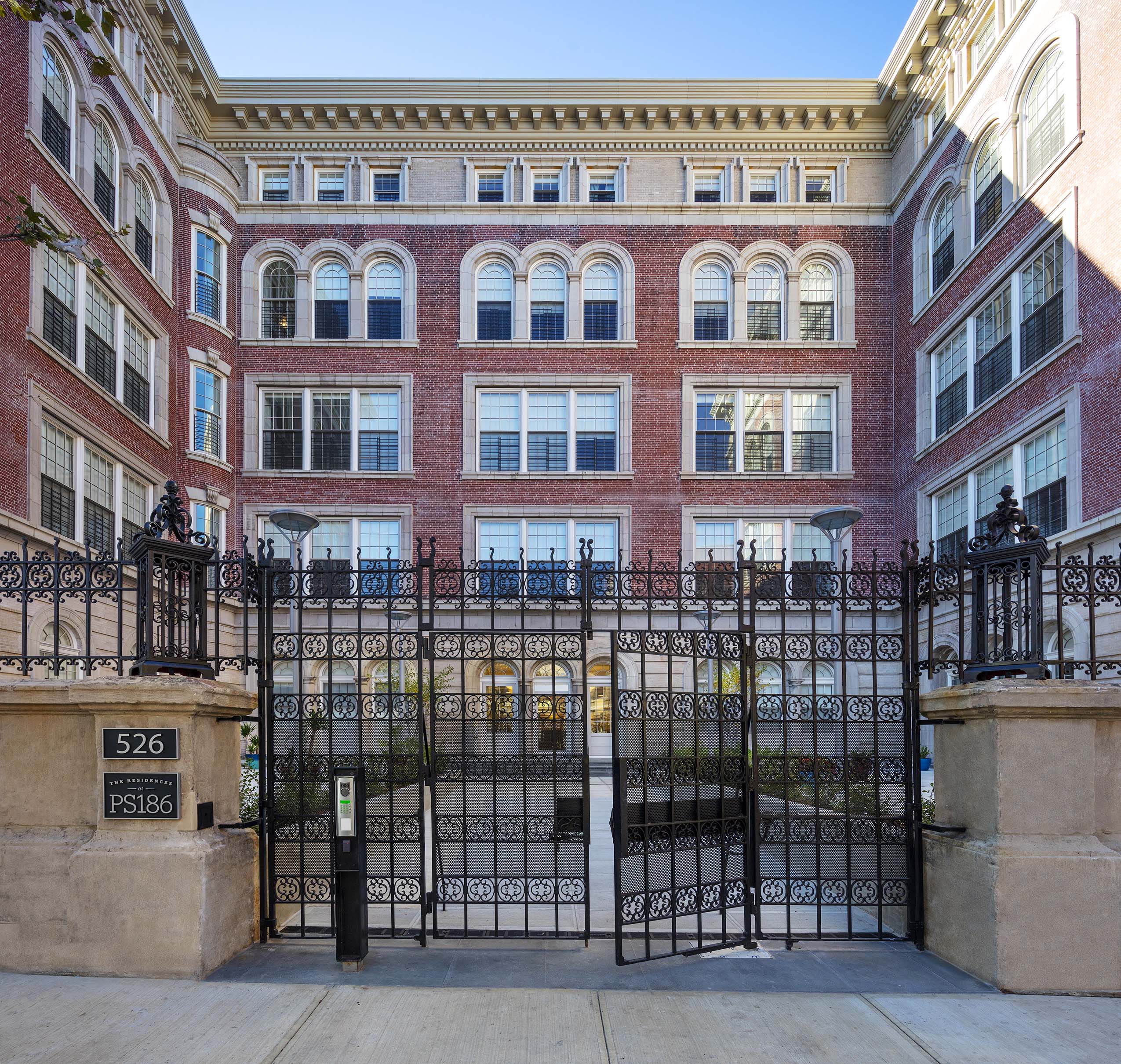
Dattner Architects' The Residences at PS 186 has been awarded the Lucy B. Moses Award by the The New York Landmarks Conservancy, the Conservancy’s highest honors for excellence in preservation. Opening last fall, this project represents the commitment by the design team and the community to preserve a significant piece of our city's history. Originally built as a public school, the building sat empty for decades, until our clients' tenacity led to its transformation. It now provides affordable housing and a Boys & Girls Club for this Harlem neighborhood.
The coveted awards are named for Lucy G. Moses, a dedicated New Yorker whose generosity benefited the City for more than 50 years. The Awards have recognized over 275 individuals, organizations, and building owners for their extraordinary contributions to the City. The Conservancy is grateful for the generous support of the Henry and Lucy Moses Fund, which makes the Awards possible.
The New York Landmarks Conservancy has led the effort to preserve and protect New York City’s architectural legacy for over 40 years. Since its founding, the Conservancy has loaned and granted more than $40 million, which has leveraged more than $1 billion in some 2,000 restoration projects throughout New York, revitalizing communities, providing economic stimulus and supporting local jobs. The Conservancy has also offered countless hours of pro bono technical advice to building owners, both nonprofit organizations and individuals. The Conservancy’s work across the City and State protects New York’s distinctive architectural heritage for residents and visitors alike today, and for future generations. For more information, please visit www.nylandmarks.org.
Dattner Architects' The Residences at PS 186 has been awarded the Lucy B. Moses Award by the The New York Landmarks Conservancy, the Conservancy’s highest honors for excellence in preservation. Opening last fall, this project represents the commitment by the design team and the community to preserve a significant piece of our city's history. Originally built as a public school, the building sat empty for decades, until our clients' tenacity led to its transformation. It now provides affordable housing and a Boys & Girls Club for this Harlem neighborhood.
The coveted awards are named for Lucy G. Moses, a dedicated New Yorker whose generosity benefited the City for more than 50 years. The Awards have recognized over 275 individuals, organizations, and building owners for their extraordinary contributions to the City. The Conservancy is grateful for the generous support of the Henry and Lucy Moses Fund, which makes the Awards possible.
The New York Landmarks Conservancy has led the effort to preserve and protect New York City’s architectural legacy for over 40 years. Since its founding, the Conservancy has loaned and granted more than $40 million, which has leveraged more than $1 billion in some 2,000 restoration projects throughout New York, revitalizing communities, providing economic stimulus and supporting local jobs. The Conservancy has also offered countless hours of pro bono technical advice to building owners, both nonprofit organizations and individuals. The Conservancy’s work across the City and State protects New York’s distinctive architectural heritage for residents and visitors alike today, and for future generations. For more information, please visit www.nylandmarks.org.
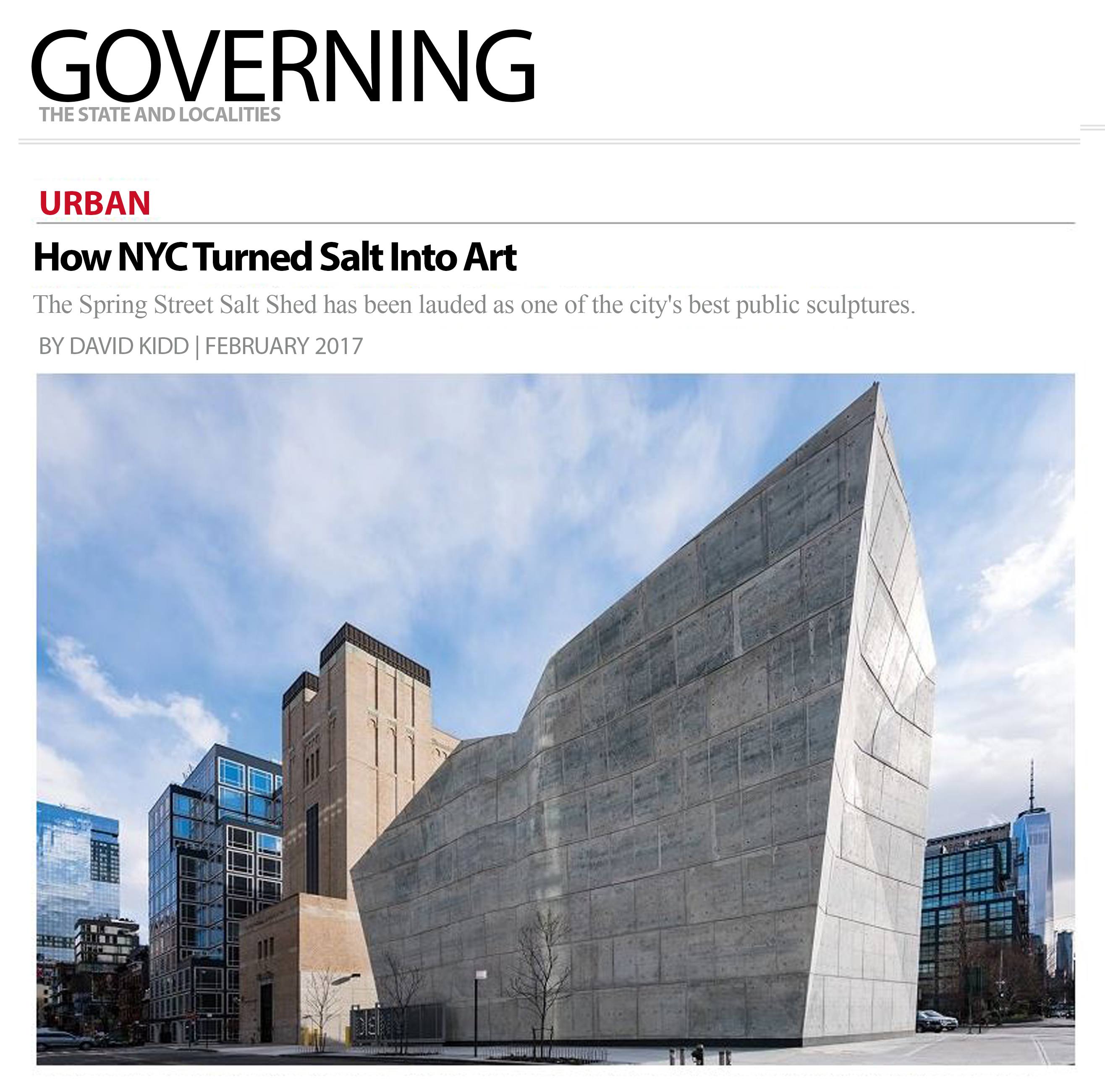
Once again our Salt Shed is lauded as a work of art. The national publication, GOVERNING, offers a brief but impactful article revealing to the nation how public infrastructure projects are not only essential to the cities in which we live, but also have the ability to enhance neighborhoods. Known for providing nonpartisan news, insight, and analysis on such issues as economic development, energy, the environment, and technology, we are thrilled GOVERNING has recognized our widely acclaimed project as “as one of the city’s best public sculptures.”
Once again our Salt Shed is lauded as a work of art. The national publication, GOVERNING, offers a brief but impactful article revealing to the nation how public infrastructure projects are not only essential to the cities in which we live, but also have the ability to enhance neighborhoods. Known for providing nonpartisan news, insight, and analysis on such issues as economic development, energy, the environment, and technology, we are thrilled GOVERNING has recognized our widely acclaimed project as “as one of the city’s best public sculptures.”
Of the 700 entries in 20 categories across 10 Regions, the Number 7 Subway Line Extension, designed by WSP|Parsons Brinckerhoff with Dattner Architects as the lead architects, won Best of the Best Airport/Transit Project! A culmination of a nearly year-long effort by ENR and industry judges, we are honored to have our project identified as “the pinnacle of design and construction achievement” across the entire country.
The projects will be featured in more depth in the March 2017 issue of ENR. http://nas/content/live/dattnerdev.enr.com/articles/41543-best-of-the-best-projects-2016 The March issue will also reveal the ENR editors’ choice of Project of the Year.
The project teams will be honored at the Award of Excellence gala dinner at the New York Hilton Midtown on April 13, and award plaques will be presented to the project teams at a breakfast ceremony on April 14. For more information, visit www.enrawardofexcellence.com/.
Of the 700 entries in 20 categories across 10 Regions, the Number 7 Subway Line Extension, designed by WSP|Parsons Brinckerhoff with Dattner Architects as the lead architects, won Best of the Best Airport/Transit Project! A culmination of a nearly year-long effort by ENR and industry judges, we are honored to have our project identified as “the pinnacle of design and construction achievement” across the entire country.
The projects will be featured in more depth in the March 2017 issue of ENR. http://nas/content/live/dattnerdev.enr.com/articles/41543-best-of-the-best-projects-2016 The March issue will also reveal the ENR editors’ choice of Project of the Year.
The project teams will be honored at the Award of Excellence gala dinner at the New York Hilton Midtown on April 13, and award plaques will be presented to the project teams at a breakfast ceremony on April 14. For more information, visit www.enrawardofexcellence.com/.
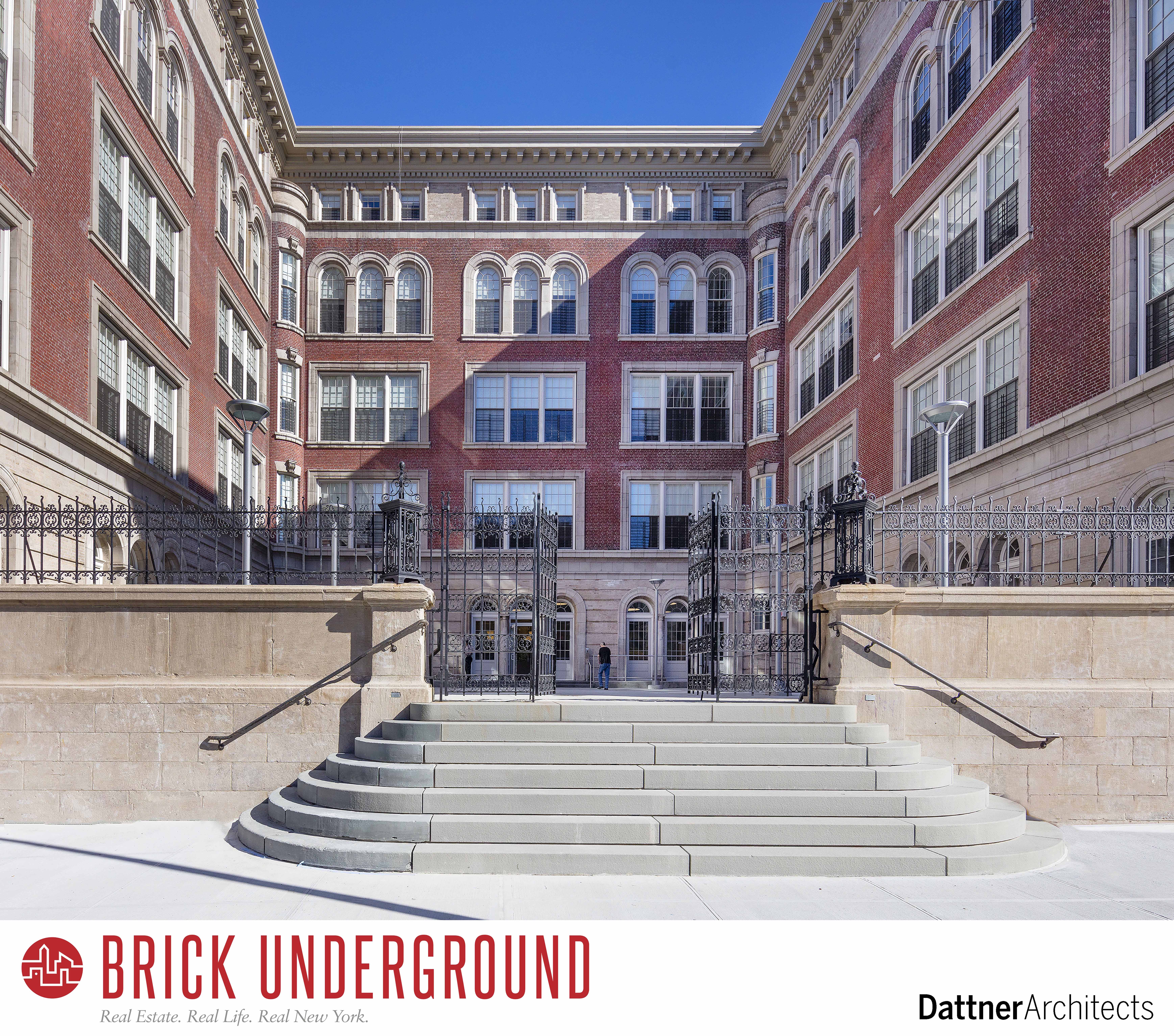
Brick Underground’s recent article “The Most Interesting Additions to NYC’s Skyline – and a look ahead at what’s to come” shares insight on notable housing projects that were new to the market last year, projects to look forward to this year, and the best of in adaptive re-use. Dattner Architects is thrilled to have our Residences at P.S. 186, which opened just last fall, featured as “2016’s best adaptive re-use residence”!
Brick Underground’s recent article “The Most Interesting Additions to NYC’s Skyline – and a look ahead at what’s to come” shares insight on notable housing projects that were new to the market last year, projects to look forward to this year, and the best of in adaptive re-use. Dattner Architects is thrilled to have our Residences at P.S. 186, which opened just last fall, featured as “2016’s best adaptive re-use residence”!
On February 9th, Dattner Architects’ Principal Jeffrey Dugan will be speaking alongside over 30 other representatives from across the Construction & Development industries at the third annual Anchin Construction & Development Forum. The key themes for this year’s forum include: The development pipeline beyond 2017, redevelopment activity, construction financing challenges, innovations in technology, engineering and design, a special session on real estate public-private partnerships, as well as a series of special talks on key projects and innovations.
The Panel - It’s Complicated: Public-Private Relationships on Transformative Developments & Infrastructure
Jeffrey Dugan AIA, Principal - Dattner Architects
Paul Monte, Co-Manageing Partner of Peckar & Abramson's New York Office
Michael Meyer, President of F&T Group
Michael Horodniceanu, President, MTA Capital Construction
Ronnie Hakim, President, NYC Transit
Stewart Steeves, CEO, LaGuardia Gateway Partners
Registration
February 9, 2017
8AM-4PM
TKP New York Conference Center
On February 9th, Dattner Architects’ Principal Jeffrey Dugan will be speaking alongside over 30 other representatives from across the Construction & Development industries at the third annual Anchin Construction & Development Forum. The key themes for this year’s forum include: The development pipeline beyond 2017, redevelopment activity, construction financing challenges, innovations in technology, engineering and design, a special session on real estate public-private partnerships, as well as a series of special talks on key projects and innovations.
The Panel - It’s Complicated: Public-Private Relationships on Transformative Developments & Infrastructure
Jeffrey Dugan AIA, Principal - Dattner Architects
Paul Monte, Co-Manageing Partner of Peckar & Abramson's New York Office
Michael Meyer, President of F&T Group
Michael Horodniceanu, President, MTA Capital Construction
Ronnie Hakim, President, NYC Transit
Stewart Steeves, CEO, LaGuardia Gateway Partners
Registration
February 9, 2017
8AM-4PM
TKP New York Conference Center
Kicking off 2017, Architectural Record’s Top Ten list commemorates the many highs and lows of the last “rollercoaster year” by featuring ten of the most talked about and impactful projects of 2016. As a firm that prides itself on designing spaces for the communal civic life and everyday people, we continue to be honored by the attention our civic projects, and in this case notably our “humble salt shed in New York,” have garnered. Furthermore, we feel privileged to have the opportunity to create these spaces for people to enjoy.
Kicking off 2017, Architectural Record’s Top Ten list commemorates the many highs and lows of the last “rollercoaster year” by featuring ten of the most talked about and impactful projects of 2016. As a firm that prides itself on designing spaces for the communal civic life and everyday people, we continue to be honored by the attention our civic projects, and in this case notably our “humble salt shed in New York,” have garnered. Furthermore, we feel privileged to have the opportunity to create these spaces for people to enjoy.
We are proud to start the new year by announcing promotions. Eric Epstein, Gia Mainiero, and Ruth Ro have been elevated to Associate Principal and Douglas Freeman has been promoted to Senior Associate. In addition, Kirsten Sibilia has been named Dattner Architects’ Managing Principal. These new positions reflect both the evolution of Dattner Architects as well as the individual contributions that Eric, Gia, Ruth, Doug and Kirsten have made to further our firm’s commitment to designing impactful and inspiring social infrastructure projects.
[caption id="attachment_6409" align="aligncenter" width="560"] From Left to Right: Douglas Freeman, Gia Mainiero, Kirsten Sibilia, Ruth Ro, Eric Epstein[/caption]
A proponent of an iterative design process that is rooted in program needs, Eric Epstein AIA, LEED AP seeks opportunities for architecture to make a positive impact in the lives of those who experience it. He is the project manager for the Joel Braverman High School Master Plan, Renovation, and Addition project. Eric is also the lead designer and project manager for the Charles F. Murphy Early Childhood Development Center in Coney Island, the addition to PS 50 in Queens and Riverside Center School in Manhattan – all of which are under construction. “With so many inspiring and dynamic projects recently completed, in construction, or in design, this is a truly exciting time for Dattner Architects. I'm honored to be a part of this creative, thoughtful, and talented team.”
Gia Mainiero AIA, LEED AP BD+C has always been fascinated with the infrastructure of the city and enjoys working on buildings that celebrate civic functions. The project manager for the award winning Manhattan Districts 1/2/5 Garage and Spring Street Salt Shed, her determination to garner a big picture understanding of the services that make urban life possible has led her to manage many of the firm’s infrastructure and transportation projects. “I’m thrilled to take on this role at Dattner Architects. I feel incredibly fortunate to have spent the last 11 years working with a great group of colleagues, consultants and clients that are up for the challenge of making great design a reality. I am looking forward to future collaborations and civic creations.”
Ruth Ro AIA, LEED AP BD+C is a talented designer and project manager. Naturally adept at bringing people together and facilitating dialogue, she approaches each project with a characteristic vitality. She was a critical member of the team for the Hub, a 55-story residential tower now under construction in Downtown Brooklyn and she continues to lead several projects at the Brooklyn Navy Yard for Steiner Studios. “The city is a never-ending work in progress and everyone makes a contribution. As architects, we have a responsibility to use design to keep improving what was there before — to create spaces that are safer, more accessible, more sustainable and that keep raising the standard of urban life. I am honored to be a part of an office that embraces projects that make the city livable and I look forward to building on this foundation in my new role.”
With over 30 years of experience with complex urban projects, Douglas Freeman AIA, LEED AP joined Dattner Architects four years ago. His approach to each project is rooted in the belief that architecture is an art that can transform the habitable environment. With a focus on transportation and infrastructure projects, Doug is the project manager for renovations at the Henry Hudson Bridge, East 91st and West 59th Marine Transfer Stations, PATH Substation No. 9 and LaGuardia West End Substation for the Port Authority of New York & New Jersey. “New York is one of the most dynamic urban centers in the world. It’s where we work. It’s where we play. I am privileged to be part of Dattner Architects, which is right there in the thick of it, striving to make a positive impact on the city we love.”
A vocal advocate for the value of design and role of civic architecture in our cities, Kirsten Sibilia Assoc. AIA, LEED AP joined Dattner Architects in 2010 to lead the firm’s marketing, business development and communications and strategic planning efforts. She seeks opportunities to strengthen the practice both internally and externally, and in her new role as Managing Principal, Kirsten will oversee the firm’s operations, provide business leadership, and serve as a point person for key discussions. “The social infrastructure architecture that Dattner Architects designs is the foundation of our cities. I am proud to be able to contribute to the health and vitality of our practice, reinforcing our long-standing commitment to civic architecture and our shared belief that design can and does make a difference.”
We are proud to start the new year by announcing promotions. Eric Epstein, Gia Mainiero, and Ruth Ro have been elevated to Associate Principal and Douglas Freeman has been promoted to Senior Associate. In addition, Kirsten Sibilia has been named Dattner Architects’ Managing Principal. These new positions reflect both the evolution of Dattner Architects as well as the individual contributions that Eric, Gia, Ruth, Doug and Kirsten have made to further our firm’s commitment to designing impactful and inspiring social infrastructure projects.
[caption id="attachment_6409" align="aligncenter" width="560"] From Left to Right: Douglas Freeman, Gia Mainiero, Kirsten Sibilia, Ruth Ro, Eric Epstein[/caption]
A proponent of an iterative design process that is rooted in program needs, Eric Epstein AIA, LEED AP seeks opportunities for architecture to make a positive impact in the lives of those who experience it. He is the project manager for the Joel Braverman High School Master Plan, Renovation, and Addition project. Eric is also the lead designer and project manager for the Charles F. Murphy Early Childhood Development Center in Coney Island, the addition to PS 50 in Queens and Riverside Center School in Manhattan – all of which are under construction. “With so many inspiring and dynamic projects recently completed, in construction, or in design, this is a truly exciting time for Dattner Architects. I'm honored to be a part of this creative, thoughtful, and talented team.”
Gia Mainiero AIA, LEED AP BD+C has always been fascinated with the infrastructure of the city and enjoys working on buildings that celebrate civic functions. The project manager for the award winning Manhattan Districts 1/2/5 Garage and Spring Street Salt Shed, her determination to garner a big picture understanding of the services that make urban life possible has led her to manage many of the firm’s infrastructure and transportation projects. “I’m thrilled to take on this role at Dattner Architects. I feel incredibly fortunate to have spent the last 11 years working with a great group of colleagues, consultants and clients that are up for the challenge of making great design a reality. I am looking forward to future collaborations and civic creations.”
Ruth Ro AIA, LEED AP BD+C is a talented designer and project manager. Naturally adept at bringing people together and facilitating dialogue, she approaches each project with a characteristic vitality. She was a critical member of the team for the Hub, a 55-story residential tower now under construction in Downtown Brooklyn and she continues to lead several projects at the Brooklyn Navy Yard for Steiner Studios. “The city is a never-ending work in progress and everyone makes a contribution. As architects, we have a responsibility to use design to keep improving what was there before — to create spaces that are safer, more accessible, more sustainable and that keep raising the standard of urban life. I am honored to be a part of an office that embraces projects that make the city livable and I look forward to building on this foundation in my new role.”
With over 30 years of experience with complex urban projects, Douglas Freeman AIA, LEED AP joined Dattner Architects four years ago. His approach to each project is rooted in the belief that architecture is an art that can transform the habitable environment. With a focus on transportation and infrastructure projects, Doug is the project manager for renovations at the Henry Hudson Bridge, East 91st and West 59th Marine Transfer Stations, PATH Substation No. 9 and LaGuardia West End Substation for the Port Authority of New York & New Jersey. “New York is one of the most dynamic urban centers in the world. It’s where we work. It’s where we play. I am privileged to be part of Dattner Architects, which is right there in the thick of it, striving to make a positive impact on the city we love.”
A vocal advocate for the value of design and role of civic architecture in our cities, Kirsten Sibilia Assoc. AIA, LEED AP joined Dattner Architects in 2010 to lead the firm’s marketing, business development and communications and strategic planning efforts. She seeks opportunities to strengthen the practice both internally and externally, and in her new role as Managing Principal, Kirsten will oversee the firm’s operations, provide business leadership, and serve as a point person for key discussions. “The social infrastructure architecture that Dattner Architects designs is the foundation of our cities. I am proud to be able to contribute to the health and vitality of our practice, reinforcing our long-standing commitment to civic architecture and our shared belief that design can and does make a difference.”
Curbed's annual Best New Architecture list honors the “most deserving people, places and things in the real estate, architecture and neighborhood universes of New York City.” For their 13th installment, they selected two projects from Dattner Architects. In the Best Conversions category, The Residences at PS 186 was selected as the best of three finalists; with Curbed highlighting the building’s return as a “true community resource”, and citing the design as “more proof that affordable housing and lovely architecture can be compatible.” The Spring Street Salt Shed was the sole recipient in the Best Addition to New York City category, heralded for its ability to “marry form and function”.
Curbed's annual Best New Architecture list honors the “most deserving people, places and things in the real estate, architecture and neighborhood universes of New York City.” For their 13th installment, they selected two projects from Dattner Architects. In the Best Conversions category, The Residences at PS 186 was selected as the best of three finalists; with Curbed highlighting the building’s return as a “true community resource”, and citing the design as “more proof that affordable housing and lovely architecture can be compatible.” The Spring Street Salt Shed was the sole recipient in the Best Addition to New York City category, heralded for its ability to “marry form and function”.
Architect Magazine chose Dattner Architects' holiday card as one of twenty that struck the right balance between season spirits and creativity, while remaining on-brand. Our card was inspired by an annual in-house design contest that, this year revolved around Snow Globes.
Architect Magazine chose Dattner Architects' holiday card as one of twenty that struck the right balance between season spirits and creativity, while remaining on-brand. Our card was inspired by an annual in-house design contest that, this year revolved around Snow Globes.
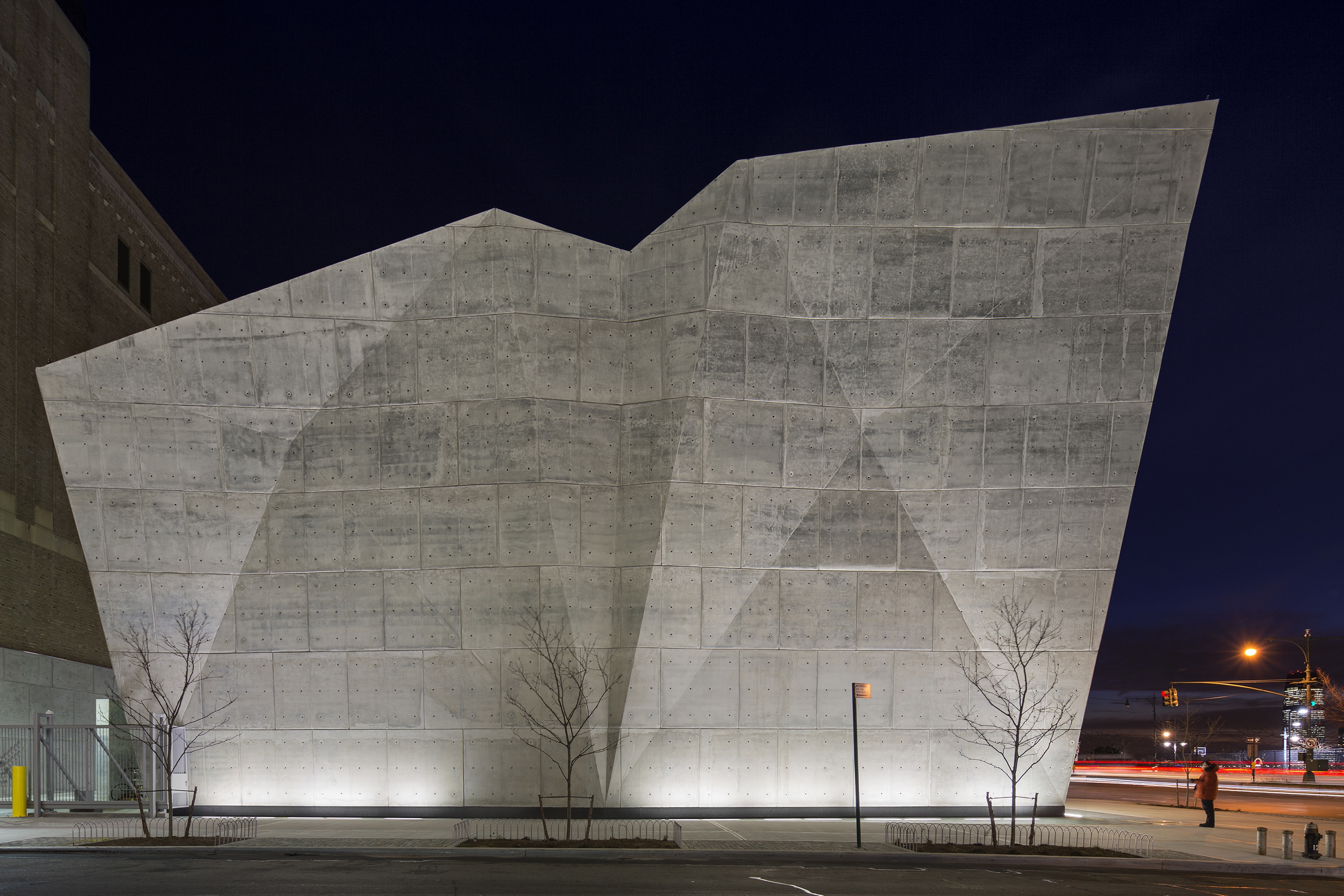
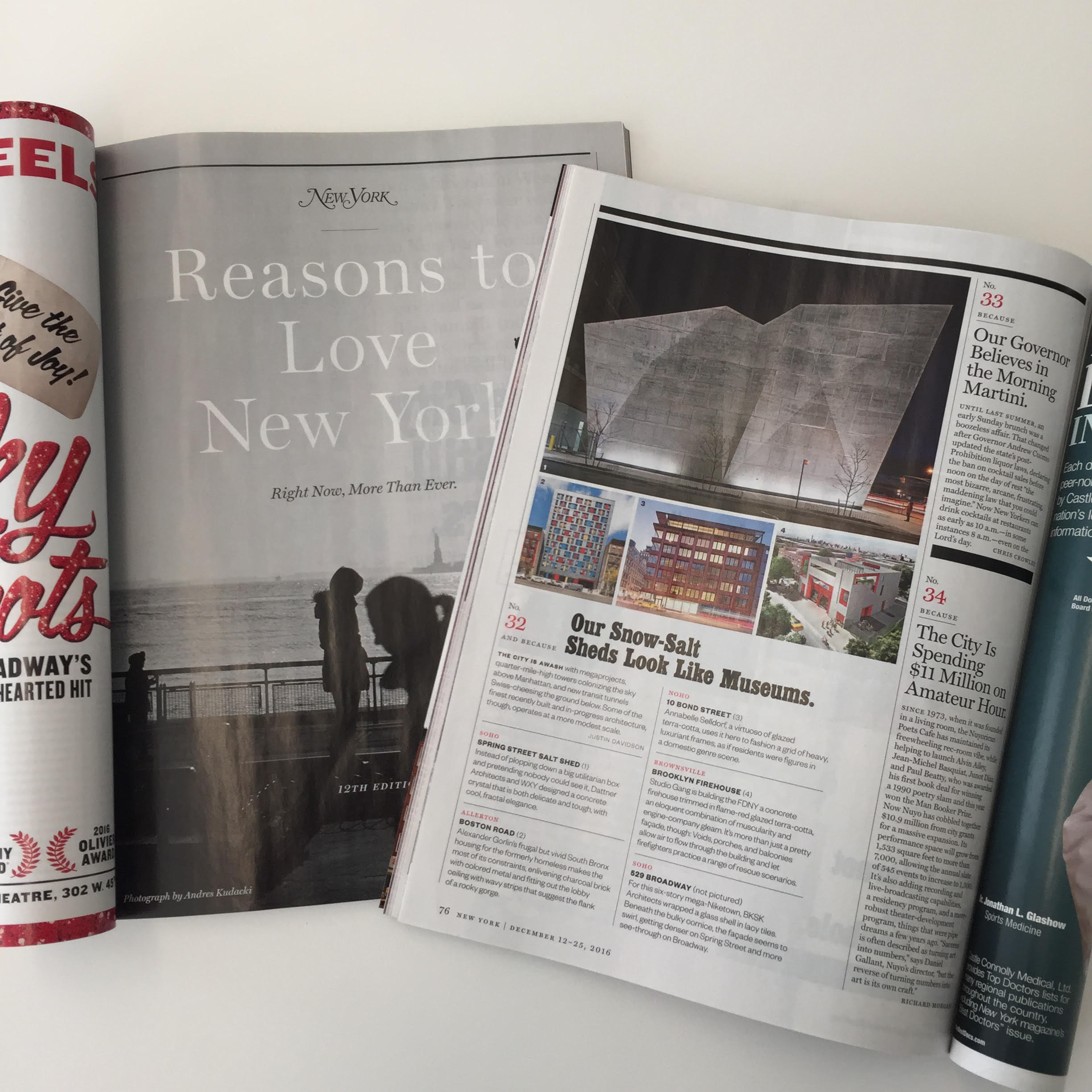
The Spring Street Salt Shed made New York Magazine's annual list of Reasons to Love New York City - Right Now More Than Ever! Under the heading, Because our Snow Sheds look like Museums, the salt shed is number 32 on an eclectic and entertaining list generated by the magazine's editors.
The Spring Street Salt Shed made New York Magazine's annual list of Reasons to Love New York City - Right Now More Than Ever! Under the heading, Because our Snow Sheds look like Museums, the salt shed is number 32 on an eclectic and entertaining list generated by the magazine's editors.
With the holiday season upon us, Dattner Architects reflects on a year of extraordinary collaborations, exciting project starts and ribbon cuttings, and a growing team of talent to drive us forward in the year to come. To commemorate 2016, our holiday card embraces our love of design and proclivity for a little friendly competition... Each year, we host a themed design charrette in the month leading up to our holiday party. This year, 12 teams collaborated in what we called THE SNOW GLOBE PROJECT. To view each final design, please click on the image below.
Happy Holidays!
With the holiday season upon us, Dattner Architects reflects on a year of extraordinary collaborations, exciting project starts and ribbon cuttings, and a growing team of talent to drive us forward in the year to come. To commemorate 2016, our holiday card embraces our love of design and proclivity for a little friendly competition... Each year, we host a themed design charrette in the month leading up to our holiday party. This year, 12 teams collaborated in what we called THE SNOW GLOBE PROJECT. To view each final design, please click on the image below.
Happy Holidays!
Yesterday, the New York Housing Conference (NYHC) & National Housing Conference (NHC) hosted their 43rd Annual Awards Program lunch, showcasing innovative projects that are making a difference in neighborhoods across the state. Each year, the program also involves an the Community Impact Competition. This year, four Dattner Architects projects, some completed just last month, were featured: West Farms Compass 1, Landmark on Main Street, Van Cortlandt Green, and Coney Island Commons.
This year's program theme “Keys to Opportunity” demonstrated the transformative impact affordable housing can have in combating poverty and the offer of hope for a better life for residents with manageable housing costs. We are proud to have both clients and collaborators receive awards:
Clara Fox Award for Outstanding Achievement: Charles Laven, President, Forsyth Street
Nonprofit of the Year: Nick Lembo, Monadnock Construction and Monadnock Development
Public Service Award: Shola Olatoye, Chair and Chief Executive Officer, New York City Housing Authority
Yesterday, the New York Housing Conference (NYHC) & National Housing Conference (NHC) hosted their 43rd Annual Awards Program lunch, showcasing innovative projects that are making a difference in neighborhoods across the state. Each year, the program also involves an the Community Impact Competition. This year, four Dattner Architects projects, some completed just last month, were featured: West Farms Compass 1, Landmark on Main Street, Van Cortlandt Green, and Coney Island Commons.
This year's program theme “Keys to Opportunity” demonstrated the transformative impact affordable housing can have in combating poverty and the offer of hope for a better life for residents with manageable housing costs. We are proud to have both clients and collaborators receive awards:
Clara Fox Award for Outstanding Achievement: Charles Laven, President, Forsyth Street
Nonprofit of the Year: Nick Lembo, Monadnock Construction and Monadnock Development
Public Service Award: Shola Olatoye, Chair and Chief Executive Officer, New York City Housing Authority
"Timeless Structures Invite Imagination and Exploration"
Playworld, a leading commercial playground equipment manufacturer, today announced PlayCubes have been named one of Architectural Record's Products of the Year. Dattner Architects' Principal and Founder, Richard Dattner, debuted playcubes in the 1960s, which corresponded to his revolutionary Adventure Playground in Central Park - challenging conventional notions about child development and the outdoors. Today, an exclusive partnership between Dattner and Playworld is introducing the once popular playground equipment to new generations.
From the award announcment:
"I've proudly been designing play equipment for the majority of my career and it's rewarding to see PlayCubes recognized by our peers outside of the parks and recreation industry," said Craig Mellott, an industrial designer at Playworld who helped oversee the launch of PlayCubes. "The iconic sculptural playforms enhance outdoor spaces and provide a play environment that is unique and supportive to child development, while also being aesthetically pleasing. The entire Playworld team is honored to have PlayCubes named a Product of the Year by Architectural Record."
PlayCubes offer rich physical, social and cognitive play value along with refreshingly fun ways to engage. The distinctive geometric shapes and undefined paths encourage exploration and climbing activity that's accessible, yet challenging. The varying planes and handholds encourage climbing and spatial experimentation, with small recesses that invite entry and provide an immersive play experience.
"This much-loved form has been redesigned by popular demand to meet current safety standards," said Dattner, whose Salt Shed project was featured on the cover of Architectural Record in March 2016. "Reimagined in tough rotational molding, these larger PlayCubes, with openings on all 14 faces, offer more visibility, enhanced play opportunities and almost limitless combinations."
"Timeless Structures Invite Imagination and Exploration"
Playworld, a leading commercial playground equipment manufacturer, today announced PlayCubes have been named one of Architectural Record's Products of the Year. Dattner Architects' Principal and Founder, Richard Dattner, debuted playcubes in the 1960s, which corresponded to his revolutionary Adventure Playground in Central Park - challenging conventional notions about child development and the outdoors. Today, an exclusive partnership between Dattner and Playworld is introducing the once popular playground equipment to new generations.
From the award announcment:
"I've proudly been designing play equipment for the majority of my career and it's rewarding to see PlayCubes recognized by our peers outside of the parks and recreation industry," said Craig Mellott, an industrial designer at Playworld who helped oversee the launch of PlayCubes. "The iconic sculptural playforms enhance outdoor spaces and provide a play environment that is unique and supportive to child development, while also being aesthetically pleasing. The entire Playworld team is honored to have PlayCubes named a Product of the Year by Architectural Record."
PlayCubes offer rich physical, social and cognitive play value along with refreshingly fun ways to engage. The distinctive geometric shapes and undefined paths encourage exploration and climbing activity that's accessible, yet challenging. The varying planes and handholds encourage climbing and spatial experimentation, with small recesses that invite entry and provide an immersive play experience.
"This much-loved form has been redesigned by popular demand to meet current safety standards," said Dattner, whose Salt Shed project was featured on the cover of Architectural Record in March 2016. "Reimagined in tough rotational molding, these larger PlayCubes, with openings on all 14 faces, offer more visibility, enhanced play opportunities and almost limitless combinations."
The American School & University has selected The City University of New York, Brooklyn College, Feirstein Graduate School of Cinema for a Special Citation. We are honored to have our work recognized in the November Architectural Portfolio issue. The jury expressed their thoughts about our project: "Restrained and bold, black and white landscape - cinematic emphasis on the students and city beyond. "
The Architectural Portfolio - The ultimate tribute to education design excellence. If selected for publication, this distinctive November issue of American School & University gives outstanding projects national acclaim in an education design sourcebook used all year by administrators at schools and universities across the country.
The American School & University has selected The City University of New York, Brooklyn College, Feirstein Graduate School of Cinema for a Special Citation. We are honored to have our work recognized in the November Architectural Portfolio issue. The jury expressed their thoughts about our project: "Restrained and bold, black and white landscape - cinematic emphasis on the students and city beyond. "
The Architectural Portfolio - The ultimate tribute to education design excellence. If selected for publication, this distinctive November issue of American School & University gives outstanding projects national acclaim in an education design sourcebook used all year by administrators at schools and universities across the country.
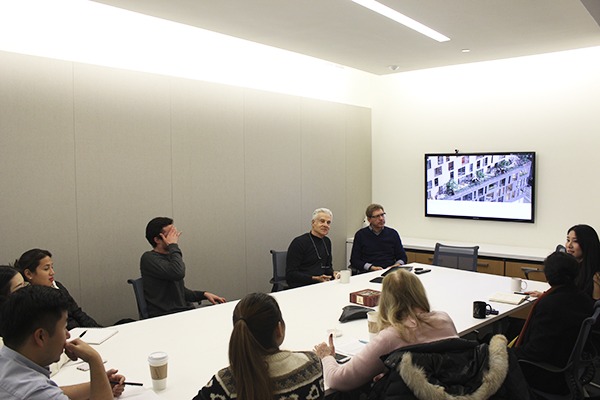
As part of our firm’s commitment to professional development, each year Dattner Architects hosts a class of graduate students from The NYU Schack Institute of Real Estate.
Interested in real estate development, particularly multi-family residential, the students come to Dattner Architects because of our expertise in this market. Through a lecture, discussion and tour, the students are given an opportunity to meet firm leadership, learn about the design and construction process through recent real world examples, and see projects currently on the boards. Yesterday’s talk was led by Principals Daniel Heuberger and Richard Dattner and focused on the future of New York City Housing. Via Verde in the Bronx and the Halletts Point Development in Queens were used as case studies.
As part of our firm’s commitment to professional development, each year Dattner Architects hosts a class of graduate students from The NYU Schack Institute of Real Estate.
Interested in real estate development, particularly multi-family residential, the students come to Dattner Architects because of our expertise in this market. Through a lecture, discussion and tour, the students are given an opportunity to meet firm leadership, learn about the design and construction process through recent real world examples, and see projects currently on the boards. Yesterday’s talk was led by Principals Daniel Heuberger and Richard Dattner and focused on the future of New York City Housing. Via Verde in the Bronx and the Halletts Point Development in Queens were used as case studies.
Two of Dattner Architects' projects, Via Verde and The Spring Street Salt Shed, were mentioned in an inspiring article by The New York Times, "The Shapes of New York", acknowledging significant, human-scale buildings that we don't always see in New York's very pronounced skyline. Of the 12 projects recognized for a positive contribution to New York's architectural transformation over the past decade, we are thrilled to have two such important yet diverse projects included.
# 3 - Spring Street Salt Shed
“The salt shed is a totally unexpected thing for a very municipal, prosaic, urban-management function, like the infrastructure for salting the roads in winter. It is a strange-looking thing; it draws attention to itself when you’re flying by in a taxicab. It’s got a good location on the West Side, it’s unusual and it makes you wonder, ‘What is that?’ It has a toughness to it architecturally that’s right. It’s interesting to have that level of care and value and investment into something municipal and often overlooked. It’s just salt storage. But why not?” --James Corner, Landscape architect and founding partner, Field Operations
#7 - Via Verde, The Green Way
“In Europe, there’s a lot of good architects involved in public housing, and there isn’t so much of a disconnect between design and affordable housing that you see in New York and the U.S. Via Verde is a good example of design contributing to making housing more special. Design shouldn’t just be limited to the high-income brackets. I liked the diversity of housing types here, from the low-rise sections at the neighborhood scale that steps up into this tower. With the facade, there was a lot of research, too, into durability, so you could maybe spend a little more knowing it would last.” -- Amale Andraos, Dean, Columbia University Graduate School of Architecture; co-founder, WORKac
Two of Dattner Architects' projects, Via Verde and The Spring Street Salt Shed, were mentioned in an inspiring article by The New York Times, "The Shapes of New York", acknowledging significant, human-scale buildings that we don't always see in New York's very pronounced skyline. Of the 12 projects recognized for a positive contribution to New York's architectural transformation over the past decade, we are thrilled to have two such important yet diverse projects included.
# 3 - Spring Street Salt Shed
“The salt shed is a totally unexpected thing for a very municipal, prosaic, urban-management function, like the infrastructure for salting the roads in winter. It is a strange-looking thing; it draws attention to itself when you’re flying by in a taxicab. It’s got a good location on the West Side, it’s unusual and it makes you wonder, ‘What is that?’ It has a toughness to it architecturally that’s right. It’s interesting to have that level of care and value and investment into something municipal and often overlooked. It’s just salt storage. But why not?” --James Corner, Landscape architect and founding partner, Field Operations
#7 - Via Verde, The Green Way
“In Europe, there’s a lot of good architects involved in public housing, and there isn’t so much of a disconnect between design and affordable housing that you see in New York and the U.S. Via Verde is a good example of design contributing to making housing more special. Design shouldn’t just be limited to the high-income brackets. I liked the diversity of housing types here, from the low-rise sections at the neighborhood scale that steps up into this tower. With the facade, there was a lot of research, too, into durability, so you could maybe spend a little more knowing it would last.” -- Amale Andraos, Dean, Columbia University Graduate School of Architecture; co-founder, WORKac
When completed 1,300+ units of affordable housing & retail space will be introduced to this Bronx community.
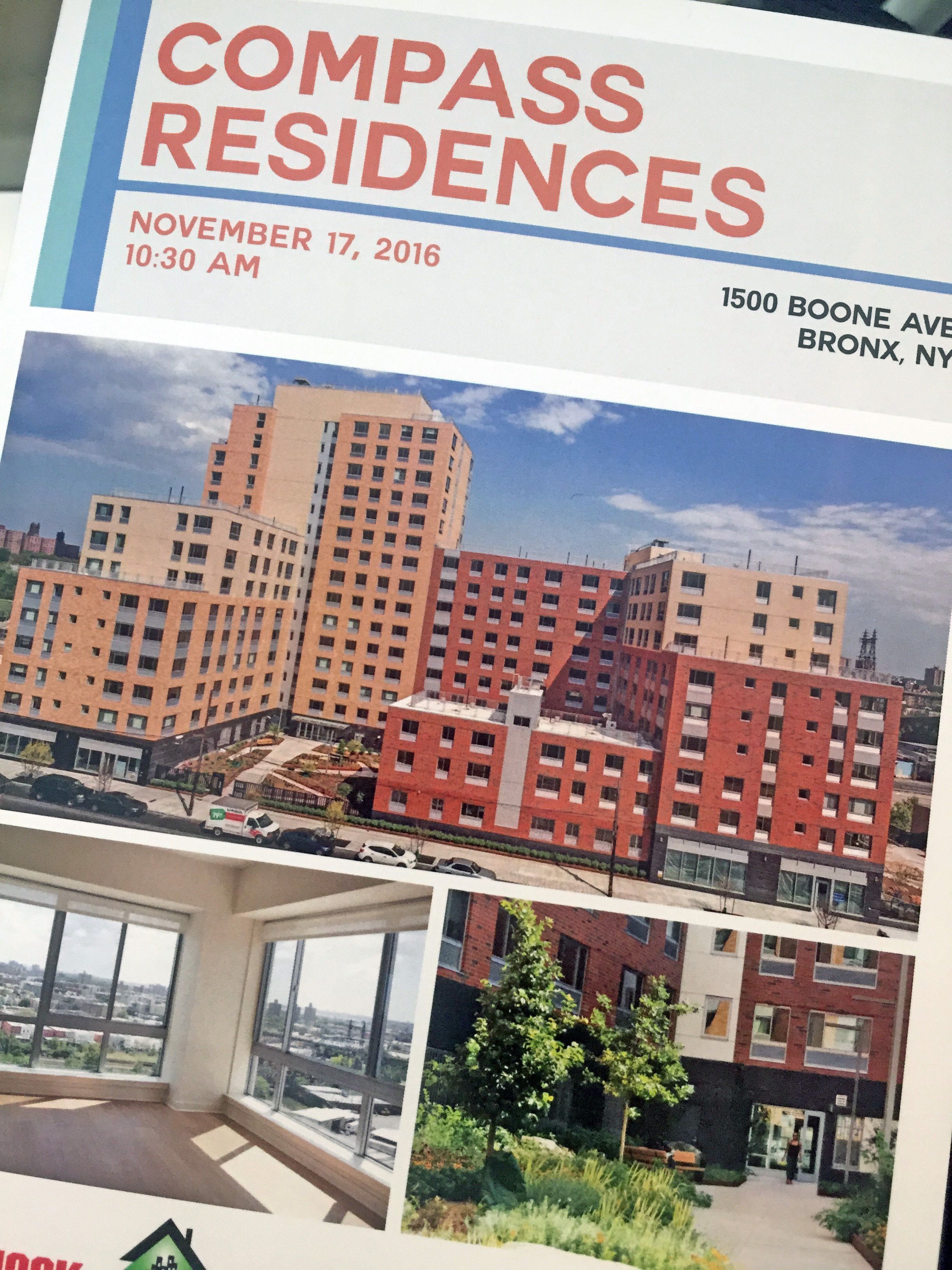
On November 17, 2016, New York State Homes and Community Renewal (HCR), the New York City Department of Housing Preservation and Development (HPD) and New York City Housing Development Corporation (HDC) joined the development team, Monadnock Development, Signature Urban Properties, and GTIS Partners and members of the design team for a ribbon cutting to celebrate the completion of Compass Residences 1, the first building within the 17-acre West Farms Redevelopment Plan.
Organized around a central courtyard with two levels of parking below, Compass Residences buildings 1A and 1B are nine- and 15-story buildings on Boone Avenue in the Bronx. The 237-unit complex includes a mix of studio, one, two and three bedroom units for affordable to low- and moderate-income households. The design employs a variety of colors and patterns to distinguish the buildings as separate structures and emphasize the dynamic massing of the project. Residential windows are generously sized to provide abundant daylight in apartments and to open up the facades. Building heights vary from 3 to 15 floors, with higher portions along West Farms Road, creating visual interest and an urban scale.
The 4,932 square feet of Retail space along Boone Avenue and West Farms Road provide a mixed-use development to serve the community. A public plaza provides welcome open space and serves as a connection between Boone Avenue and West Farms Road. The project emphasizes sustainability and has been designed to meet the Enterprise Green Communities criteria.
West Farms Redevelopment Plan - The Compass Residences 1 is the first building within the 17-acre West Farms Redevelopment Plan, which will be built out in phases. Phase 2 is in construction, and Phase 3 is in design. When complete the mixed-use development will provide 11 blocks of affordable and workforce housing with retail and community facilities to serve the existing and growing community. The plan provides buildings of varying heights stepping up to the urban edge along the Bronx River, organized around courtyards which will provide recreational areas for residents with parking areas below. Mid-block passages humanize the streetscape and provide views to the new Starlight Park. The plan emphasizes principles of sustainable development with the creation of a compact, pedestrian friendly, vibrant, mixed-use community with good connections to nearby neighborhoods.
As representatives from each agency involved in the project spoke, NYC HDC President Eric Enderlin reinforced the impact on the community, “The opening of these two beautiful new buildings with 237 affordable homes represents a new chapter for this underused industrial stretch of the Crotona Park East neighborhood,” congratulating the project partners for “laying the groundwork for a diverse, thriving community.”
Principal-In-Charge for this project, William Stein commented, "Dattner Architects is pleased to be part of this transformative project, which is creating a new urban neighborhood in the Crotona Park East / West Farms communities of the Bronx. Overlooking the Bronx River and Sheridan Expressway, the project provides urgently needed affordable housing, retail and community facilities and landscaped public open spaces. The project’s dynamic architecture creates a new skyline expressing the revitalization of the Bronx."
Principal and firm Founder, Richard Dattner AIA attended the ceremony, “Dattner Architects has, with this initial project, begun the creation of an entire neighborhood along the newly restored Bronx River. Beginning with the largest private rezoning in NYC, the final project will house over 1,200 families in 8 new buildings. Our goal of community building is wonderfully realized in this significant project.”
When completed 1,300+ units of affordable housing & retail space will be introduced to this Bronx community.
On November 17, 2016, New York State Homes and Community Renewal (HCR), the New York City Department of Housing Preservation and Development (HPD) and New York City Housing Development Corporation (HDC) joined the development team, Monadnock Development, Signature Urban Properties, and GTIS Partners and members of the design team for a ribbon cutting to celebrate the completion of Compass Residences 1, the first building within the 17-acre West Farms Redevelopment Plan.
Organized around a central courtyard with two levels of parking below, Compass Residences buildings 1A and 1B are nine- and 15-story buildings on Boone Avenue in the Bronx. The 237-unit complex includes a mix of studio, one, two and three bedroom units for affordable to low- and moderate-income households. The design employs a variety of colors and patterns to distinguish the buildings as separate structures and emphasize the dynamic massing of the project. Residential windows are generously sized to provide abundant daylight in apartments and to open up the facades. Building heights vary from 3 to 15 floors, with higher portions along West Farms Road, creating visual interest and an urban scale.
The 4,932 square feet of Retail space along Boone Avenue and West Farms Road provide a mixed-use development to serve the community. A public plaza provides welcome open space and serves as a connection between Boone Avenue and West Farms Road. The project emphasizes sustainability and has been designed to meet the Enterprise Green Communities criteria.
West Farms Redevelopment Plan - The Compass Residences 1 is the first building within the 17-acre West Farms Redevelopment Plan, which will be built out in phases. Phase 2 is in construction, and Phase 3 is in design. When complete the mixed-use development will provide 11 blocks of affordable and workforce housing with retail and community facilities to serve the existing and growing community. The plan provides buildings of varying heights stepping up to the urban edge along the Bronx River, organized around courtyards which will provide recreational areas for residents with parking areas below. Mid-block passages humanize the streetscape and provide views to the new Starlight Park. The plan emphasizes principles of sustainable development with the creation of a compact, pedestrian friendly, vibrant, mixed-use community with good connections to nearby neighborhoods.
As representatives from each agency involved in the project spoke, NYC HDC President Eric Enderlin reinforced the impact on the community, “The opening of these two beautiful new buildings with 237 affordable homes represents a new chapter for this underused industrial stretch of the Crotona Park East neighborhood,” congratulating the project partners for “laying the groundwork for a diverse, thriving community.”
Principal-In-Charge for this project, William Stein commented, "Dattner Architects is pleased to be part of this transformative project, which is creating a new urban neighborhood in the Crotona Park East / West Farms communities of the Bronx. Overlooking the Bronx River and Sheridan Expressway, the project provides urgently needed affordable housing, retail and community facilities and landscaped public open spaces. The project’s dynamic architecture creates a new skyline expressing the revitalization of the Bronx."
Principal and firm Founder, Richard Dattner AIA attended the ceremony, “Dattner Architects has, with this initial project, begun the creation of an entire neighborhood along the newly restored Bronx River. Beginning with the largest private rezoning in NYC, the final project will house over 1,200 families in 8 new buildings. Our goal of community building is wonderfully realized in this significant project.”
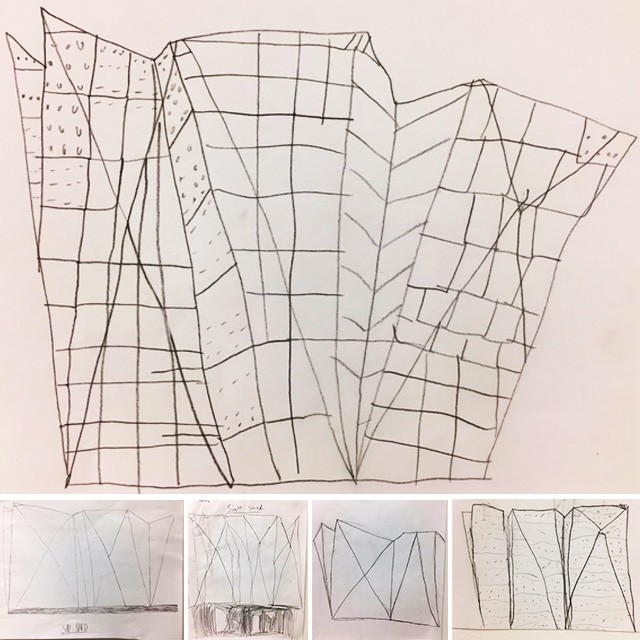
Last month, third Graders from Little Red School House came down to the Spring Street Salt Shed as part of their math class. Dattner Architects' Project Manager, Gia Mainiero, spoke to the students about how math is used in architecture — and explained how the Salt Shed was designed. As part of their project - Where’s the Real World Relevance in Exploring the Math in Cubes? - the students created sketches of their interpretation of the Salt Shed's many faces and angles.
Last month, third Graders from Little Red School House came down to the Spring Street Salt Shed as part of their math class. Dattner Architects' Project Manager, Gia Mainiero, spoke to the students about how math is used in architecture — and explained how the Salt Shed was designed. As part of their project - Where’s the Real World Relevance in Exploring the Math in Cubes? - the students created sketches of their interpretation of the Salt Shed's many faces and angles.
Last night at the 2016 CANstruction New York Awards Gala, the Dattner Architects team was honored with the Juror’s Favorite Award for their submission – “Lean on Me”. The sculpture was comprised of 4,400 cans – all donated by Goya Foods. The team was also presented with an Appreciation Award, recognizing 10 years of firm participation in the CANstruction New York exhibits. Our firm is proud to support CANstruction in their mission to fight hunger and undernourishment, and to invigorate the community with public art. All the food cans from the exhibit will be donated to local food banks after the show is over. The exhibit is currently on display at Brookfield Place – and will remain up until November 16th.
This year’s CANstruction design/build team from Dattner Architects is – Richard Jolta, Rem Garavito, Blake Kurasek, Rebecca McCarthy, Kate Spata, Eileen Chen, Bart Mangold, Malik Zaidi, Aaron Opalka, Francisco Grimaldi and Praxiteles Lykos. Congrats on a job well done!
Last night at the 2016 CANstruction New York Awards Gala, the Dattner Architects team was honored with the Juror’s Favorite Award for their submission – “Lean on Me”. The sculpture was comprised of 4,400 cans – all donated by Goya Foods. The team was also presented with an Appreciation Award, recognizing 10 years of firm participation in the CANstruction New York exhibits. Our firm is proud to support CANstruction in their mission to fight hunger and undernourishment, and to invigorate the community with public art. All the food cans from the exhibit will be donated to local food banks after the show is over. The exhibit is currently on display at Brookfield Place – and will remain up until November 16th.
This year’s CANstruction design/build team from Dattner Architects is – Richard Jolta, Rem Garavito, Blake Kurasek, Rebecca McCarthy, Kate Spata, Eileen Chen, Bart Mangold, Malik Zaidi, Aaron Opalka, Francisco Grimaldi and Praxiteles Lykos. Congrats on a job well done!
On November 10th, Dattner Architects' Principal Jeffrey Dugan will moderate a panel discussion Infrastructure Imperative: Moving Beyond the Wake-Up Call. Hosted by the AIANY's Design for Risk and Reconstruction Committee and Transportation and Infrastructure Committee, the panel will explore the issue of aging infrastructure in current times and its impact on mass transportation, energy systems, public health facilities, telecommunications systems, and food supply chains as cities, both locally and abroad, evolve. The panel of industry experts will identify the most critical infrastructure issues, assess challenges, and propose innovative solutions to monitor our rapidly changing environment.
Moderator
Jeffrey Dugan, AIA, Dattner Architects
Speakers
Robin Guenther, FAIA, Principal, Sustainable Healthcare Design Leader, Perkins + Will
Daniel Leonhardt, Senior Energy Policy Associate, Pace University
Heather Roiter Damiano, Director of Hazard Mitigation, NYC Office of Emergency Management
Joseph Simenic, Program Director, The Port Authority of New York and New Jersey
Jim Venturi, Principal, ReThink Studio
November 10th, 2016 - 6-8PM
Center for Architecture - 536 LaGuardia Place, NY, NY
On November 10th, Dattner Architects' Principal Jeffrey Dugan will moderate a panel discussion Infrastructure Imperative: Moving Beyond the Wake-Up Call. Hosted by the AIANY's Design for Risk and Reconstruction Committee and Transportation and Infrastructure Committee, the panel will explore the issue of aging infrastructure in current times and its impact on mass transportation, energy systems, public health facilities, telecommunications systems, and food supply chains as cities, both locally and abroad, evolve. The panel of industry experts will identify the most critical infrastructure issues, assess challenges, and propose innovative solutions to monitor our rapidly changing environment.
Moderator
Jeffrey Dugan, AIA, Dattner Architects
Speakers
Robin Guenther, FAIA, Principal, Sustainable Healthcare Design Leader, Perkins + Will
Daniel Leonhardt, Senior Energy Policy Associate, Pace University
Heather Roiter Damiano, Director of Hazard Mitigation, NYC Office of Emergency Management
Joseph Simenic, Program Director, The Port Authority of New York and New Jersey
Jim Venturi, Principal, ReThink Studio
November 10th, 2016 - 6-8PM
Center for Architecture - 536 LaGuardia Place, NY, NY
As the New York City's population surges toward 9 million, as early as 2030, 12 architecture and engineering firms explore the question - How will NYC accommodate that kind of growth? Each firm focused on a particular area of the city to examine how certain areas of the city could or should be reimagined to accommodate the growth we are expecting.
Published in Crains' October 31st issue is Dattner Architects' Big Idea to convert waste-transfer stations into eco-friendly fuel producers.
Dattner's Big Idea: Converting waste-transfer stations into eco-friendly fuel producers
In his OneNYC plan, Mayor Bill de Blasio set a target of contributing zero waste to landfills by 2030. Right now, this goal seems distant, as the city recycles or composts just 25% of its solid waste. Much of the remainder gets sent to out-of-state landfills via four waterfront transfer stations located in Manhattan, Queens and Brooklyn. To make the process more sustainable, Dattner Architects suggests outfitting the stations with plasma arc technology, a process that converts solid waste into synthetic gas and other materials that can be sold for industrial and construction uses. Better yet, the process doesn’t release harmful combustion emissions into the atmosphere. In all, Dattner estimates that building the plasma infrastructure would cost $150 million to $200 million per location. But the potential impact of the project would be massive: If the system were instituted at the marine-transfer station in Manhattan and the land-based stations in the Bronx and Staten Island, all city residents and workers could participate in eco-positive waste disposal.
“The technology is at a point where it becomes realistic to consider it. The time to start discussing it is now.” - Daniel Heuberger
As the New York City's population surges toward 9 million, as early as 2030, 12 architecture and engineering firms explore the question - How will NYC accommodate that kind of growth? Each firm focused on a particular area of the city to examine how certain areas of the city could or should be reimagined to accommodate the growth we are expecting.
Published in Crains' October 31st issue is Dattner Architects' Big Idea to convert waste-transfer stations into eco-friendly fuel producers.
Dattner's Big Idea: Converting waste-transfer stations into eco-friendly fuel producers
In his OneNYC plan, Mayor Bill de Blasio set a target of contributing zero waste to landfills by 2030. Right now, this goal seems distant, as the city recycles or composts just 25% of its solid waste. Much of the remainder gets sent to out-of-state landfills via four waterfront transfer stations located in Manhattan, Queens and Brooklyn. To make the process more sustainable, Dattner Architects suggests outfitting the stations with plasma arc technology, a process that converts solid waste into synthetic gas and other materials that can be sold for industrial and construction uses. Better yet, the process doesn’t release harmful combustion emissions into the atmosphere. In all, Dattner estimates that building the plasma infrastructure would cost $150 million to $200 million per location. But the potential impact of the project would be massive: If the system were instituted at the marine-transfer station in Manhattan and the land-based stations in the Bronx and Staten Island, all city residents and workers could participate in eco-positive waste disposal.
“The technology is at a point where it becomes realistic to consider it. The time to start discussing it is now.” - Daniel Heuberger
On November 9th, Dattner Architects' Principal and Founder, Richard Dattner, will moderate a Q+A session for real estate developer and author Jonathan Rose’s new book THE WELL-TEMPERED CITY: What Modern Science, Ancient Civilizations, and Human Nature Teach Us About the Future of Urban Life.
The book talk will begin with insights from Jonathan Rose on his research, innovative ideas, and lessons learned in his career, followed by the Q+A. Dattner Architects is thrilled to be a part of this exciting launch with one of our most esteemed clients.
The event will be held at New York's Center for Architecture. For more information, please visit their website.
On November 9th, Dattner Architects' Principal and Founder, Richard Dattner, will moderate a Q+A session for real estate developer and author Jonathan Rose’s new book THE WELL-TEMPERED CITY: What Modern Science, Ancient Civilizations, and Human Nature Teach Us About the Future of Urban Life.
The book talk will begin with insights from Jonathan Rose on his research, innovative ideas, and lessons learned in his career, followed by the Q+A. Dattner Architects is thrilled to be a part of this exciting launch with one of our most esteemed clients.
The event will be held at New York's Center for Architecture. For more information, please visit their website.
This morning's New York Today from the New York Times features a round up of new public architecture, in honor of "Archtober," the month long celebration of architecture. The Spring Street Salt Shed and Manhattan Districts 1/2/5 Garage topped the list. The New York Times notes, "it has been a big - and architecturally bold - year so far for New York’s municipal buildings."
This morning's New York Today from the New York Times features a round up of new public architecture, in honor of "Archtober," the month long celebration of architecture. The Spring Street Salt Shed and Manhattan Districts 1/2/5 Garage topped the list. The New York Times notes, "it has been a big - and architecturally bold - year so far for New York’s municipal buildings."
On November 3rd Dattner Architects' Principal Beth Greenberg FAIA is participating in the Professional Women in Construction of New York's annual Architects & Engineers event. Moderated by STV's Regional Director, Jennifer Murphy, Beth will join a group of four panelists for the Principal's Roundtable: Architects on NYC Horizons - a panel of high level women architects discussing upcoming projects, successes, and challenges. The evening event will also include presentations on Bridge and Transit Projects and on the Moynihan/Farley Station Redevelopment.
Founded in 1980, Professional Women in Construction is a national, non-profit organization committed to advancing professional, entrepreneurial and managerial opportunities for women and other populations in construction and related industries.
When: 11/3/2016 - 5:30-8:30 PM
Where: Cooper Union, Rose Auditorium
On November 3rd Dattner Architects' Principal Beth Greenberg FAIA is participating in the Professional Women in Construction of New York's annual Architects & Engineers event. Moderated by STV's Regional Director, Jennifer Murphy, Beth will join a group of four panelists for the Principal's Roundtable: Architects on NYC Horizons - a panel of high level women architects discussing upcoming projects, successes, and challenges. The evening event will also include presentations on Bridge and Transit Projects and on the Moynihan/Farley Station Redevelopment.
Founded in 1980, Professional Women in Construction is a national, non-profit organization committed to advancing professional, entrepreneurial and managerial opportunities for women and other populations in construction and related industries.
When: 11/3/2016 - 5:30-8:30 PM
Where: Cooper Union, Rose Auditorium
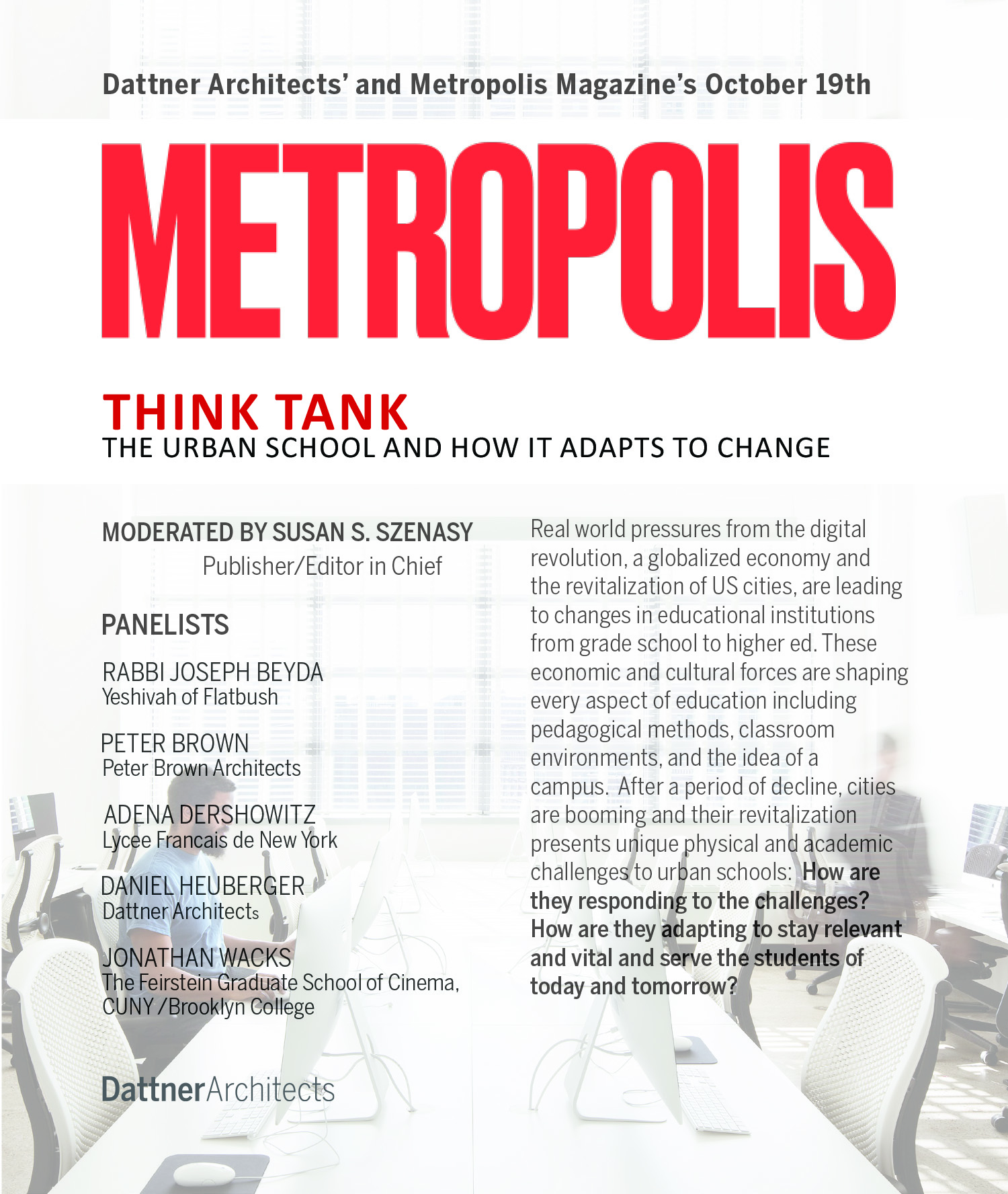
On Wednesday, October 19th, Dattner Architects hosted a panel discussion as part of Metropolis Magazine's Think Tank series, a live research program bringing together industry experts to discuss changing environments and how innovative and evolutionary design adapts. Moderated by Metropolis' Editor-in-Chief, Susan S. Szenasy, Dattner Architects’ Principal Daniel Heuberger joined a panel of both experts and clients to discuss the many opportunities and challenges Urban Schools face in today’s digital and urban-centric environment.
On Wednesday, October 19th, Dattner Architects hosted a panel discussion as part of Metropolis Magazine's Think Tank series, a live research program bringing together industry experts to discuss changing environments and how innovative and evolutionary design adapts. Moderated by Metropolis' Editor-in-Chief, Susan S. Szenasy, Dattner Architects’ Principal Daniel Heuberger joined a panel of both experts and clients to discuss the many opportunities and challenges Urban Schools face in today’s digital and urban-centric environment.
This year, the Village Voice has chosen our Spring Street Salt Shed as a Best of NYC® award recipient in the culture category. Each year, the publication selects winners among 8 categories, and we are proud they have recognized the Shed. Described in the award's article as a "spiritually suitable storage facility", we are thrilled that the community is accepting it as their own and seeing it as a "fine little gem of public design".
This year, the Village Voice has chosen our Spring Street Salt Shed as a Best of NYC® award recipient in the culture category. Each year, the publication selects winners among 8 categories, and we are proud they have recognized the Shed. Described in the award's article as a "spiritually suitable storage facility", we are thrilled that the community is accepting it as their own and seeing it as a "fine little gem of public design".
"What a Great Day in Harlem! Here we are standing on what high expectations yield." - Dominique Jones, Boys & Girls Club of Harlem
Today city officials, development partners, and the design team gathered to celebrate the official opening of The Residences at PS 186, 79-unit mixed-use affordable housing development, co-located with a new 11,302 square foot state-of-the art clubhouse for the Boys and Girls Club of Harlem (BGCH).
"The success of this project comes from collective sense of mission in restoration."
- Mark Reed, Alembic Community Development
Led by a dynamic partnership of the Boys and Girls Club of Harlem, Monadnock Development LLC and Alembic Community Development, the revitalized PS 186 has transformed and restored a historically significant, yet dilapidated, former public school building in New York City’s Harlem’s Hamilton Heights community into a community jewel.
"This creative, dynamic development embodies the Mayor's affordable housing plan." - David Quart, NYC Department of Housing Preservation and Development
Completed in 1903, Harlem’s former Public School 186 is exemplary of the innovative urban school design employed by C.B.J. Snyder, the Superintendent of School Buildings for the New York City Board of Education from 1891 and 1923. Despite the former school’s deteriorated condition after sitting vacant since the 1970s, the building has been conditionally approved by the National Parks Service as a historically significant example of early 20th century school architecture, making it eligible for listing on the National Register of Historic Places and for historic tax credits.
"Dattner Architects talented team provided the perfect balance -- preserving character-defining elements while ensuring the functionality of the spaces." - Tom Ciano, Monadnock Development
Dattner Architects’ design approach for the adaptive reuse of this historically significant school building into new residences for a vibrant community and a central presence for the Boys & Girls Club of Harlem, is informed by a deep respect for the architectural past and complies with the Secretary of Interior’s Standards for Rehabilitation. The original Italian Renaissance Revival style exterior with its projecting historic cornice will be restored, along with character defining interior features, including the original H-shaped corridor configuration, ornamental stair cases, high ceilings and a decorative stage. Contemporary insertions are designed to complement the historic building, and new materials such as glass and chrome will accent the new programmatic elements.
“We are honored to breathe new life into this remarkable building. An early example of how school buildings could be civic monuments for a better society, the renewal of the former PS 186 is an opportunity to once again give the building back to the neighborhood as the Boys & Girls Club of Harlem—a vital community resource—and as affordable residences.” —Joseph Coppola AIA, Principal, Dattner Architects
"What a Great Day in Harlem! Here we are standing on what high expectations yield." - Dominique Jones, Boys & Girls Club of Harlem
Today city officials, development partners, and the design team gathered to celebrate the official opening of The Residences at PS 186, 79-unit mixed-use affordable housing development, co-located with a new 11,302 square foot state-of-the art clubhouse for the Boys and Girls Club of Harlem (BGCH).
"The success of this project comes from collective sense of mission in restoration."
- Mark Reed, Alembic Community Development
Led by a dynamic partnership of the Boys and Girls Club of Harlem, Monadnock Development LLC and Alembic Community Development, the revitalized PS 186 has transformed and restored a historically significant, yet dilapidated, former public school building in New York City’s Harlem’s Hamilton Heights community into a community jewel.
"This creative, dynamic development embodies the Mayor's affordable housing plan." - David Quart, NYC Department of Housing Preservation and Development
Completed in 1903, Harlem’s former Public School 186 is exemplary of the innovative urban school design employed by C.B.J. Snyder, the Superintendent of School Buildings for the New York City Board of Education from 1891 and 1923. Despite the former school’s deteriorated condition after sitting vacant since the 1970s, the building has been conditionally approved by the National Parks Service as a historically significant example of early 20th century school architecture, making it eligible for listing on the National Register of Historic Places and for historic tax credits.
"Dattner Architects talented team provided the perfect balance -- preserving character-defining elements while ensuring the functionality of the spaces." - Tom Ciano, Monadnock Development
Dattner Architects’ design approach for the adaptive reuse of this historically significant school building into new residences for a vibrant community and a central presence for the Boys & Girls Club of Harlem, is informed by a deep respect for the architectural past and complies with the Secretary of Interior’s Standards for Rehabilitation. The original Italian Renaissance Revival style exterior with its projecting historic cornice will be restored, along with character defining interior features, including the original H-shaped corridor configuration, ornamental stair cases, high ceilings and a decorative stage. Contemporary insertions are designed to complement the historic building, and new materials such as glass and chrome will accent the new programmatic elements.
“We are honored to breathe new life into this remarkable building. An early example of how school buildings could be civic monuments for a better society, the renewal of the former PS 186 is an opportunity to once again give the building back to the neighborhood as the Boys & Girls Club of Harlem—a vital community resource—and as affordable residences.” —Joseph Coppola AIA, Principal, Dattner Architects
Through a new contract, Dattner Architects will be working with the New York City Department of Design and Construction to bring design excellence to public projects in the five boroughs. “For over a decade, the DDC’s Design and Construction Excellence Program has been one of the City’s best tools to deliver quality public projects. This new round of DCE 2.0 firms builds on that legacy and reflects the diversity, creativity, and expertise that we need to help build our City and improve the quality of life in neighborhoods throughout our five boroughs,” Justin Garrett Moore, Public Design Commission executive director.
We are one of the three firms now pre-qualified to design large projects for the City. These projects will be guided by the Guiding Principles published by the NYC DDC last year. These principles were developed to ensure that "equity, sustainability, resiliency, and healthy living are integral to the design and construction process." These tenets are central to our design ethos and we are eager to collaborate with the DDC to design civic structures worthy of our fair city.
Through a new contract, Dattner Architects will be working with the New York City Department of Design and Construction to bring design excellence to public projects in the five boroughs. “For over a decade, the DDC’s Design and Construction Excellence Program has been one of the City’s best tools to deliver quality public projects. This new round of DCE 2.0 firms builds on that legacy and reflects the diversity, creativity, and expertise that we need to help build our City and improve the quality of life in neighborhoods throughout our five boroughs,” Justin Garrett Moore, Public Design Commission executive director.
We are one of the three firms now pre-qualified to design large projects for the City. These projects will be guided by the Guiding Principles published by the NYC DDC last year. These principles were developed to ensure that "equity, sustainability, resiliency, and healthy living are integral to the design and construction process." These tenets are central to our design ethos and we are eager to collaborate with the DDC to design civic structures worthy of our fair city.
This Saturday and Sunday, October 15th and 16th, the Annual Open House New York Weekend returns with tours, talks, and special events at more than 250 sites across all five boroughs. Among those sites not typically open to the public, Dattner Architects and DSNY are proud to open the doors of the year-old Manhattan District 1/2/5 Garage & Spring Street Salt Shed for tours on Sunday, October 16th. Visitors will be guided through the garage, up to the green roof, and into the Sat Shed, providing a behind-the-scenes glimpse into what it takes to manage the city’s waste stream, and to keep our streets clean. The tours will show visitors why these new infrastructure buildings have been named the "two of the most distinguished public buildings in the city in years" as well as the processes that go on behind the scenes to ensure the city is kept healthy, safe and clean.
About Open House New York
Open House New York (OHNY) provides broad audiences with unparalleled access to the extraordinary architecture of New York and to the people who help design, build, and preserve the city. Through its year-round programs and the annual OHNY Weekend, Open House New York celebrates the best examples of design and planning throughout the five boroughs, from historic to contemporary, and helps foster a more informed conversation about how architecture and urban design sustain New York as a vibrant place to live, work, and learn.
This Saturday and Sunday, October 15th and 16th, the Annual Open House New York Weekend returns with tours, talks, and special events at more than 250 sites across all five boroughs. Among those sites not typically open to the public, Dattner Architects and DSNY are proud to open the doors of the year-old Manhattan District 1/2/5 Garage & Spring Street Salt Shed for tours on Sunday, October 16th. Visitors will be guided through the garage, up to the green roof, and into the Sat Shed, providing a behind-the-scenes glimpse into what it takes to manage the city’s waste stream, and to keep our streets clean. The tours will show visitors why these new infrastructure buildings have been named the "two of the most distinguished public buildings in the city in years" as well as the processes that go on behind the scenes to ensure the city is kept healthy, safe and clean.
About Open House New York
Open House New York (OHNY) provides broad audiences with unparalleled access to the extraordinary architecture of New York and to the people who help design, build, and preserve the city. Through its year-round programs and the annual OHNY Weekend, Open House New York celebrates the best examples of design and planning throughout the five boroughs, from historic to contemporary, and helps foster a more informed conversation about how architecture and urban design sustain New York as a vibrant place to live, work, and learn.
The Manhattan Districts 1/2/5 Garage and Spring Street Salt Shed are featured today as Archtober's Building of the Day. The Building of the Day series celebrates contemporary as well as iconic architecture in New York City with daily architect-led tours. Within the year of opening the Manhattan Districts 1/2/5 Garage & Salt Shed have become iconic and a source of neighborhood pride. This pair of public buildings, that serves close to 300,000 residents, are the home for 150 sanitation vehicles, 3 districts’ equipment including front-end loaders, salt spreaders, heavy-equipment wreckers, personnel vehicles; separate vehicle wash, and 250 workers who have offices, locker rooms, training and lunch rooms for each district; centralized fueling and repair facilities and 5000 tons of salt for winter snow clearing.
The design is intended to reflect a commitment to civic expression, environmental responsibility and sensitivity to the urban context. Although municipal projects are often targeted as undesirable uses, the community has embraced the project and applauded the use of design to successfully integrate critical services into the neighborhood. Located below the 100 year flood plain, the Garage is a first responder in severe weather events. Under construction at the time that post-tropical Hurricane Sandy hit New York City, the team was able to determine how much the storm exceeded the previously established base flood elevations and redesign for greater resilience.
Sustainable design features and urban context are intrinsic to the design and organization of both facilities. A double-skin façade wraps the upper floors of the garage, comprised of glazed curtain wall and 2,600 custom perforated-aluminum fins, which float above the building’s dark articulated masonry base. The fins reduce solar heat gain and glare, create an ethereal wrapper to obscure mechanical louvers and create a façade of rhythmic vertical elements. At the east side, they follow the slopes of the ramps within, shielding the view of headlights. At the south-facing Personnel Areas and the Repair Bays on the west side, the fins move, tracking the sun’s location throughout the day and creating a dynamic façade. Bold colors in the interior circulation further animate the façade from within and provide an intuitive means of wayfinding throughout the facility.
The “fifth façade,” a 1.5 acre green roof, softens the view from above, reduces heat-island effect, enhances storm water retention, and promotes biodiversity. Heated and cooled by municipal steam service it reduces fossil fuel emissions. Waste steam condensate and rainwater filtered through the green roof are captured and reused for truck wash, reducing potable water use. This project is LEED Gold certified, and is a benchmark project for New York City’s Active Design program, which promotes the health and fitness of occupants through building design.
Rising nearly 70 feet, the cast-in-place architectural concrete Salt Shed acts as a counterpoint to the diaphanous, scrim-like façade of Manhattan 1/2/5’s Garage. The Shed’s crystalline, faceted planes enliven this highly visible structure, creating a sculptural landmark in the neighborhood. It tapers toward the bottom—creating more pedestrian space and a dramatic overhang. The shed emerges from a moat of textured glass paving, which reflects the sidewalk illumination, further contributing to the enigmatic and iconic nature of this place in the city.
Tours will be given to pre-registered guests in the afternoon by members of the Dattner Architects and WXY architecture + urban design.
The Manhattan Districts 1/2/5 Garage and Spring Street Salt Shed are featured today as Archtober's Building of the Day. The Building of the Day series celebrates contemporary as well as iconic architecture in New York City with daily architect-led tours. Within the year of opening the Manhattan Districts 1/2/5 Garage & Salt Shed have become iconic and a source of neighborhood pride. This pair of public buildings, that serves close to 300,000 residents, are the home for 150 sanitation vehicles, 3 districts’ equipment including front-end loaders, salt spreaders, heavy-equipment wreckers, personnel vehicles; separate vehicle wash, and 250 workers who have offices, locker rooms, training and lunch rooms for each district; centralized fueling and repair facilities and 5000 tons of salt for winter snow clearing.
The design is intended to reflect a commitment to civic expression, environmental responsibility and sensitivity to the urban context. Although municipal projects are often targeted as undesirable uses, the community has embraced the project and applauded the use of design to successfully integrate critical services into the neighborhood. Located below the 100 year flood plain, the Garage is a first responder in severe weather events. Under construction at the time that post-tropical Hurricane Sandy hit New York City, the team was able to determine how much the storm exceeded the previously established base flood elevations and redesign for greater resilience.
Sustainable design features and urban context are intrinsic to the design and organization of both facilities. A double-skin façade wraps the upper floors of the garage, comprised of glazed curtain wall and 2,600 custom perforated-aluminum fins, which float above the building’s dark articulated masonry base. The fins reduce solar heat gain and glare, create an ethereal wrapper to obscure mechanical louvers and create a façade of rhythmic vertical elements. At the east side, they follow the slopes of the ramps within, shielding the view of headlights. At the south-facing Personnel Areas and the Repair Bays on the west side, the fins move, tracking the sun’s location throughout the day and creating a dynamic façade. Bold colors in the interior circulation further animate the façade from within and provide an intuitive means of wayfinding throughout the facility.
The “fifth façade,” a 1.5 acre green roof, softens the view from above, reduces heat-island effect, enhances storm water retention, and promotes biodiversity. Heated and cooled by municipal steam service it reduces fossil fuel emissions. Waste steam condensate and rainwater filtered through the green roof are captured and reused for truck wash, reducing potable water use. This project is LEED Gold certified, and is a benchmark project for New York City’s Active Design program, which promotes the health and fitness of occupants through building design.
Rising nearly 70 feet, the cast-in-place architectural concrete Salt Shed acts as a counterpoint to the diaphanous, scrim-like façade of Manhattan 1/2/5’s Garage. The Shed’s crystalline, faceted planes enliven this highly visible structure, creating a sculptural landmark in the neighborhood. It tapers toward the bottom—creating more pedestrian space and a dramatic overhang. The shed emerges from a moat of textured glass paving, which reflects the sidewalk illumination, further contributing to the enigmatic and iconic nature of this place in the city.
Tours will be given to pre-registered guests in the afternoon by members of the Dattner Architects and WXY architecture + urban design.
On Monday, September 26th, the Center for Architecture hosted a panel exploring the integration and adaptation of digital technologies in today's schools. The panel's focus covered themes from the growing "generational divide", with regard to technology, to the implementation of digital tools "that are both ubiquitous and invisible," and how designers can create environments that incorporate these themes.
Dattner Architect's Principal Daniel Heuberger was one of two moderators engaging a panel of students, professors, and administrators from varying technology-centered institutions. Daniel's extensive experience designing educational facilities for k-12 projects and higher education institutions, allowed him to facilitate a dynamic discussion about the benefits of future collaboration among designers, educators, and students in the rapidly evolving field of technology and education.
Most recently, Daniel led the public/private backed team to design Brooklyn College's, Barry Feirstein Graduate School of Cinema; a facility dedicated to sophisticated digital film production that employs both innovative technology and programming within the Steiner Studios's working lot.
On Monday, September 26th, the Center for Architecture hosted a panel exploring the integration and adaptation of digital technologies in today's schools. The panel's focus covered themes from the growing "generational divide", with regard to technology, to the implementation of digital tools "that are both ubiquitous and invisible," and how designers can create environments that incorporate these themes.
Dattner Architect's Principal Daniel Heuberger was one of two moderators engaging a panel of students, professors, and administrators from varying technology-centered institutions. Daniel's extensive experience designing educational facilities for k-12 projects and higher education institutions, allowed him to facilitate a dynamic discussion about the benefits of future collaboration among designers, educators, and students in the rapidly evolving field of technology and education.
Most recently, Daniel led the public/private backed team to design Brooklyn College's, Barry Feirstein Graduate School of Cinema; a facility dedicated to sophisticated digital film production that employs both innovative technology and programming within the Steiner Studios's working lot.
A renown designer of more than 350 public schools during the 19th and 20th centuries, CBJ Snyder created school buildings to both stand as public monuments for communities as well as integrate innovative design practices that contribute to the health and safety of each student. Today, much of his legacy remains through buildings that have been preserved and restored, 18 of which have been designated New York City Landmarks.
On Thursday, September 22nd, The Greenwich Village Society For Historic Preservation hosted a panel discussion at the Loisaida Center, "Tale of Four Schools," presenting Snyder's work and legacy. The discussion explored four historic Snyder projects. Dattner Architects' principal Joseph Coppola joined Tom Ciano from Monadnock Construction to share their insight on the preservation and adaptive reuse of our recently completed PS 186 project in Harlem.
A renown designer of more than 350 public schools during the 19th and 20th centuries, CBJ Snyder created school buildings to both stand as public monuments for communities as well as integrate innovative design practices that contribute to the health and safety of each student. Today, much of his legacy remains through buildings that have been preserved and restored, 18 of which have been designated New York City Landmarks.
On Thursday, September 22nd, The Greenwich Village Society For Historic Preservation hosted a panel discussion at the Loisaida Center, "Tale of Four Schools," presenting Snyder's work and legacy. The discussion explored four historic Snyder projects. Dattner Architects' principal Joseph Coppola joined Tom Ciano from Monadnock Construction to share their insight on the preservation and adaptive reuse of our recently completed PS 186 project in Harlem.
On Friday, September 30th, the Center for Architecture will open their exhibit Authenticity and Innovation, showcasing projects that are not officially designated New York City landmarks but have been saved and revitalized, adding to the vibrant mix of old and new that characterizes New York's dynamic urbanism.
Among the 28 projects featured, Dattner Architects' PS 186 project will be on display. Led by a dynamic partnership of the Boys and Girls Club of Harlem, Monadnock Development LLC and Alembic Community Development, the revitalized PS 186 has transformed and restored a historically significant, yet dilapidated, former public school building in New York City’s Harlem’s Hamilton Heights community into a community jewel.
The exhibition will be on display from September 30, 2016-January 14, 2017.
On Friday, September 30th, the Center for Architecture will open their exhibit Authenticity and Innovation, showcasing projects that are not officially designated New York City landmarks but have been saved and revitalized, adding to the vibrant mix of old and new that characterizes New York's dynamic urbanism.
Among the 28 projects featured, Dattner Architects' PS 186 project will be on display. Led by a dynamic partnership of the Boys and Girls Club of Harlem, Monadnock Development LLC and Alembic Community Development, the revitalized PS 186 has transformed and restored a historically significant, yet dilapidated, former public school building in New York City’s Harlem’s Hamilton Heights community into a community jewel.
The exhibition will be on display from September 30, 2016-January 14, 2017.
Last night, we hosted the 2nd Dattner Architects Gallery opening of 2017. The artistic works of three Dattner employees are now currently featured on the walls of our office. As you walk down the hallway, you will find acrylic and oil paintings (Project Manager, Rocio Acosta), stone sculptures (Associate Principal, Gia Mainiero AIA, LEED AP BD+C), and pottery (Human Resources Manager, Mary Beth Lardaro). During the opening, our artists spoke about their creative pursuits outside of the office, including the motivation behind their chosen craft, and the methods used to create their art. It was great to witness such artistry, and hear how these personal endeavors influence their work here at Dattner. Creativity breeds creativity. We are thankful to Rocio, Gia, and Mary Beth for inspiring us to continue to create! In doing so, we remain steadfast in our mission to improve and sustain communities through our design.
Recently, the New York Times wrote a piece featuring Dattner Architects’ designed CUNY Brooklyn College's Feirstein Graduate School of Cinema. The article discusses the current climate in Hollywood, including the lack of diversity, the challenges behind rebooting the system, and the pivotal role Feirstein and its students are playing in this reboot. Feirstein is under the radar in comparison to other film schools around the country, and part of the school’s mission is to admit “women and minorities whose stories aren't usually told."
In the hallways of Feirstein, change is happening.
* Click images to enlarge.
On March 16th, Dattner Principals Paul Bauer and John Woelfling will participate in the Sustainability Summit, and the Affordable Housing Summit during the New York Building Expo. Paul will host a talk on sustainability in architecture, while John will take part in a discussion about Passive House building and design. The two-day event, hosted at the Javits Center, will focus on the latest trends and projects as they relate to: Real Estate, Health & Safety, Government Policy, Architecture, Sustainability, Digital Construction, and Infrastructure.
Paul’s Presentation:
Summit: Sustainability
Title: Sustainability in Architecture
Time: March 16, 2017. 11:30am – 11:50pm
Panelists:
– Paul Bauer – Dattner Architects
John’s Panel:
Summit: Residential Construction
Title: Affordable Housing – Meeting Demand
Time: March 16, 2017. 11:25am – 11:50am
Panelists:
– John Woelfling – Dattner Architects
– Mark Ginsberg – Curtis + Ginsberg Architects
– James Lee, Vice President of Construction Management, Grosvenor Construction
– Christopher Long, Founding Partner, Leong Leong
– Peter Bafitis, Principal, RKTB Architects
Registration
Dattner Architects' widely-acclaimed infrastructure projects are in the news again! The folks behind Untapped Cities’ recently visited the Manhattan Districts 1/2/5 Garage and Spring Street Salt Shed. With the goal of uncovering some of New York City’s most unique places and stories, Untapped Cities gives readers a glimpse into the sanitation center that provides “innovative, sound functionality behind an architecturally modern façade.”
On March 3rd, guests were welcomed to Dattner Architects’ office to see some of our high-profile and award-winning work. An invitation and custom map guided visitors to food, drinks and project exhibits. We were thrilled to see the office quickly fill up with people who all share a similar passion for architecture and urban environments.
Over 100 guests wrote what they loved about New York City and posted it on our “Declaration Wall.” A wide range of statements were declared from favorite neighborhoods, to best NYC foods, and to type of buildings. The “Archive,” showcasing Richard Dattner’s historical projects, was a huge highlight of the night. A big thank you to the Architectural League for allowing us to take part in the First Friday Series!
*Click to enlarge images
On the evening of Friday, March 3rd, as part of the Architectural League’s highly-acclaimed First Friday Series, we will open our office up to clients and industry friends to enjoy drinks, conversation, and a behind the scenes look at our ongoing and award-winning work. The League’s First Fridays is a monthly series which provides opportunities for League members to visit the offices of leading design practices to see work on the boards and learn more about the offices’ organization and design processes. As part of the experience, we plan to exhibit several innovative, high profile projects, an “Archive” of 50+ years of our work, and a special interactive experience to reconnect each guest to the city we all love.
*Please note that advanced is required through the Architectural League.
On March 9th, the Center for Architecture is hosting the day-long 2017 Universal Design Conference, a multi-disciplined gathering of educators, product and service innovators, built environment experts, decision makers, and procurement officials interested in sharing knowledge and exploring innovative applications of universal design.
Focusing on sustainability, resilient communities, and accessibility, participants will explore leading universal design trends such as community resiliency, aging in place, and livable communities through 20-minute UDx Talks. Participants will hear from leading industry experts, and learn about examples of excellence from companies and communities showcasing the principles of universal design.
Among those experts, Dattner Architects' Principal, Beth Greenberg FAIA, will present how four Universal Design Principles • Equitable Use, Flexibility of Use, Simple, Intuitive Use, and Perceptible Information • are incorporated into the New 34 Street - Hudson Yards Station project - the first new subway station in the NYC Transit system in over 25 years.
Check Out the Full Schedule
To Register, please visit the Conference Website
Dattner Architects' The Residences at PS 186 has been awarded the Lucy B. Moses Award by the The New York Landmarks Conservancy, the Conservancy’s highest honors for excellence in preservation. Opening last fall, this project represents the commitment by the design team and the community to preserve a significant piece of our city's history. Originally built as a public school, the building sat empty for decades, until our clients' tenacity led to its transformation. It now provides affordable housing and a Boys & Girls Club for this Harlem neighborhood.
The coveted awards are named for Lucy G. Moses, a dedicated New Yorker whose generosity benefited the City for more than 50 years. The Awards have recognized over 275 individuals, organizations, and building owners for their extraordinary contributions to the City. The Conservancy is grateful for the generous support of the Henry and Lucy Moses Fund, which makes the Awards possible.
The New York Landmarks Conservancy has led the effort to preserve and protect New York City’s architectural legacy for over 40 years. Since its founding, the Conservancy has loaned and granted more than $40 million, which has leveraged more than $1 billion in some 2,000 restoration projects throughout New York, revitalizing communities, providing economic stimulus and supporting local jobs. The Conservancy has also offered countless hours of pro bono technical advice to building owners, both nonprofit organizations and individuals. The Conservancy’s work across the City and State protects New York’s distinctive architectural heritage for residents and visitors alike today, and for future generations. For more information, please visit www.nylandmarks.org.
Once again our Salt Shed is lauded as a work of art. The national publication, GOVERNING, offers a brief but impactful article revealing to the nation how public infrastructure projects are not only essential to the cities in which we live, but also have the ability to enhance neighborhoods. Known for providing nonpartisan news, insight, and analysis on such issues as economic development, energy, the environment, and technology, we are thrilled GOVERNING has recognized our widely acclaimed project as “as one of the city’s best public sculptures.”
Of the 700 entries in 20 categories across 10 Regions, the Number 7 Subway Line Extension, designed by WSP|Parsons Brinckerhoff with Dattner Architects as the lead architects, won Best of the Best Airport/Transit Project! A culmination of a nearly year-long effort by ENR and industry judges, we are honored to have our project identified as “the pinnacle of design and construction achievement” across the entire country.
The projects will be featured in more depth in the March 2017 issue of ENR. http://nas/content/live/dattnerdev.enr.com/articles/41543-best-of-the-best-projects-2016 The March issue will also reveal the ENR editors’ choice of Project of the Year.
The project teams will be honored at the Award of Excellence gala dinner at the New York Hilton Midtown on April 13, and award plaques will be presented to the project teams at a breakfast ceremony on April 14. For more information, visit www.enrawardofexcellence.com/.
Brick Underground’s recent article “The Most Interesting Additions to NYC’s Skyline – and a look ahead at what’s to come” shares insight on notable housing projects that were new to the market last year, projects to look forward to this year, and the best of in adaptive re-use. Dattner Architects is thrilled to have our Residences at P.S. 186, which opened just last fall, featured as “2016’s best adaptive re-use residence”!
On February 9th, Dattner Architects’ Principal Jeffrey Dugan will be speaking alongside over 30 other representatives from across the Construction & Development industries at the third annual Anchin Construction & Development Forum. The key themes for this year’s forum include: The development pipeline beyond 2017, redevelopment activity, construction financing challenges, innovations in technology, engineering and design, a special session on real estate public-private partnerships, as well as a series of special talks on key projects and innovations.
The Panel - It’s Complicated: Public-Private Relationships on Transformative Developments & Infrastructure
Jeffrey Dugan AIA, Principal - Dattner Architects
Paul Monte, Co-Manageing Partner of Peckar & Abramson's New York Office
Michael Meyer, President of F&T Group
Michael Horodniceanu, President, MTA Capital Construction
Ronnie Hakim, President, NYC Transit
Stewart Steeves, CEO, LaGuardia Gateway Partners
Registration
February 9, 2017
8AM-4PM
TKP New York Conference Center
Kicking off 2017, Architectural Record’s Top Ten list commemorates the many highs and lows of the last “rollercoaster year” by featuring ten of the most talked about and impactful projects of 2016. As a firm that prides itself on designing spaces for the communal civic life and everyday people, we continue to be honored by the attention our civic projects, and in this case notably our “humble salt shed in New York,” have garnered. Furthermore, we feel privileged to have the opportunity to create these spaces for people to enjoy.
We are proud to start the new year by announcing promotions. Eric Epstein, Gia Mainiero, and Ruth Ro have been elevated to Associate Principal and Douglas Freeman has been promoted to Senior Associate. In addition, Kirsten Sibilia has been named Dattner Architects’ Managing Principal. These new positions reflect both the evolution of Dattner Architects as well as the individual contributions that Eric, Gia, Ruth, Doug and Kirsten have made to further our firm’s commitment to designing impactful and inspiring social infrastructure projects.
[caption id="attachment_6409" align="aligncenter" width="560"] From Left to Right: Douglas Freeman, Gia Mainiero, Kirsten Sibilia, Ruth Ro, Eric Epstein[/caption]
A proponent of an iterative design process that is rooted in program needs, Eric Epstein AIA, LEED AP seeks opportunities for architecture to make a positive impact in the lives of those who experience it. He is the project manager for the Joel Braverman High School Master Plan, Renovation, and Addition project. Eric is also the lead designer and project manager for the Charles F. Murphy Early Childhood Development Center in Coney Island, the addition to PS 50 in Queens and Riverside Center School in Manhattan – all of which are under construction. “With so many inspiring and dynamic projects recently completed, in construction, or in design, this is a truly exciting time for Dattner Architects. I'm honored to be a part of this creative, thoughtful, and talented team.”
Gia Mainiero AIA, LEED AP BD+C has always been fascinated with the infrastructure of the city and enjoys working on buildings that celebrate civic functions. The project manager for the award winning Manhattan Districts 1/2/5 Garage and Spring Street Salt Shed, her determination to garner a big picture understanding of the services that make urban life possible has led her to manage many of the firm’s infrastructure and transportation projects. “I’m thrilled to take on this role at Dattner Architects. I feel incredibly fortunate to have spent the last 11 years working with a great group of colleagues, consultants and clients that are up for the challenge of making great design a reality. I am looking forward to future collaborations and civic creations.”
Ruth Ro AIA, LEED AP BD+C is a talented designer and project manager. Naturally adept at bringing people together and facilitating dialogue, she approaches each project with a characteristic vitality. She was a critical member of the team for the Hub, a 55-story residential tower now under construction in Downtown Brooklyn and she continues to lead several projects at the Brooklyn Navy Yard for Steiner Studios. “The city is a never-ending work in progress and everyone makes a contribution. As architects, we have a responsibility to use design to keep improving what was there before — to create spaces that are safer, more accessible, more sustainable and that keep raising the standard of urban life. I am honored to be a part of an office that embraces projects that make the city livable and I look forward to building on this foundation in my new role.”
With over 30 years of experience with complex urban projects, Douglas Freeman AIA, LEED AP joined Dattner Architects four years ago. His approach to each project is rooted in the belief that architecture is an art that can transform the habitable environment. With a focus on transportation and infrastructure projects, Doug is the project manager for renovations at the Henry Hudson Bridge, East 91st and West 59th Marine Transfer Stations, PATH Substation No. 9 and LaGuardia West End Substation for the Port Authority of New York & New Jersey. “New York is one of the most dynamic urban centers in the world. It’s where we work. It’s where we play. I am privileged to be part of Dattner Architects, which is right there in the thick of it, striving to make a positive impact on the city we love.”
A vocal advocate for the value of design and role of civic architecture in our cities, Kirsten Sibilia Assoc. AIA, LEED AP joined Dattner Architects in 2010 to lead the firm’s marketing, business development and communications and strategic planning efforts. She seeks opportunities to strengthen the practice both internally and externally, and in her new role as Managing Principal, Kirsten will oversee the firm’s operations, provide business leadership, and serve as a point person for key discussions. “The social infrastructure architecture that Dattner Architects designs is the foundation of our cities. I am proud to be able to contribute to the health and vitality of our practice, reinforcing our long-standing commitment to civic architecture and our shared belief that design can and does make a difference.”
Curbed's annual Best New Architecture list honors the “most deserving people, places and things in the real estate, architecture and neighborhood universes of New York City.” For their 13th installment, they selected two projects from Dattner Architects. In the Best Conversions category, The Residences at PS 186 was selected as the best of three finalists; with Curbed highlighting the building’s return as a “true community resource”, and citing the design as “more proof that affordable housing and lovely architecture can be compatible.” The Spring Street Salt Shed was the sole recipient in the Best Addition to New York City category, heralded for its ability to “marry form and function”.
Architect Magazine chose Dattner Architects' holiday card as one of twenty that struck the right balance between season spirits and creativity, while remaining on-brand. Our card was inspired by an annual in-house design contest that, this year revolved around Snow Globes.
The Spring Street Salt Shed made New York Magazine's annual list of Reasons to Love New York City - Right Now More Than Ever! Under the heading, Because our Snow Sheds look like Museums, the salt shed is number 32 on an eclectic and entertaining list generated by the magazine's editors.
With the holiday season upon us, Dattner Architects reflects on a year of extraordinary collaborations, exciting project starts and ribbon cuttings, and a growing team of talent to drive us forward in the year to come. To commemorate 2016, our holiday card embraces our love of design and proclivity for a little friendly competition... Each year, we host a themed design charrette in the month leading up to our holiday party. This year, 12 teams collaborated in what we called THE SNOW GLOBE PROJECT. To view each final design, please click on the image below.
Happy Holidays!
Yesterday, the New York Housing Conference (NYHC) & National Housing Conference (NHC) hosted their 43rd Annual Awards Program lunch, showcasing innovative projects that are making a difference in neighborhoods across the state. Each year, the program also involves an the Community Impact Competition. This year, four Dattner Architects projects, some completed just last month, were featured: West Farms Compass 1, Landmark on Main Street, Van Cortlandt Green, and Coney Island Commons.
This year's program theme “Keys to Opportunity” demonstrated the transformative impact affordable housing can have in combating poverty and the offer of hope for a better life for residents with manageable housing costs. We are proud to have both clients and collaborators receive awards:
Clara Fox Award for Outstanding Achievement: Charles Laven, President, Forsyth Street
Nonprofit of the Year: Nick Lembo, Monadnock Construction and Monadnock Development
Public Service Award: Shola Olatoye, Chair and Chief Executive Officer, New York City Housing Authority
"Timeless Structures Invite Imagination and Exploration"
Playworld, a leading commercial playground equipment manufacturer, today announced PlayCubes have been named one of Architectural Record's Products of the Year. Dattner Architects' Principal and Founder, Richard Dattner, debuted playcubes in the 1960s, which corresponded to his revolutionary Adventure Playground in Central Park - challenging conventional notions about child development and the outdoors. Today, an exclusive partnership between Dattner and Playworld is introducing the once popular playground equipment to new generations.
From the award announcment:
"I've proudly been designing play equipment for the majority of my career and it's rewarding to see PlayCubes recognized by our peers outside of the parks and recreation industry," said Craig Mellott, an industrial designer at Playworld who helped oversee the launch of PlayCubes. "The iconic sculptural playforms enhance outdoor spaces and provide a play environment that is unique and supportive to child development, while also being aesthetically pleasing. The entire Playworld team is honored to have PlayCubes named a Product of the Year by Architectural Record."
PlayCubes offer rich physical, social and cognitive play value along with refreshingly fun ways to engage. The distinctive geometric shapes and undefined paths encourage exploration and climbing activity that's accessible, yet challenging. The varying planes and handholds encourage climbing and spatial experimentation, with small recesses that invite entry and provide an immersive play experience.
"This much-loved form has been redesigned by popular demand to meet current safety standards," said Dattner, whose Salt Shed project was featured on the cover of Architectural Record in March 2016. "Reimagined in tough rotational molding, these larger PlayCubes, with openings on all 14 faces, offer more visibility, enhanced play opportunities and almost limitless combinations."
The American School & University has selected The City University of New York, Brooklyn College, Feirstein Graduate School of Cinema for a Special Citation. We are honored to have our work recognized in the November Architectural Portfolio issue. The jury expressed their thoughts about our project: "Restrained and bold, black and white landscape - cinematic emphasis on the students and city beyond. "
The Architectural Portfolio - The ultimate tribute to education design excellence. If selected for publication, this distinctive November issue of American School & University gives outstanding projects national acclaim in an education design sourcebook used all year by administrators at schools and universities across the country.
As part of our firm’s commitment to professional development, each year Dattner Architects hosts a class of graduate students from The NYU Schack Institute of Real Estate.
Interested in real estate development, particularly multi-family residential, the students come to Dattner Architects because of our expertise in this market. Through a lecture, discussion and tour, the students are given an opportunity to meet firm leadership, learn about the design and construction process through recent real world examples, and see projects currently on the boards. Yesterday’s talk was led by Principals Daniel Heuberger and Richard Dattner and focused on the future of New York City Housing. Via Verde in the Bronx and the Halletts Point Development in Queens were used as case studies.
Two of Dattner Architects' projects, Via Verde and The Spring Street Salt Shed, were mentioned in an inspiring article by The New York Times, "The Shapes of New York", acknowledging significant, human-scale buildings that we don't always see in New York's very pronounced skyline. Of the 12 projects recognized for a positive contribution to New York's architectural transformation over the past decade, we are thrilled to have two such important yet diverse projects included.
# 3 - Spring Street Salt Shed
“The salt shed is a totally unexpected thing for a very municipal, prosaic, urban-management function, like the infrastructure for salting the roads in winter. It is a strange-looking thing; it draws attention to itself when you’re flying by in a taxicab. It’s got a good location on the West Side, it’s unusual and it makes you wonder, ‘What is that?’ It has a toughness to it architecturally that’s right. It’s interesting to have that level of care and value and investment into something municipal and often overlooked. It’s just salt storage. But why not?” --James Corner, Landscape architect and founding partner, Field Operations
#7 - Via Verde, The Green Way
“In Europe, there’s a lot of good architects involved in public housing, and there isn’t so much of a disconnect between design and affordable housing that you see in New York and the U.S. Via Verde is a good example of design contributing to making housing more special. Design shouldn’t just be limited to the high-income brackets. I liked the diversity of housing types here, from the low-rise sections at the neighborhood scale that steps up into this tower. With the facade, there was a lot of research, too, into durability, so you could maybe spend a little more knowing it would last.” -- Amale Andraos, Dean, Columbia University Graduate School of Architecture; co-founder, WORKac
When completed 1,300+ units of affordable housing & retail space will be introduced to this Bronx community.
On November 17, 2016, New York State Homes and Community Renewal (HCR), the New York City Department of Housing Preservation and Development (HPD) and New York City Housing Development Corporation (HDC) joined the development team, Monadnock Development, Signature Urban Properties, and GTIS Partners and members of the design team for a ribbon cutting to celebrate the completion of Compass Residences 1, the first building within the 17-acre West Farms Redevelopment Plan.
Organized around a central courtyard with two levels of parking below, Compass Residences buildings 1A and 1B are nine- and 15-story buildings on Boone Avenue in the Bronx. The 237-unit complex includes a mix of studio, one, two and three bedroom units for affordable to low- and moderate-income households. The design employs a variety of colors and patterns to distinguish the buildings as separate structures and emphasize the dynamic massing of the project. Residential windows are generously sized to provide abundant daylight in apartments and to open up the facades. Building heights vary from 3 to 15 floors, with higher portions along West Farms Road, creating visual interest and an urban scale.
The 4,932 square feet of Retail space along Boone Avenue and West Farms Road provide a mixed-use development to serve the community. A public plaza provides welcome open space and serves as a connection between Boone Avenue and West Farms Road. The project emphasizes sustainability and has been designed to meet the Enterprise Green Communities criteria.
West Farms Redevelopment Plan - The Compass Residences 1 is the first building within the 17-acre West Farms Redevelopment Plan, which will be built out in phases. Phase 2 is in construction, and Phase 3 is in design. When complete the mixed-use development will provide 11 blocks of affordable and workforce housing with retail and community facilities to serve the existing and growing community. The plan provides buildings of varying heights stepping up to the urban edge along the Bronx River, organized around courtyards which will provide recreational areas for residents with parking areas below. Mid-block passages humanize the streetscape and provide views to the new Starlight Park. The plan emphasizes principles of sustainable development with the creation of a compact, pedestrian friendly, vibrant, mixed-use community with good connections to nearby neighborhoods.
As representatives from each agency involved in the project spoke, NYC HDC President Eric Enderlin reinforced the impact on the community, “The opening of these two beautiful new buildings with 237 affordable homes represents a new chapter for this underused industrial stretch of the Crotona Park East neighborhood,” congratulating the project partners for “laying the groundwork for a diverse, thriving community.”
Principal-In-Charge for this project, William Stein commented, "Dattner Architects is pleased to be part of this transformative project, which is creating a new urban neighborhood in the Crotona Park East / West Farms communities of the Bronx. Overlooking the Bronx River and Sheridan Expressway, the project provides urgently needed affordable housing, retail and community facilities and landscaped public open spaces. The project’s dynamic architecture creates a new skyline expressing the revitalization of the Bronx."
Principal and firm Founder, Richard Dattner AIA attended the ceremony, “Dattner Architects has, with this initial project, begun the creation of an entire neighborhood along the newly restored Bronx River. Beginning with the largest private rezoning in NYC, the final project will house over 1,200 families in 8 new buildings. Our goal of community building is wonderfully realized in this significant project.”
Last month, third Graders from Little Red School House came down to the Spring Street Salt Shed as part of their math class. Dattner Architects' Project Manager, Gia Mainiero, spoke to the students about how math is used in architecture — and explained how the Salt Shed was designed. As part of their project - Where’s the Real World Relevance in Exploring the Math in Cubes? - the students created sketches of their interpretation of the Salt Shed's many faces and angles.
Last night at the 2016 CANstruction New York Awards Gala, the Dattner Architects team was honored with the Juror’s Favorite Award for their submission – “Lean on Me”. The sculpture was comprised of 4,400 cans – all donated by Goya Foods. The team was also presented with an Appreciation Award, recognizing 10 years of firm participation in the CANstruction New York exhibits. Our firm is proud to support CANstruction in their mission to fight hunger and undernourishment, and to invigorate the community with public art. All the food cans from the exhibit will be donated to local food banks after the show is over. The exhibit is currently on display at Brookfield Place – and will remain up until November 16th.
This year’s CANstruction design/build team from Dattner Architects is – Richard Jolta, Rem Garavito, Blake Kurasek, Rebecca McCarthy, Kate Spata, Eileen Chen, Bart Mangold, Malik Zaidi, Aaron Opalka, Francisco Grimaldi and Praxiteles Lykos. Congrats on a job well done!
On November 10th, Dattner Architects' Principal Jeffrey Dugan will moderate a panel discussion Infrastructure Imperative: Moving Beyond the Wake-Up Call. Hosted by the AIANY's Design for Risk and Reconstruction Committee and Transportation and Infrastructure Committee, the panel will explore the issue of aging infrastructure in current times and its impact on mass transportation, energy systems, public health facilities, telecommunications systems, and food supply chains as cities, both locally and abroad, evolve. The panel of industry experts will identify the most critical infrastructure issues, assess challenges, and propose innovative solutions to monitor our rapidly changing environment.
Moderator
Jeffrey Dugan, AIA, Dattner Architects
Speakers
Robin Guenther, FAIA, Principal, Sustainable Healthcare Design Leader, Perkins + Will
Daniel Leonhardt, Senior Energy Policy Associate, Pace University
Heather Roiter Damiano, Director of Hazard Mitigation, NYC Office of Emergency Management
Joseph Simenic, Program Director, The Port Authority of New York and New Jersey
Jim Venturi, Principal, ReThink Studio
November 10th, 2016 - 6-8PM
Center for Architecture - 536 LaGuardia Place, NY, NY
As the New York City's population surges toward 9 million, as early as 2030, 12 architecture and engineering firms explore the question - How will NYC accommodate that kind of growth? Each firm focused on a particular area of the city to examine how certain areas of the city could or should be reimagined to accommodate the growth we are expecting.
Published in Crains' October 31st issue is Dattner Architects' Big Idea to convert waste-transfer stations into eco-friendly fuel producers.
Dattner's Big Idea: Converting waste-transfer stations into eco-friendly fuel producers
In his OneNYC plan, Mayor Bill de Blasio set a target of contributing zero waste to landfills by 2030. Right now, this goal seems distant, as the city recycles or composts just 25% of its solid waste. Much of the remainder gets sent to out-of-state landfills via four waterfront transfer stations located in Manhattan, Queens and Brooklyn. To make the process more sustainable, Dattner Architects suggests outfitting the stations with plasma arc technology, a process that converts solid waste into synthetic gas and other materials that can be sold for industrial and construction uses. Better yet, the process doesn’t release harmful combustion emissions into the atmosphere. In all, Dattner estimates that building the plasma infrastructure would cost $150 million to $200 million per location. But the potential impact of the project would be massive: If the system were instituted at the marine-transfer station in Manhattan and the land-based stations in the Bronx and Staten Island, all city residents and workers could participate in eco-positive waste disposal.
“The technology is at a point where it becomes realistic to consider it. The time to start discussing it is now.” - Daniel Heuberger
On November 9th, Dattner Architects' Principal and Founder, Richard Dattner, will moderate a Q+A session for real estate developer and author Jonathan Rose’s new book THE WELL-TEMPERED CITY: What Modern Science, Ancient Civilizations, and Human Nature Teach Us About the Future of Urban Life.
The book talk will begin with insights from Jonathan Rose on his research, innovative ideas, and lessons learned in his career, followed by the Q+A. Dattner Architects is thrilled to be a part of this exciting launch with one of our most esteemed clients.
The event will be held at New York's Center for Architecture. For more information, please visit their website.
This morning's New York Today from the New York Times features a round up of new public architecture, in honor of "Archtober," the month long celebration of architecture. The Spring Street Salt Shed and Manhattan Districts 1/2/5 Garage topped the list. The New York Times notes, "it has been a big - and architecturally bold - year so far for New York’s municipal buildings."
On November 3rd Dattner Architects' Principal Beth Greenberg FAIA is participating in the Professional Women in Construction of New York's annual Architects & Engineers event. Moderated by STV's Regional Director, Jennifer Murphy, Beth will join a group of four panelists for the Principal's Roundtable: Architects on NYC Horizons - a panel of high level women architects discussing upcoming projects, successes, and challenges. The evening event will also include presentations on Bridge and Transit Projects and on the Moynihan/Farley Station Redevelopment.
Founded in 1980, Professional Women in Construction is a national, non-profit organization committed to advancing professional, entrepreneurial and managerial opportunities for women and other populations in construction and related industries.
When: 11/3/2016 - 5:30-8:30 PM
Where: Cooper Union, Rose Auditorium
On Wednesday, October 19th, Dattner Architects hosted a panel discussion as part of Metropolis Magazine's Think Tank series, a live research program bringing together industry experts to discuss changing environments and how innovative and evolutionary design adapts. Moderated by Metropolis' Editor-in-Chief, Susan S. Szenasy, Dattner Architects’ Principal Daniel Heuberger joined a panel of both experts and clients to discuss the many opportunities and challenges Urban Schools face in today’s digital and urban-centric environment.
This year, the Village Voice has chosen our Spring Street Salt Shed as a Best of NYC® award recipient in the culture category. Each year, the publication selects winners among 8 categories, and we are proud they have recognized the Shed. Described in the award's article as a "spiritually suitable storage facility", we are thrilled that the community is accepting it as their own and seeing it as a "fine little gem of public design".
"What a Great Day in Harlem! Here we are standing on what high expectations yield." - Dominique Jones, Boys & Girls Club of Harlem
Today city officials, development partners, and the design team gathered to celebrate the official opening of The Residences at PS 186, 79-unit mixed-use affordable housing development, co-located with a new 11,302 square foot state-of-the art clubhouse for the Boys and Girls Club of Harlem (BGCH).
"The success of this project comes from collective sense of mission in restoration."
- Mark Reed, Alembic Community Development
Led by a dynamic partnership of the Boys and Girls Club of Harlem, Monadnock Development LLC and Alembic Community Development, the revitalized PS 186 has transformed and restored a historically significant, yet dilapidated, former public school building in New York City’s Harlem’s Hamilton Heights community into a community jewel.
"This creative, dynamic development embodies the Mayor's affordable housing plan." - David Quart, NYC Department of Housing Preservation and Development
Completed in 1903, Harlem’s former Public School 186 is exemplary of the innovative urban school design employed by C.B.J. Snyder, the Superintendent of School Buildings for the New York City Board of Education from 1891 and 1923. Despite the former school’s deteriorated condition after sitting vacant since the 1970s, the building has been conditionally approved by the National Parks Service as a historically significant example of early 20th century school architecture, making it eligible for listing on the National Register of Historic Places and for historic tax credits.
"Dattner Architects talented team provided the perfect balance -- preserving character-defining elements while ensuring the functionality of the spaces." - Tom Ciano, Monadnock Development
Dattner Architects’ design approach for the adaptive reuse of this historically significant school building into new residences for a vibrant community and a central presence for the Boys & Girls Club of Harlem, is informed by a deep respect for the architectural past and complies with the Secretary of Interior’s Standards for Rehabilitation. The original Italian Renaissance Revival style exterior with its projecting historic cornice will be restored, along with character defining interior features, including the original H-shaped corridor configuration, ornamental stair cases, high ceilings and a decorative stage. Contemporary insertions are designed to complement the historic building, and new materials such as glass and chrome will accent the new programmatic elements.
“We are honored to breathe new life into this remarkable building. An early example of how school buildings could be civic monuments for a better society, the renewal of the former PS 186 is an opportunity to once again give the building back to the neighborhood as the Boys & Girls Club of Harlem—a vital community resource—and as affordable residences.” —Joseph Coppola AIA, Principal, Dattner Architects
Through a new contract, Dattner Architects will be working with the New York City Department of Design and Construction to bring design excellence to public projects in the five boroughs. “For over a decade, the DDC’s Design and Construction Excellence Program has been one of the City’s best tools to deliver quality public projects. This new round of DCE 2.0 firms builds on that legacy and reflects the diversity, creativity, and expertise that we need to help build our City and improve the quality of life in neighborhoods throughout our five boroughs,” Justin Garrett Moore, Public Design Commission executive director.
We are one of the three firms now pre-qualified to design large projects for the City. These projects will be guided by the Guiding Principles published by the NYC DDC last year. These principles were developed to ensure that "equity, sustainability, resiliency, and healthy living are integral to the design and construction process." These tenets are central to our design ethos and we are eager to collaborate with the DDC to design civic structures worthy of our fair city.
This Saturday and Sunday, October 15th and 16th, the Annual Open House New York Weekend returns with tours, talks, and special events at more than 250 sites across all five boroughs. Among those sites not typically open to the public, Dattner Architects and DSNY are proud to open the doors of the year-old Manhattan District 1/2/5 Garage & Spring Street Salt Shed for tours on Sunday, October 16th. Visitors will be guided through the garage, up to the green roof, and into the Sat Shed, providing a behind-the-scenes glimpse into what it takes to manage the city’s waste stream, and to keep our streets clean. The tours will show visitors why these new infrastructure buildings have been named the "two of the most distinguished public buildings in the city in years" as well as the processes that go on behind the scenes to ensure the city is kept healthy, safe and clean.
About Open House New York
Open House New York (OHNY) provides broad audiences with unparalleled access to the extraordinary architecture of New York and to the people who help design, build, and preserve the city. Through its year-round programs and the annual OHNY Weekend, Open House New York celebrates the best examples of design and planning throughout the five boroughs, from historic to contemporary, and helps foster a more informed conversation about how architecture and urban design sustain New York as a vibrant place to live, work, and learn.
The Manhattan Districts 1/2/5 Garage and Spring Street Salt Shed are featured today as Archtober's Building of the Day. The Building of the Day series celebrates contemporary as well as iconic architecture in New York City with daily architect-led tours. Within the year of opening the Manhattan Districts 1/2/5 Garage & Salt Shed have become iconic and a source of neighborhood pride. This pair of public buildings, that serves close to 300,000 residents, are the home for 150 sanitation vehicles, 3 districts’ equipment including front-end loaders, salt spreaders, heavy-equipment wreckers, personnel vehicles; separate vehicle wash, and 250 workers who have offices, locker rooms, training and lunch rooms for each district; centralized fueling and repair facilities and 5000 tons of salt for winter snow clearing.
The design is intended to reflect a commitment to civic expression, environmental responsibility and sensitivity to the urban context. Although municipal projects are often targeted as undesirable uses, the community has embraced the project and applauded the use of design to successfully integrate critical services into the neighborhood. Located below the 100 year flood plain, the Garage is a first responder in severe weather events. Under construction at the time that post-tropical Hurricane Sandy hit New York City, the team was able to determine how much the storm exceeded the previously established base flood elevations and redesign for greater resilience.
Sustainable design features and urban context are intrinsic to the design and organization of both facilities. A double-skin façade wraps the upper floors of the garage, comprised of glazed curtain wall and 2,600 custom perforated-aluminum fins, which float above the building’s dark articulated masonry base. The fins reduce solar heat gain and glare, create an ethereal wrapper to obscure mechanical louvers and create a façade of rhythmic vertical elements. At the east side, they follow the slopes of the ramps within, shielding the view of headlights. At the south-facing Personnel Areas and the Repair Bays on the west side, the fins move, tracking the sun’s location throughout the day and creating a dynamic façade. Bold colors in the interior circulation further animate the façade from within and provide an intuitive means of wayfinding throughout the facility.
The “fifth façade,” a 1.5 acre green roof, softens the view from above, reduces heat-island effect, enhances storm water retention, and promotes biodiversity. Heated and cooled by municipal steam service it reduces fossil fuel emissions. Waste steam condensate and rainwater filtered through the green roof are captured and reused for truck wash, reducing potable water use. This project is LEED Gold certified, and is a benchmark project for New York City’s Active Design program, which promotes the health and fitness of occupants through building design.
Rising nearly 70 feet, the cast-in-place architectural concrete Salt Shed acts as a counterpoint to the diaphanous, scrim-like façade of Manhattan 1/2/5’s Garage. The Shed’s crystalline, faceted planes enliven this highly visible structure, creating a sculptural landmark in the neighborhood. It tapers toward the bottom—creating more pedestrian space and a dramatic overhang. The shed emerges from a moat of textured glass paving, which reflects the sidewalk illumination, further contributing to the enigmatic and iconic nature of this place in the city.
Tours will be given to pre-registered guests in the afternoon by members of the Dattner Architects and WXY architecture + urban design.
On Monday, September 26th, the Center for Architecture hosted a panel exploring the integration and adaptation of digital technologies in today's schools. The panel's focus covered themes from the growing "generational divide", with regard to technology, to the implementation of digital tools "that are both ubiquitous and invisible," and how designers can create environments that incorporate these themes.
Dattner Architect's Principal Daniel Heuberger was one of two moderators engaging a panel of students, professors, and administrators from varying technology-centered institutions. Daniel's extensive experience designing educational facilities for k-12 projects and higher education institutions, allowed him to facilitate a dynamic discussion about the benefits of future collaboration among designers, educators, and students in the rapidly evolving field of technology and education.
Most recently, Daniel led the public/private backed team to design Brooklyn College's, Barry Feirstein Graduate School of Cinema; a facility dedicated to sophisticated digital film production that employs both innovative technology and programming within the Steiner Studios's working lot.
A renown designer of more than 350 public schools during the 19th and 20th centuries, CBJ Snyder created school buildings to both stand as public monuments for communities as well as integrate innovative design practices that contribute to the health and safety of each student. Today, much of his legacy remains through buildings that have been preserved and restored, 18 of which have been designated New York City Landmarks.
On Thursday, September 22nd, The Greenwich Village Society For Historic Preservation hosted a panel discussion at the Loisaida Center, "Tale of Four Schools," presenting Snyder's work and legacy. The discussion explored four historic Snyder projects. Dattner Architects' principal Joseph Coppola joined Tom Ciano from Monadnock Construction to share their insight on the preservation and adaptive reuse of our recently completed PS 186 project in Harlem.
On Friday, September 30th, the Center for Architecture will open their exhibit Authenticity and Innovation, showcasing projects that are not officially designated New York City landmarks but have been saved and revitalized, adding to the vibrant mix of old and new that characterizes New York's dynamic urbanism.
Among the 28 projects featured, Dattner Architects' PS 186 project will be on display. Led by a dynamic partnership of the Boys and Girls Club of Harlem, Monadnock Development LLC and Alembic Community Development, the revitalized PS 186 has transformed and restored a historically significant, yet dilapidated, former public school building in New York City’s Harlem’s Hamilton Heights community into a community jewel.
The exhibition will be on display from September 30, 2016-January 14, 2017.